The word-of-mouth fermentation of Anger Serious Crime has opened up new ideas for Hong Kong gangster films.
Original title: Hong Kong gangster film opens up new ideas.
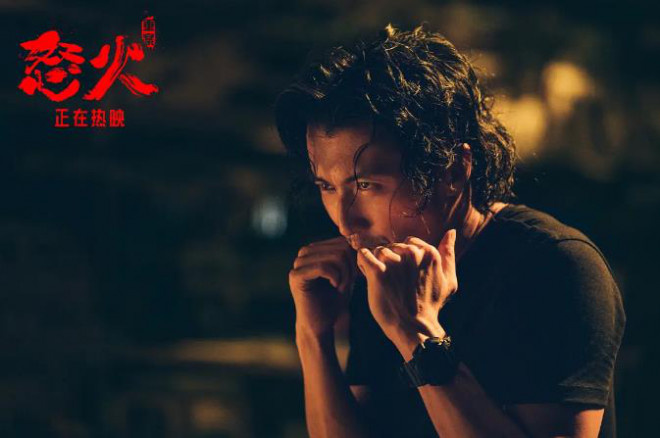
The film "Anger Serious Case", which was directed, supervised, supervised and starred, has been at the top of the single-day box office for many days since its release. Thanks to the audience’s high enthusiasm for watching movies, the proportion of box office and film arrangement continued to rise. In addition to the excellent box office, the film has won a high reputation from the audience on all major platforms.
"It’s all too much, it’s all madness." David Baudelaire, a film critic, commented on Hong Kong films in the 1990s, telling the spiritual meaning of Hong Kong films in that golden age. In the production of gangster films, Chen Musheng’s posthumous work "Anger Serious Case" rekindled the charm of Hong Kong films with a cavity of "anger", which aroused the audience’s recollection and expectation of the "eternal topic" of the game between gangsters and robbers, and also caused fans to pay collective tribute to Chen Musheng, a Hong Kong filmmaker.
The word "anger" is no longer strange to Chen Musheng. More than ten years ago, a very successful gunfight scene was created, which really marked the formation of Chen Musheng style. From this point on, Chen Musheng began to make full use of its firepower in police films — — … … Where the plot goes, there is not much truth for both sides to talk about, and bullets and grenades are worth a thousand words. Interestingly, young audiences who have already been fed by Hollywood blockbusters are more interested in Chen’s style of "martial arts", and often they can come up with a few golden sentences, such as "Jesus can’t keep him, I said!" In the hail of bullets, the characters can still be set up vividly. This time, Anger Serious Case continues this trend.
We can get a glimpse of the protagonist’s character in Anger Serious Crime. Donnie Yen, an action superstar, and Nicholas Tse, a "cross-border singer", respectively played two ordinary policemen in the Hong Kong Major Crimes Unit. Zhang Chongbang, played by the former, is honest and abides by principles, even to the point of "stressing death". Qiu Gang ‘ao, played by Nicholas Tse, also has a dream of justice, but he is appreciated by the leaders because he knows the internal "rules" of the police station. The atypical character of the latter also laid the groundwork for the future blackening. The appearance of a kidnapping case of a rich man contributed to the watershed of their lives — — Qiu Gang ‘ao’s mistake was caused by his boss, so that he and a group of colleagues were accused by the court and eventually jailed. In this regard, the "Return of the Gods" in "The Serious Case of Anger", a series of gun battles and dramas that disturbed all sentient beings began to be staged, and its wonderful popularity was, in the words of the audience, "worthy of the ticket price!"
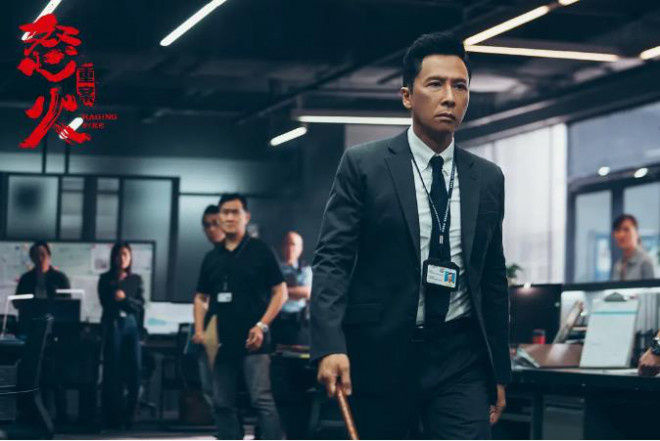
Whether it’s gun battles, hand-to-hand combat, racing, blasting, or abandoned shopping malls, slums, sewers, cathedrals … … In the constantly changing scenes, director Chen Musheng accurately expressed his understanding and persistence in the Hong Kong gangster film "Hard Bridge and Hard Horse". Among them, there are racing chasing in downtown, Donnie Yen’s visual shock with one enemy and a hundred enemies, Nicholas Tse’s cool and biting when playing butterfly knife, and the fierce fighting of the protagonist in the church confrontation — — Every action scene is both dangerous and difficult, and finally presents the ultimate embodiment of violence aesthetics. In order to show the "martial arts" of police films, director Chen Musheng can also be said to have spared no expense — — Fast, accurate and fierce fighting, hard, burning and bombing gun battles, and the double impact of boxing to meat and bullets are the double enjoyment of the audience’s vision and hearing, and the adrenaline is soaring wildly. The exquisite audience sighed with emotion that the sound of AK47 pulling the bolt in the film is the same as that of a real gun, and the sense of the scene is full, which makes people close their eyes and shout. This feeling is like the "smell" of Hong Kong gangster movies many years ago.
The whole movie focuses on "anger", which includes not only the anger of Qiu Gang ‘ao and others who were abandoned in prison, but also the anger of Zhang Chongbang after the tragic death of his colleague and the abduction of his wife. However, this anger did not push the characters into the corner of both good and evil. Black is not all black and white is not all white, just like yin and yang gossip. And this is exactly what Chen Musheng wants to express: The world is either black or white, and there are many gray areas.
In the face of helpless and heavy topics, the film also has answers, not just through the protagonist’s perspective, but more attention to details. Just as the film "got a box lunch" at the beginning, Zhang Chongbang, its partner, was mellow and soft-hard, but he also resolutely died when facing the gangsters’ guns. Yuan Jiabao, as a senior officer of the police force, once lost, finally chose to maintain his subordinates and return to his true heart. These people are indeed neither black nor white, but they can still make choices and stick to their principles when facing their own gray. Heart for heaven, a thought of hell. People should control their inner "anger" and stick to their true intentions. In the "bitterness" of the plot routine, "Anger Serious Case" shows the director’s "gratitude" to the new ideas of the police film. It is not easy. Different from the past Hong Kong gangster films, Anger Serious Case is not a heroic triumph of evil over righteousness, nor is it the final curtain of the villain of tragic fate. It is more about communicating with the connotation in an equal manner and telling the truth. While it is full of old Hong Kong flavor, it ignites new ideas of Hong Kong gangster films with a cavity of "anger". Although the times will pass, the classics will be passed on. For Hong Kong movies, we might as well expect more. (Author: Xie Weifeng)