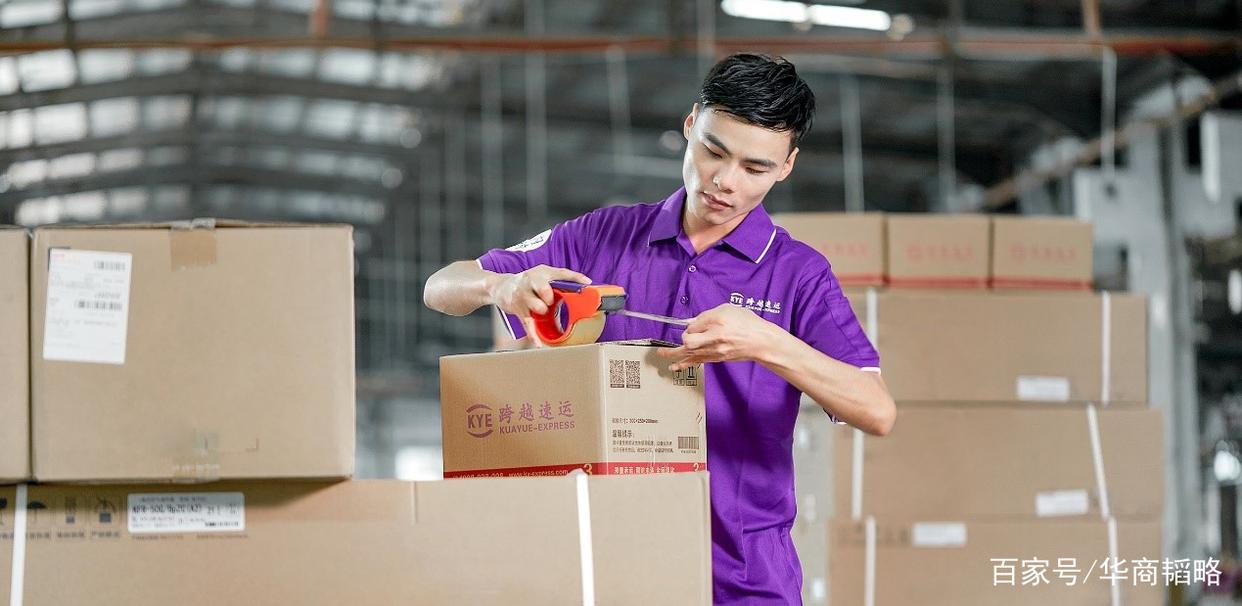
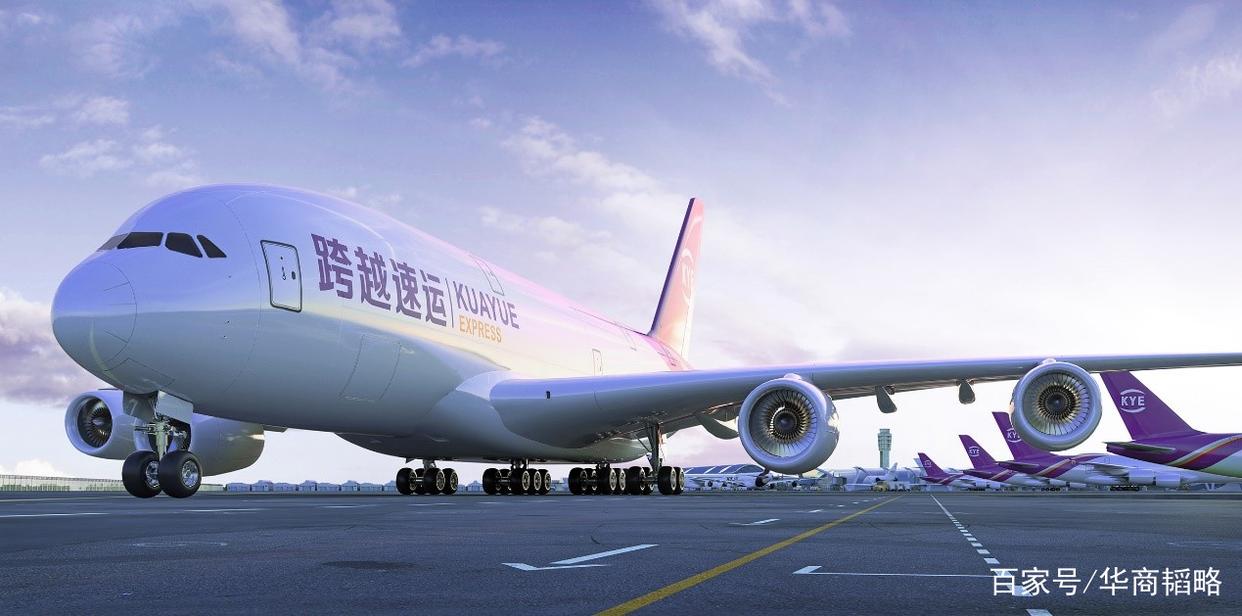
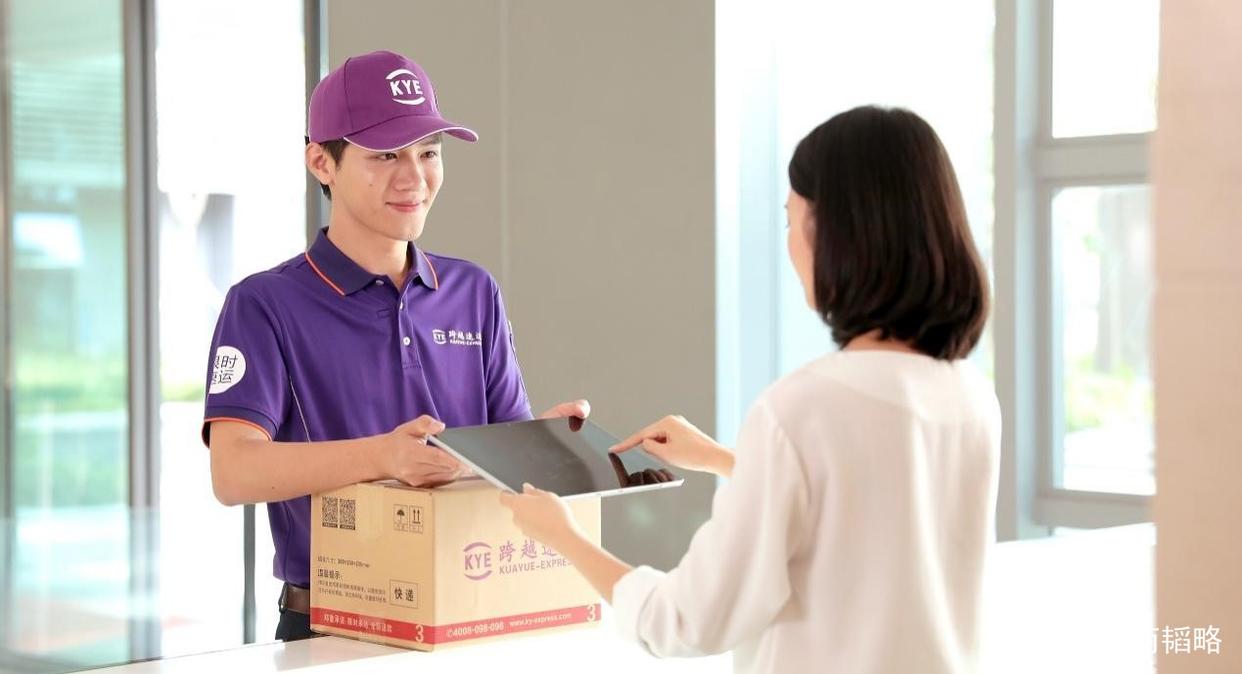
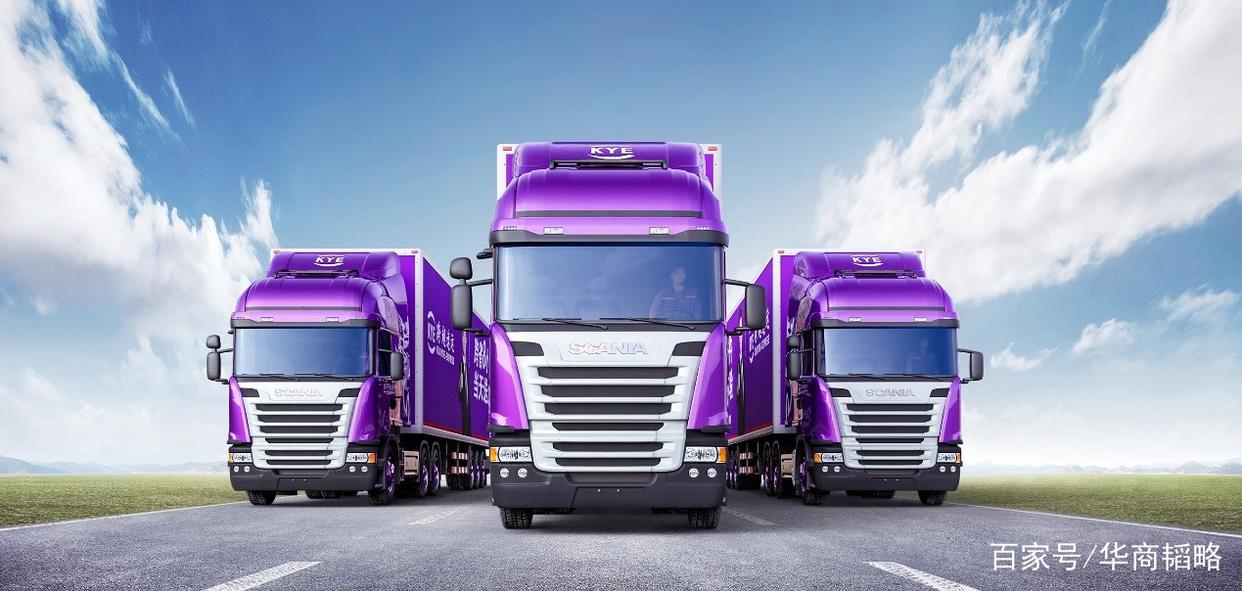
Behind the scenes | Beyond the "fast, steady and accurate" of express transportation, I saw its competitive key points.

  How fast is the 800-mile express? This scene is often seen in costume dramas: a soldier gallops on the road with a whip, and keeps shouting: "Get out of the way, get out of the way, it’s urgent for 800 miles." In ancient times, it was a long way, and the country set up a post station, replacing people with horses, and there could be no mistakes in the middle, ensuring speed and punctual delivery. "Time has changed, and people’s demand for logistics has not changed." Fast ","stable "and" accurate "are still the key words for the development of logistics enterprises.

  The pioneer of "speed-limited" operation across the province takes 8-hour punctual arrival across the province as a star time-limited product, creating a precedent of "domestic time-limited". "limited speed" contains three meanings: "first, it is mainly based on aviation parts"; Second, the promise of timeliness is delivered on time; Third, there are strong data, algorithms, transportation capacity and service system support. "

  The premise of "fast" is to be stable and fast, and the batch can be copied quickly. The concept of "limited speed" is constantly improved through a number of differentiated services.

  First, fast and stable-guarantee the timeliness on the same day.

  Compared with fast delivery, fast, stable and punctual delivery is the most concerned issue for customers. Then, what’s the difference between cross-express and other logistics companies in terms of guarantee timeliness? Cross-border express delivery is ahead of the industry in both urgent and general parts, and the fastest inter-provincial delivery in 8 hours is a performance of cross-border strength. It makes full use of the advantages of aviation resources, science and technology, integrates the company’s manpower, material resources and financial resources, and unifies transportation and delivery, which greatly saves logistics time.

  In addition, thanks to the advantage of "national direct sales", the disadvantages of various express delivery companies are broken, and the sword-casting system is used to implement flexible and free optimal resource management mode across express transportation without external force. For example, after the customer places an order for each time-limited part, the system will generate more than 130 preparatory schemes according to the information dimensions such as road conditions, destinations and customer characteristics, and match the nearest driver and the nearest flight, with the ultimate goal of the lowest road transportation price.

  Second, capacity upgrade-strategic cooperation with many domestic airlines.

  During the peak period of Double Eleven Express, many peers were unable to guarantee the timeliness due to the explosion of e-commerce. However, cross-border express is different from other logistics companies, focusing on the TOB market, serving corporate customers and better ensuring the timeliness. Although South China has more than 70% aircraft belly resources and 16 charter flights, Trans Express has continuously expanded new strategic partners this year, and reached strategic partnerships with more than 10 major domestic airlines such as Air China, China Southern Airlines, China Eastern Airlines, Shenzhen Airlines and Shandong Airlines. Every year, 10% of the company’s turnover will be used to upgrade aviation resources, set up special classes for multiple routes, and charter flights to increase aviation capacity. The basis of logistics freight transportation is road transportation, but the basis of timeliness guarantee is sufficient air transport capacity.

  Secondly, through strategic cooperation with a number of companies, priority will be given to sorting the crossed goods, further improving the timeliness, ensuring the smooth and stable supply chain of enterprises, and seeking the fastest capacity guarantee for "limited speed".

  Third, dynamic routing upgrade-let express "add" speed.

  Of course, in addition to capacity upgrade and guarantee timeliness, dynamic routing upgrade is also the key point to cross the "fast", "stable" and "accurate" of express transportation. Increase the investment in automation and intelligent facilities and equipment across express transportation, introduce a variety of domestic advanced intelligent sorting systems, and adopt the integrated control of WMS/WCS/PLC system advanced in the industry to realize automatic sorting of goods. In addition, through the optimization of business processes and management, intelligent and accurate sorting is realized by using sorting machines, unmanned aerial vehicles, automatic sorting and intelligent customer service in management support links, which effectively improves the circulation efficiency and site carrying capacity in the field.

  At the same time, the vehicle digitalization reform will be implemented across this year, and the digitalization of vehicle maintenance, driver monitoring and car use efficiency will be realized by upgrading the middle platform system. In the management link, a visualization platform for the whole process of express logistics will be formed, which will promote the timeliness of the whole chain and reduce the cost. The map has also been upgraded again. According to the maps of key cities in the country, the road conditions and traffic restrictions have been re-counted, optimized and adjusted, and the optimal path has been re-planned.

  More importantly, dynamic routing upgrade can establish a whole-process ecological information network with internal self-driving and external interconnection through big data applications, and promote the dual innovation of business and technology. Through the functions of intelligent order sorting and one-click stowage, the system can complete the efficient and intensive stowage of tens of thousands of goods orders in 10 seconds, greatly reducing the labor cost and time of stowage; The order data is synchronized in the whole process, and upstream and downstream customers can query the information of goods storage and distribution in various ways, thus improving the customer service experience. The setting of the driver evaluation system in the system is the performance of effectively controlling the service quality and improving the service level of drivers. At the same time, through the combination of light and heavy, the vehicle loading rate is improved, and the industry problems such as "empty return" are solved, thus saving 20% of the site resources of corporate customers, solving the problem of customer delivery timeliness and "increasing" the speed of express delivery.

  Fourth, service upgrade-dedicated line is faster.

  Most logistics companies carry out their business by integrating the third-party resources of warehousing, transportation, distribution and other links. Although this way of "organizing bureaus and moving bricks" can save large-scale investment in basic assets in the early stage, it is lack of autonomy in controlling transportation capacity and personnel, and its ability to resist risks is low, so it is impossible to provide customers with integrated whole-process logistics services at affordable prices, which directly affects the service level. The cross-speed operation is a direct logistics enterprise, which can guarantee customer demand in all aspects and at multiple levels. In the aspect of door-to-door delivery, delivery can respond to customers for 1 hour and delivery for 2 hours; In the delivery vehicle, it is a van truck to take delivery, which is safer, faster than other small tricycles of logistics companies, and free of special car fees, which is more favorable; In terms of prescription, it promises to refund the fee after overtime, and the prescription is also fully guaranteed in the peak season.

  In the after-sales service, across Express, a 7*24-hour dedicated service was opened. Compared with other express delivery companies’ complicated customer service transfer processes, across Express, dedicated customer service followed up. At the same time, for large-scale shippers with huge shipments, across Express, it will also provide accurate customized services from professional transportation capacity to transportation tools, from global dispatching to global digitalization.

  Undeniably, behind the cross-express differentiated service, it is inseparable from its cross-over resource advantages and the comprehensive service capabilities of various sectors’ collaborative production, but more importantly, the cross-express differentiated service is combined with the actual situation to create a solid operating chassis and find a way of differentiated competition. Under the premise of 8 hours, some areas can achieve inter-provincial 6 hours. According to reports, for many customers who choose to reach the next day, they can even reach the same day. In the Tenth Five-Year Plan, the national strategy of building a high-quality comprehensive three-dimensional transportation network is put forward, and it will reach the whole country in one day in 2035. Then, with the ability of leaping, it is expected that it will reach the whole country in one day in two years. Relying on the above advantages, it is naturally worth looking forward to the express service that spans the express "fast", "stable" and "accurate".

  ——END——

  Welcome to pay attention to [Chinese business strategy], know the man of the hour, and read the legend of strategy.

Reporting/feedback

A "Nantah" robbed several families, and the emerging abbreviations added a lot of "troubles"

  In recent years, with the development of the Internet and mobile terminals, especially the popularity of smart phones, network language has gradually ushered in the climax of development, and has formed a certain impact and influence on Chinese itself, and new words such as "call" and "children’s shoes" have appeared. These emerging abbreviations, mixed words, alphabetic words and homophonic words are not only popular on the Internet, but also "popular" in various scenes of life. So, how should we treat these new words and whether we need to standardize them? In this issue, we invited four scholars to discuss the above issues for readers.

  A robbery by several "Nantah" families refers to a case-solving case several years ago. In 2015, Nanchang University published the Charter of Nanchang University in official website, and named it "Nanda" for short, which was a repetition of the long-established abbreviation of "Nanjing University" and aroused public concern. During the discussion, people think that Nanning University can only be called Ningda if it is not called Nanda, but Ningxia University and Ningbo University have problems again. Ningxia University is called "Xiada", which coincides with the pronunciation of "Xiamen University". This has stimulated the humorous ability of netizens to create gimmicks, such as calling Xiamen University "the big door", Shantou University "the big head" and Taiyuan University "too big", and so on.

  Why do colleges and universities attach so much importance to abbreviations? First, according to the statistics of econometrics, the frequency of Chinese words depends largely on the length of words, and the longer the words, the lower the frequency of use. That is to say, a university has a short and loud abbreviation, which will have unexpected effects on improving the visibility of the school and making it easier for people to mention it. Secondly, in people’s daily communication, the abbreviation ru sentence is often more in line with the rhythm and rhythm of speech. For example, "troops stationed in Beijing" and "people coming to Shanghai" are more in line with the reading and breathing habits of "2+2" rhythm than "troops stationed in Beijing" and "people coming to Shanghai", so they are easier to be selected by speakers. Thirdly, it is easier for listeners to remember the object of conversation by using abbreviations. For example, "China University of Science and Technology has developed rapidly in recent years" is better than "China University of Science and Technology has developed rapidly in recent years".

  The abbreviation of universities belongs to the category of abbreviated words in linguistics. It is generally believed that people like to use abbreviations because the speaker always wants to make his meaning clear in the shortest possible words (inertia psychology under the principle of language economy); Another reason is that the human brain’s information processing ability is limited. If the sentence is too long, the listener will remember the back and forget the front, so compressing some parts of the sentence can be more conducive to sentence understanding. Then there is the self-expression advantage of the university abbreviation mentioned above. For these reasons, languages of all ethnic groups have the habit of using abbreviations. For example, in English documents, some long units and concepts will be marked with acronyms when the word appears for the first time, such as the World Trade Organization, and when it is mentioned later, it will be replaced by WTO. There are also many ways to abbreviate Chinese. Besides English, there are also ways to abbreviate words: ① Abbreviation (Internet celebrity — Online celebrity); Section division (such as the abbreviation "CPPCC" for "Political Consultative Conference"); ③ Headword sharing method (such as "universities, primary and secondary schools, import and export, entry and exit", etc.); (4) Co-deletion of headwords (such as "being more advanced than learning, catching up with the advanced, helping the advanced and surpassing the advanced" constitutes "being more advanced than learning");⑤ Sentences are condensed into words (such as "conversion from military to civilian, upgrading from college to undergraduate, changing profits into taxes"); ⑥ Once contracted and then contracted, abbreviations are shortened again according to the occasion of use (such as "People’s Republic of China (PRC)" — "China" — "medium"); ⑦ "consonant", part of phonemes are selected from two syllables to form a new syllable ("two" — "Two" and "Three" — "three", "no need" — "Don’t") and so on.

  In recent years, the convenience and speed of network communication have stimulated the creativity of netizens, and a large number of new abbreviations have entered the field of communication and extended from online to offline. Such as "rich soil, camp reform, Gao Fushuai, plain and sweet, ignorant, eager to make progress, unwilling to dismantle people’s difficulties, and refusing to move ten times". Many of these new abbreviations compress a complete event into three or four syllables. However, the new abbreviations are widely used, and their negative effects are rapidly emerging. First, the newly created abbreviations are too random and have poor stability, and they are produced and disappeared almost every day, which has caused the user’s memory burden; Second, some abbreviations are relatively obscure in meaning, and many people often don’t know what they mean, resulting in communication barriers; Third, out of the pursuit of fashion, primary and secondary school students use network abbreviations in daily communication and composition, which blurs the learning of standardized language.

  So, how should abbreviations be standardized? On the one hand, we must be strict. Network abbreviations should not be used or appear in official documents, publications and school teaching. On the other hand, we should be tolerant. No matter how novel the network abbreviation language is, after all, it aims at communication. This factor determines that it can’t be too outrageous, and some distinctive new abbreviations will also settle down and enter the standard words. Back to the university abbreviation mentioned at the beginning, there are the following solutions: First, respect history. In recent decades, "Nanda" has gradually become a recognized abbreviation of Nanjing University. Lingnan University and Nankai University, which were originally called "Nanda", were renamed "Lingnan" and "Nankai" respectively. Second, respect the authority. The abbreviations determined in the university articles of association approved by the Ministry of Education first, and those declared later, should be avoided. For example, Nanchang University, Nantong University and Nanning University should no longer be referred to as "Nanda". Third, now everyone has accepted three-syllable words and four-syllable words, and university abbreviations don’t have to be reduced to two syllables, such as "Beijing Normal University" and "Northeast Normal University" are also good choices.

  (Author: Wu Changan, Wu Na, professors of Northeast Normal University and postdoctoral fellow of Sun Yat-sen University)

The ups and downs of contemporary "gleaner"

Most people don’t know about the scavengers. In fact, in reality, a large number of garbage cleaners living in urban gaps are not homogeneous groups, and their internal division of labor and stratification have already formed. A large number of scavengers still have the expectation of gradual accumulation and upward mobility. However, despite the existence of opportunities for social mobility, they are also very fragile. A natural and man-made disaster is enough to bring their decades of struggle back to the original point.

In a village in south-central Henan province, we have repeatedly heard that most people in the village and surrounding areas have gone out to collect waste products, and some villagers have made a fortune by collecting waste products, so we asked the village cadres to introduce a villager who has been scavenging for a long time and knows the whole waste purchasing industry. This is how we met Fang Zhenye. The 65-year-old Fang Zhenye started scavenging in the 1980s, and worked in the waste industry until 2010. In the past 30 years, he went from scavenging and collecting waste at a fixed point to running a waste collection station step by step, and every step was deeply branded with the change of urban-rural relations.

(A) missed the opportunity for development and embarked on the road of scavenging

Fang Zhenye is small and thin, but his eyes are alert, he is good at talking, and his expression is clear, his logic is strong, and he is not lacking in literary talent. It can be seen that he has a solid foundation in reading when he was young.

He graduated from junior high school in 1970, and then worked as a farmer at home for one or two years. He joined the army in the second half of 1972 and worked as a soldier in Chengdu for four years. In 1975, he became the first batch of party member to join the Party, and soon became the monitor. In the fourth year of the army, he joined the cadre teaching team with excellent performance. This means that being trained with emphasis is very likely to stay in the army in the future, with broad prospects, but it has lost the opportunity by mistake. Fang Zhenye’s fiancee was not at ease at that time, fearing that she would not want to be herself after her high level, so she went to Fang Zhen’s industrial home. Unexpectedly, she just got sick there and sent a telegram to him at home, so the army asked her to treat her. Fang Zhenye was in the coaching team at that time, and was talked to by his superiors. What the army meant was that Fang Zhenye’s lover was sick and would be a drag in the future, so he could not be trained any more. He missed the development opportunity, retired and returned home.

In 1977, after returning home, Fang Zhenye continued to farm until 1985, when he began to go out to pick up rubbish. One of the main reasons for his going out is to avoid the fine of family planning. He was fined 120 yuan that year because of his super-life. Because of his limited agricultural income, he couldn’t pay the fine, so he had to find a way to hide out.

At first, Fang Zhenye, who had just returned from the army, could not pull his face down to collect junk. However, for the sake of the family’s life, he had to put down his figure and embark on this road without too high cost. He said that at that time, in order to avoid the embarrassment of meeting acquaintances, he pulled a rickshaw out early every morning and went home until he could not see anyone at night. In this way, I secretly scavenged from 1985 to 1992. At that time, the income of scavenging was 5 yuan a day, much higher than the salaries of teachers and village cadres, and the local people’s views gradually changed. By this time, 50% of the villagers had devoted themselves to scavenging.

(2) Going out to pick up rubbish: being taken in for deportation.

In order to check the scrap market, Fang Zhenye lived in Anyang’s younger brother’s house for ten days in 1992. His brother is a college student and his sister-in-law is the head nurse. After living in his brother’s house for ten days, he felt very uncomfortable. He was afraid of being looked down upon by his brother, especially his sister-in-law, so he finally gave up Anyang and went to Luoyang with his relatives in a rage. After staying in Luoyang for three months, he collected waste products wholeheartedly. Fang Zhenye said that he was not so ashamed at that time. After returning from Luoyang, he stayed at home for more than 20 days, found five or six relatives with the same temper, and went to Dalian together. Dalian is a main battlefield for many local villagers to collect waste products. Until now, some villagers still do waste products business in Dalian.

Fang Zhenye’s memory of Dalian is not good. He said, "Dalian people and Henan people have different personalities, and they are violent, especially those who pick up junk." During his stay in Dalian, he was often injured, as were several people who went with him. After staying in Dalian for about half a year, five or six people who went with him came back one after another, and Fang Zhenye himself came back. During his six months in Dalian, Fang Zhenye was taken in for three times. Generally, the police station is involved in the management. When you arrive at the police station, you will be beaten first, and then you will be sent to the detention and repatriation station overnight at most. Before you send it, you must make a statement that you will never accept waste again and will never be here again. Then the detention and repatriation station will use the money of the deported people to buy train tickets and send them to the train. Only when the train starts will the person in charge of repatriation leave. Fang Zhen escaped from the shelter twice, once was sent home, stayed for five days and went to Dalian. The reason why they want to escape is that they can’t go to their residence to get their luggage and certificates when they are caught in the police station and sent directly from the police station to the detention and repatriation station. The first two times, because someone paid for bail, it usually takes 500-600 yuan to get bail; At that time, the income from collecting waste products was only 200-300 yuan a month. "If you come out for a month or two and get caught again, it will be finished." The third time, they were sent back because Dalian wanted to clean up the foreign population. Fang Zhenye said that his ID card and discharge certificate were lost this time, not to mention money and clothes. Fang Zhenye was very angry because he lost his discharge certificate, because it could not be reissued.Later, when he received the retirement allowance, he did not have a retirement certificate and was not recognized. Being repatriated, Fang Zhenye had no choice but to return to his hometown.

Fang Zhenye mentioned that at that time, some people in the village went out to work, and every year when they came back during the Spring Festival, people got together to discuss what they could do to make money. He said, "(At that time) officials earned more than 100 yuan a month, village cadres and primary school teachers earned a few dollars a month, and garbage collectors earned 500 yuan a month, making more money than county heads." Under such circumstances, after discussion, everyone still feels that it is more reliable to collect waste products. "After coming back (from Dalian), I was tempted by money and wanted to go, but I was afraid." At this time, Fang Zhenye’s lover discussed with her husband that she went to Dalian to collect waste products, and her husband took care of the children and cultivated the land at home. She thought, "When a woman is outside, people will have some sympathy, at least not being beaten." In this way, his wife went to Dalian and collected waste products in Dalian for nearly a year until Fang Zhenye was introduced to Beijing through another relative. In 1994, Fang Zhenye and his wife went to Beijing with their 17-year-old son. Since then, from 1994 to 2011, Fang Zhen’s family has been collecting waste products in Beijing. Despite the difficulties, relying on his hard work, luck and intelligence, Fang Zhenye opened up a situation in Beijing and experienced many twists and turns.

(3) The golden age of scavengers: "If you can pick up junk for three years, you will not give it to a county magistrate."

When I first arrived in Beijing, it was difficult to find a stable place to stay. At that time, for the sake of safety, the neighborhood Committee refused to let waste collectors in. Fang Zhenye managed to find a community to help the community clean up and take care of bicycles for free. They start cleaning at 3: 00 a.m. every day. By 7: 00 a.m. before breakfast, the day’s cleaning work has been finished. During the day, they collect waste products without wasting time. From 1994 to 1995, it took a year or so for Fang Zhenye’s family to be gradually recognized by the community and basically settled down from 1995.

When Fang Zhenye’s family first arrived in this community, they were careful everywhere and spent a lot of time on building good relations with the residents of the community. During the wheat harvest season in 1994, Fang Zhenye didn’t let his eldest son go back to his hometown to harvest with him, let him stay in that community to continue his work, and specially told his son not to be too busy collecting waste products and to do a good job for others. The eldest son is sensible, does a good job, and looks likable. The old lady in the neighborhood Committee likes this child, so Fang Zhenye and his family live in the community, and the waste products are also given to them directly. For Fang Zhenye’s family to live in, the neighborhood committee cleared out the small house where the garbage truck used to be, and built another shed to store the garbage truck. So this small house of about 8 square meters became the residence of Fang Zhenye’s family, and they lived there for ten years. Fang Zhenye said, "All my three sons grew up in that community."

Fang Zhenye told his son that he must have a good relationship with people. "We are at the bottom, and people are superior. Standing in front of people, people are too dirty. How can we have contact with people? I can only help people. " Fang Zhenye’s neighborhood is the family building of the municipal party committee. He said, "The heads of all units are there, the director, the manager and the manager. Officials have a characteristic: they are willing to pay, but unwilling to contribute. He didn’t take the flowerpot, rice and a few pounds of things, so let’s take them. We have sent more (times), and when he comes down from upstairs, there will be waste or food. If we are not here, they will put the food directly on our booth. " Fang Zhenye said that at that time, half of their food was sent by residents. For him, this solved their big problem. Several sons are big boys, and they can’t cook, and they can’t cook where they live.

There are about 1000 households in this community. The waste products that Fang Zhenye collected and sold at that time ranged from paper, cartons and cans to waste plastics, scrap copper and iron. At that time, they can easily get a net income of two or three hundred yuan a month. If they are lucky, their net income can be five or six hundred yuan a month. Therefore, in the mid-1990s, there was a popular saying in Henan, "You can pick up rags for three years and give them to a county magistrate." The peak of the whole waste purchasing industry was from 1994 to 2000. In the early 1990s, the income from collecting waste products was 200-300 yuan per month, and in the mid-1990s, it reached 400-500 yuan per month. At the same time, the monthly salary of a secretary of a township party committee was only over 100 yuan, and that of a teacher was only a few dollars.

From the mid-1990s to the early 2000s, there were two main ways to collect waste products. One is not fixed, commonly known as "garbage pickers". These people carry a bag with a stick and walk around the streets. Such people account for the majority of the people who collect waste products. The other is to collect waste products at fixed points, which must be recognized by neighborhood committees and residents. The number is very small, and Fang Zhenye belongs to this category.

Fang Zhenye explained that although he started to buy in the community in 1995, he completely occupied the community after 1997. In the second half of 1997, Fang Zhen returned to his hometown to build a house. When he returned to Beijing in 1998, it was no longer an open community, and all communities were fenced off. During this period, because it is easy to make money by collecting waste products, people from all walks of life collect them. "The more people collect, the more things there are, and the less income there is. Young people with brains have begun to take crooked ways and steal. " Fang Zhenye said that the construction of a closed residential area was planned by Beijing in a unified way, and the house in his residential area and security room was built by his father and son. From the beginning of building a closed community, it became possible for a community to be contracted by one or two, and then it gradually evolved into a later type of waste acquisition-"package community" to collect waste.

As for Zhenye, although his community was closed in 1997, at that time he still cleaned the community for free in exchange for not paying the contract fee. However, by around 2000, residents began to realize that all waste collectors were rich, and some residents suggested, "Don’t look at junk collectors, they are rich, and they have to bleed." Fang Zhenye said, "At first, residents regarded waste collectors as beggars, but they were woken up at night and closed the windows." Later, it was found that it was not easy to collect waste products, and it was also interesting to sell waste products (for us). We were not allowed to collect sanitation at night, and we could not collect sanitation before 5 am. " From then on, people who collect waste products at fixed points like Fang Zhenye began to pay a certain contract fee to the neighborhood committee.

The change of the status of scavengers is actually hidden in the anxiety of urban people caused by social stratification. Scavengers originally lived in the gap of the city and were sympathized by the city people. However, with the changes in the city in the 1990s and the rising income of scavengers, they began to become a threat to the urban middle class with increasingly unstable status and uncertain future.

(four) the restructuring of state-owned enterprises, laid-off workers and the expulsion of scavengers

After 2000, another more important change has taken place in the waste collection industry, because at this time, a large number of urban workers were laid off due to the restructuring of state-owned enterprises, making urban cleaning an important channel for the employment placement of "4050 personnel", and the scavengers who had existed in the urban gap must make way at this time. For the other zhenye, the change began with the change of the neighborhood Committee. Since 2001, college students have started to work in neighborhood committees, while old ladies who used to work in neighborhood committees have to retire if they are over 55 years old. After six months’ training in street offices, college students who have just graduated from university will go to work in neighborhood committees. Around 2004, the director and deputy director of the neighborhood Committee who had been dealing with Fang Zhenye for many years were replaced. In less than three months, things changed.

One day, the new college student director came to talk to Fang Zhenye about the new policy of the community. When talking about this, Fang Zhenye pondered for a long time before he thought of the word that made him very headache at that time: "standard". He said, "I can’t even hear the word, and my head is big when I hear it." The director of the neighborhood Committee came to express two meanings. First, the community work should be "standardized" now, and booth fees should be charged for those who collect waste products; To clean up the sanitation, a special cleaning company should be set up, and it should be cleaned in a fixed period of time during the day. "Even if it is cleaned up before 7 o’clock in the morning, the leaves will come down again when it is windy during the day. Let the residents see the cleaning staff cleaning up. If you collect sanitation at night, the residents will only see that you are collecting waste. " Second, if there are unemployed people in this community who can’t find jobs, they should replace the original cleaning staff and give priority to the unemployed people in this community. Fang Zhenye said, "What community college students explain is that’ cleaning staff’ and’ cleaning’ are to ensure cleanliness at any time. You look at this explanation, so you say,’ Those who work hard rule people, and those who work hard rule people’. "

Soon, the new regulations will be implemented. Fang Zhenye said, "As a reason for arranging unemployed people, we were cleared out. But suddenly clear us out, what should I do? " He went to several old ladies to intercede, but several people said that it was no good and must be "standardized". When Fang Zhenye was worried, the residents who had arranged to take over his work came to see him. "I said what you should do, I won’t hold you up. I’ll leave as soon as I find a place. He said he wouldn’t do (cleaning). I understood after listening to his words. I asked,’ Do you sell (this job)?’ Finally, we agreed that I would give him money and I would continue to do my original work. "Unexpectedly, one day not long after, the residents’ committee suddenly gave Fang Zhenye a good lecture and forced him to leave. Fang Zhenye said, "At that time, college students were very fierce. If they were angry, they would get angry. If they said, you would slap you!" In desperation, Fang Zhenye can only find another way out.

(5) From scavengers to "waste recyclers": paying money to "package the community"

From 2004 to 2008, Fang Zhenye and his son were employed by the cleaning department of another residential property to clean up the garbage, and their salary was 700 yuan/month. Fang Zhenye proposed to the property department that he didn’t want a salary, as long as he was allowed to collect sanitation and clear away the waste. At that time, their gross income from selling waste products could reach 5,000 yuan a month, which was handed over to the property 1000 yuan.

Fang Zhenye said that cleaning up garbage is a work that requires experience, and not everyone can do it well. At that time, in the residential area where he lived, each building had 28 floors, each floor had a garbage room, and the garbage of 12 households on each floor was put in the garbage room. At 8 o’clock in the morning, the cleaning staff carried out the garbage with the bag of the trash can and collected it layer by layer. Because there is a distance from the garbage room to the elevator, and garbage bags often contain soy sauce bottles, vinegar bottles, leftovers, etc., inexperienced employees often delay time because of garbage leakage, which also makes residents dissatisfied. According to the regulations of the property department, the cleaning staff in the learning stage need to collect a building within 2 hours. Mature employees can take it in 80 minutes, and high-tech employees can take it in 50 minutes. Fang Zhenye usually comes down within an hour, so although someone else has changed in the middle of the property to collect it, he finally had to bring Fang Zhenye back because of complaints from residents.

From Fang Zhenye’s point of view, there are several principles for choosing what kind of community to enter. The first is to see whether there are more commodity buildings or family buildings in the community. The income of purchasers in commodity buildings is twice as much as that in family buildings, because all the people living in commodity buildings are rich. The second is to see how many doors are opened in this community. The more doors there are, the more uneconomical it is, because the more doors there are, the more people from outside will come in to collect waste products. The third is to look at the number of households. Fang Zhenye and his fellow villagers once discussed a general rule that people who buy waste products can earn an average of 1 yuan from each household every day.

Since the closure of the community and the standardization of waste purchase, the "waste recyclers" in the community have been managed by the property department and paid contract fees to the property. With the increasingly fierce competition for scrap purchase, the property keeps raising the contract fee. Fang Zhenye said that according to the current market, in a community of about 10,000 people, the waste recyclers have to pay 70,000 yuan to the property a year.

(6) A short turnaround under the economic crisis: renting a waste collection station.

After the 2008 Olympic Games, the economic crisis suddenly appeared in the second half of the year. Fang Zhenye said that at that time, some waste collection stations lost hundreds of thousands at once. A waste collection station usually needs millions of dollars, and the collection station usually stores a certain amount of waste before selling it. The sudden economic crisis has caused these collection stations with hundreds of thousands of goods to lose a lot of money at one time. Some people are buying stations operated by loans, but they can’t see hope, and they are also urged to pay debts. Just in the area where Fang Zhenye is located, three people who run buying stations committed suicide, all from Gushi County, Henan Province.

With many years of industry experience, Fang Zhenye has a keen grasp and analysis ability of information. After the economic crisis, the price of waste products fell to the bottom in the second half of 2008. At this time, Fang Zhenye, who had a good idea of the situation, spent all his money, borrowed some money, raised about 300,000 yuan, and rented a purchasing station with his three sons to do the business of scrap copper and aluminum. He believes that under the circumstances at that time, the price of waste products can no longer go down, and it will definitely pick up. As expected, after the end of 2008, the price of waste really began to pick up. The rent of the purchasing station contracted by Fang Zhenye at that time was 4,000 yuan/month. If it is well managed, the monthly net income can be more than 6,000 yuan; General management, net income is only 2000 yuan.

After more than two years of running the acquisition station, the economic crisis appeared again. Fang Zhenye said that when he saw the falling oil price, he quickly withdrew. According to his many years’ experience, if the price of oil rises, the price will rise; When oil prices fall, prices will also fall, and the waste business will also weaken. With such keen judgment and analytical ability, Fang Zhenye has not suffered a big loss in the acquisition of waste products, and has avoided big price fluctuations. Until returning to his hometown, Fang Zhenye has been paying attention to the market of the waste industry, but the market has been bad in recent years, so he has never made another shot. He estimated that he would never do the junk business again.

(7) Sudden storms: Cancer has exhausted years of savings.

In the second half of 2010, Fang Zhenye’s wife had a stomachache, and it was diagnosed as duodenal cancer. She stayed in a hospital in Beijing for more than 20 days and spent more than 40,000 yuan, but the hospital did not study for 3 or 4 weeks. Finally, Fang Zhen was asked to take a living specimen to the cancer hospital for testing, and the result of the test was that it was likely to become cancerous, so the hospital asked them to transfer to another hospital quickly.

In the Spring Festival of 2010, Fang Zhenye took his wife home for the New Year and returned to Beijing for treatment the following year. He spent tens of thousands of yuan, through various relationships, transferred to a hospital where a fellow villager was the vice president. According to the situation at that time, if you don’t have surgery, your wife will have a life span of up to 3 years; If you have an operation, you may die on the operating table, but you may also survive. If you live for another 20 or 30 years, doctors are 75% sure. What my wife means is that if it is only 10,000 yuan, I will have an operation. If it is more than 10,000 yuan, I will not do it. Several sons could not make a decision, and finally Fang Zhenye made a decision and had an operation. It cost nearly 0.2 million/200 thousand before and after, and finally it survived. Fang Zhenye said that before his wife got sick, he had more than 100,000 yuan in his hand. At that time, he had planned to buy a house for his son in the suburbs of Beijing. As a result, his wife’s illness almost spent the original savings.

Fang Zhenye and his wife withdrew from the waste industry. After returning to their hometown, their sons still made a living outside, but they stopped doing waste business. The eldest son bought a big truck and transported muck for more than a year. The second son, together with his daughter-in-law, contracted the sanitation of a hotel. The third son set up a grocery store in Dalian. Because he just started to open a store, he was not familiar with it. He bought fakes and was cheated. After more than two years, he lost 50,000 to 60,000 yuan. This year, he just started to turn around.

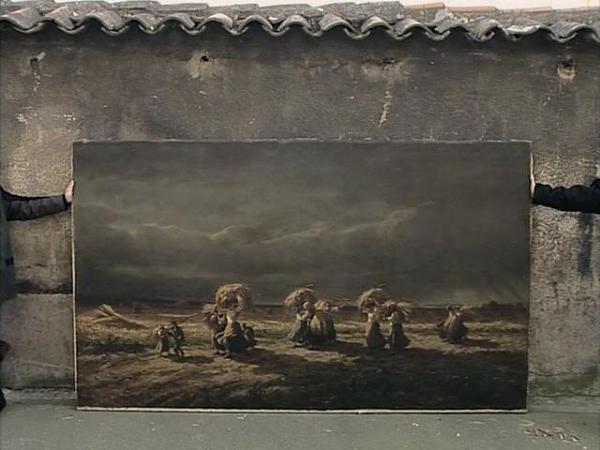
A scene in Agnès Varda’s gleaner (the picture has nothing to do with it)

Fang Zhenye’s story is only the corner of the joys and sorrows of countless scavengers in Henan Province, but it is also clearly marked by major social changes such as the detention and repatriation system and the reform of state-owned enterprises. The changes in urban-rural relations have shaped a major turning point in the life of scavengers.Fang Zhenye, who locates himself at the bottom of society,In fact, both IQ and EQ are extremely high. After years of hard work in the waste purchase market, you can accurately grasp the situation, analyze the market and make timely moves. What he lacks is just a little luck. In Henan, a region with a large population and scarce resources, there are many people with outstanding abilities, but they just lack opportunities. Occasionally, a few lucky people can achieve social mobility and get rid of the "bottom" label.

In this village of nearly 4,000 people where Fang Zhenye is located, among the 10 households with an annual income of more than 1 million (about 1% of all households in the village), 3 households started from scrap purchase, and now they run their own scrap purchase market; Of the more than 30 households (accounting for about 3% of all households in the village) with an annual income of 500-1 million, about 10 households are engaged in the work related to waste purchase, mainly engaged in waste processing or second-hand goods business, and some of them later switched from other industries to waste industry. That is to say, about a quarter of the nearly 50 households with the highest income of 5% in the village are engaged in waste-related work, accounting for about 1% in the village, and some of them did not start from the waste industry, but invested in the accumulation of other industries. Compared with that year, nearly 90% of the people in the village were involved in collecting waste products, but less than 1% completely changed their fate. The social mobility of scavengers is really difficult.

Even with high IQ and high EQ, such as Fang Zhenye, he survived the squeeze of the laid-off tide and avoided the impact of the economic crisis, but he still returned to the original point because of a serious illness of his family. Although all three sons grew up in urban communities, it is still difficult for them to stay in cities, and the hope of intergenerational mobility is still unknown.

(The name in the article is a pseudonym. )
Strengthening services in Shenyang, Liaoning Province to meet the needs of special groups for drug purchase.

  Recently, Shenyang City, Liaoning Province fully implemented the joint prevention and control mechanism of the State Council, and implemented the "Class B and Class B Management" to ensure people’s life safety and health to the greatest extent and minimize the impact of the epidemic on economic and social development.

  “‘ Class b tube ’ The focus is on strengthening services and guarantees. Shenyang has strengthened disease monitoring and early warning, strengthened prevention and control of key populations, key units, key institutions and major events, and vigorously carried out health education for residents. " Liang Hongjun, Party Secretary and Director of Shenyang Municipal Health and Wellness Committee, said.

  Up to now, all 138 medical institutions above the second level in Shenyang have set up fever clinics, and all 198 community health service centers and 110 township health centers have set up fever clinics, with a maximum of more than 20,000 patients in 24 hours.

  In order to solve the problem of "drug difficulty", Hunnan District has established a drug service working group of "community party organization+grid member of market supervision institute+person in charge of pharmacy", established a docking mechanism with pharmacies in its jurisdiction, formed a demand list, and solved the drug purchase needs of special groups.

  "I sent the medicine in half a day!" On the afternoon of January 8, Zhang Derong, an 80-year-old man who lives in Caixia Community in Hunnan District, received antipyretics from the community.

  "Aunt Zhang is an elderly person living alone. After receiving the help information, we will arrange to send medicine to the elderly for the first time." Su Chang, secretary of the Party Committee of Caixia Community, said, "We have included 10 pharmacies in our jurisdiction into the community service matrix to form the residents’ drug purchase ‘ Service circle ’ , forming a ‘ from community to pharmacy to special people; Drug delivery chain ’ , solve the drug distribution ‘ The last mile ’ Difficult problem. "

  To implement the "Class B Management", the countryside is an important barrier. To this end, Shenyang has accelerated the construction of grass-roots health defense lines, done a good job in health monitoring of key personnel such as the elderly, pregnant women and left-behind children, and unblocked the green channel for referral, thus providing convenient services for Covid-19 vaccination of rural elderly people.

  Kangping county has established a multi-sectoral joint response mechanism to solve residents’ needs, taking the village as a unit, responding within 10 minutes, completing the urgent need within 1 hour, and reporting it as soon as it is beyond its ability; Set up a volunteer service team for social psychological assistance and a psychological crisis intervention team, and open a volunteer service hotline for assistance. Since January 1 ST, online and offline have solved the needs of villagers and conducted psychological counseling for 1876 times; Mobilize rural party member, volunteers and other forces, and reserve 3,165 emergency reserve forces in counties and villages.

The movie "The Heavenly Way of the Sun II" was finalized. 2.12 Gao Shuai knights parachuted into the battlefield


1905 movie network news The movie "The Heavenly Way of the Sun II" will meet the fans on February 12th. Previously, the producers had produced many popular national works such as Super Seminary series, Xiongbinglian series, and Lieyang Tiandao I online movie.


 The Spring Festival file ushered in the most powerful country, and the fantasy plot climaxed again.


As a sister collection of Fierce Yang Tiandao II, it mainly tells the growth story that Di Tianlin, the founding father of Fierce Yang Kingdom, entrusted the young girl of Fierce Yang Star to Pan Zhen, and with the help of Pan Zhen, Dilena grew into the third generation of Fierce Yang King. In the story, Tirana, who was in a rebellious period, got rid of Pan Zhen’s discipline and came to earth. Just at this time, the earth was attacked by gluttonous stars, so she stayed on earth to cooperate with the implementation of the "Heaven Plan".


Although it is a sister collection of Fierce Yang Tiandao I, compared with Fierce Yang Tiandao I, Fierce Yang Tiandao II has richer story content, more fantastic plot and more three-dimensional scene. In addition, many "good-looking, fun and interesting" attractions have been added to Fierce Yang Tiandao II. Let’s take a look at what they are.


Gao Shuai knight Nusa parachuted into the battlefield to enrich the content. 


As a synonym for handsome and decisive, Nusa had participated in the "Deno Star Wars" before participating in this "gluttonous star attack war", and repeatedly carried out assassination missions for Carl, and quietly eradicated the big lords who refused to accept Carl in the universe for many times and then spread the belief of death.


Although Nusa played for the villain this time, his murderous look could not stop his handsomeness. As soon as he appeared, everyone was reluctant to give up the villain’s "lunch box", hoping that he could fight with Tirana a little longer. There are even netizens who hope that they can fight a new spark.


Three-dimensional preparation field display makes the scene more detailed.


Following the perfect integration of oriental aesthetics into the scene design of the Heavenly Palace in the Sun, the Heavenly Palace in the Sun II has greatly upgraded all indoor scenes, making us feel like we are in a fantasy world. In "Lieyang Tiandao II", the ordinary cabin that can only take people in Lie 1 is upgraded to a shuttle cabin that can detect and predict the information needed for various battles.Brother monkey buys wine"The unpretentious scene was upgraded to a bar where we could drink beautiful wine together, and the ordinary training ground in Lie 1 was upgraded to a high-tech martial arts field.


Every scene in "The Heavenly Way of the Sun II" has become more advanced, and every detail has been portrayed more completely. Let the audience have an immersive experience.


The cool captain and the Lolita players make the plot more interesting.


Fierce 1 is full of hard shots. It can be said that the dashing Dilena touches the hot monkey brother. In Lie 2, a sweet and salty little loli was added — — Sue Xiaoli. Although Xiaoli and Monkey Brother have similar genes, their personalities are totally different, which adds more unpretentious interest to the ordinary war.

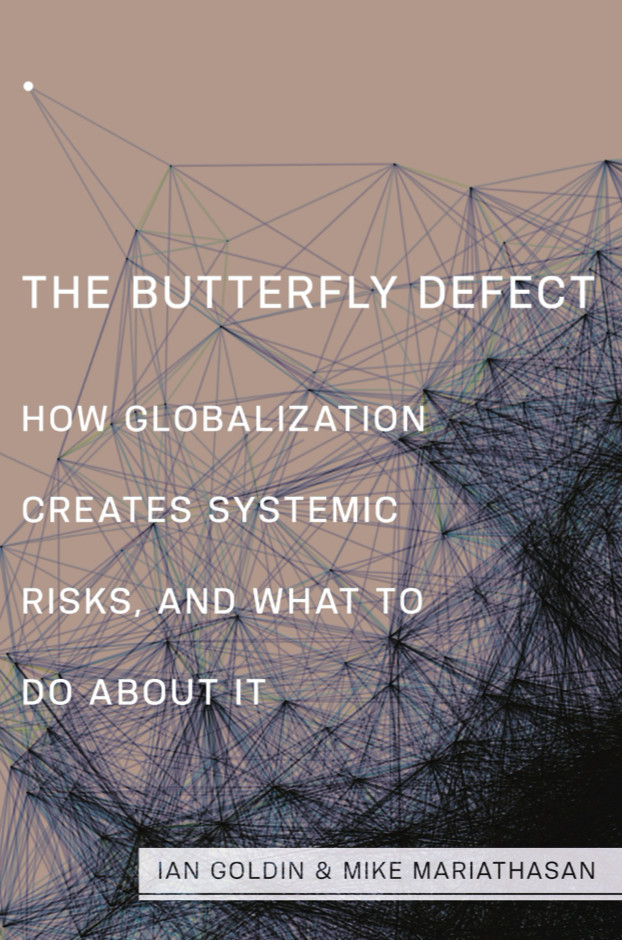
Six years ago, he predicted that the next global crisis would stem from an epidemic.

?Editor’s Note:

Novel coronavirus is spreading around the world at an alarming rate, but we should not be surprised. Globalization has brought systemic risks. As the links between trade, finance, tourism, internet and other fields become closer and larger, they also become more complex and unstable.

Edward Lorenz, the father of chaos theory, pointed out that a butterfly flapping its wings over Brazil may trigger a tornado in Texas, USA. The increasingly integrated and complicated global economy makes it more vulnerable to the consequences of "Butterfly Defect". For example, major airport hubs are powerful promoters of the positive effects of globalization, but they are also powerful communicators of the negative effects of globalization, and one of the "public hazards" they spread is epidemic diseases.

The PUP author from Oxford University, who is to be introduced to you today, warned governments in a book published six years ago that the systemic risks brought by globalization would threaten all of us, and the next global crisis would probably stem from the widespread epidemic of a disease.

The extensive connection of people leads to health risks

The density and intensity of contact between people and between people and animals are the decisive factors for the development and spread of epidemic diseases. In 1967, Stanley Milgram conducted an experiment to quantify global connectivity. He found that people can meet any stranger through at most six people.

In 2011, Facebook analyzed its 721 million users worldwide, trying to find out how many steps it takes to establish contact between any two people. It turns out that even though users are separated by thousands of miles, any two users only need 4.7 "friends" on average to be connected.

Population growth and the expansion of travel scope, coupled with the intentional or unintentional transshipment of animals (mice on board or mosquitoes on the plane), have rapidly increased the risk of epidemic spread. As we saw in the SARS epidemic in 2003, a toxic pathogen usually only needs short contact to infect someone and spread it. This makes airplanes and international travel become vectors of disease transmission.

High concentration of people raises health risks.

In 2025, the proportion of urban population in the world is expected to rise to 70%. The population density in Tokyo is as high as 5,847 people per square kilometer, and one in every 25 people lives in a mega-city, so it is necessary to "monitor, prepare and respond to infectious diseases". This practice is very important everywhere, especially in places with high population density and poor sanitary conditions, places where people are in close contact with animals, and places where water sources are easily polluted.

The risk of agglomeration will also amplify the connectivity risk within urban agglomerations and around the world, especially because major airport hubs are often located next to these cities. If an infectious disease originated in a metropolis, it is almost impossible to stop it from spreading around the world. Large cities are also usually inhabited by floating population and businessmen connected with other continents.

Gossip and Panic —— Information Management in Epidemic Prevention and Control

Now, all kinds of information and rumors can spread almost instantaneously through the Internet and social media. With this ability, the risk of panic related to infectious diseases has also increased dramatically, which has doubled the complexity of epidemic management.

Information management is essential, because panic may systematically aggravate the danger of the epidemic: during the epidemic prevention and control period, the government needs to control the flow of people and drugs, and if people frantically buy and hoard drugs, masks and other materials out of panic at this time, many important services will be greatly affected by people’s reaction.

When trying to prevent large-scale panic, governments may also choose to suppress some important information. In the social network of the financial world, there is evidence that "individual decision makers usually pay attention to the behaviors, decisions and even beliefs of others who have social contact with them (such as the perception of risks)." It is in this sense that innovation and technology also increase the risk of infectious diseases; In addition to tangible channels of transmission, we also need to be aware of the existence of risks related to "social" infection.

Another challenge comes from the management of the dissemination of sensitive research information. For example, the debate revolves around the US government’s decision to ask the major scientific journals Nature and Science to suspend publishing research on the evolution of H5N1 influenza virus. According to Medical News Today, although these studies were finally published, they were "shelved because the international community was worried that making these data public would make it easier for terrorists to make chemical and biological weapons".

PUP content express:

The Butterfly Defect: 

How Globalization Creates Systemic Risks, and What to Do about It


Author: Ian Goldin and Mike Mariathasan

Publication date: October 20, 2015 (paperback edition)

ISBN: 9780691168425

Highlights of the book

The Butterfly Defect emphasizes the widening gap between the new systemic risks arising from globalization and its effective management. This book shows that the turbocharged globalization power has the potential and power to undermine the stability of our society. Ian Goldin and Mike Mariathasan borrowed the latest insights from various disciplines and provided practical guidance for governments, enterprises and individuals on how to better cope with globalization and its risks.

Goldin and Mariathasan proved that systemic risk problems are now ubiquitous in supply chain, epidemic, infrastructure, ecology and climate change, economy and politics. Unless we solve these problems, they will lead to greater protectionism, xenophobia, nationalism, and inevitable de-globalization, increased inequality, conflicts and slower development.

The Butterfly Defect shows that in an interconnected world, reducing uncertainty and risk is an important task for our future development.

About the author:

Ian Goldin & Mike Mariathasan


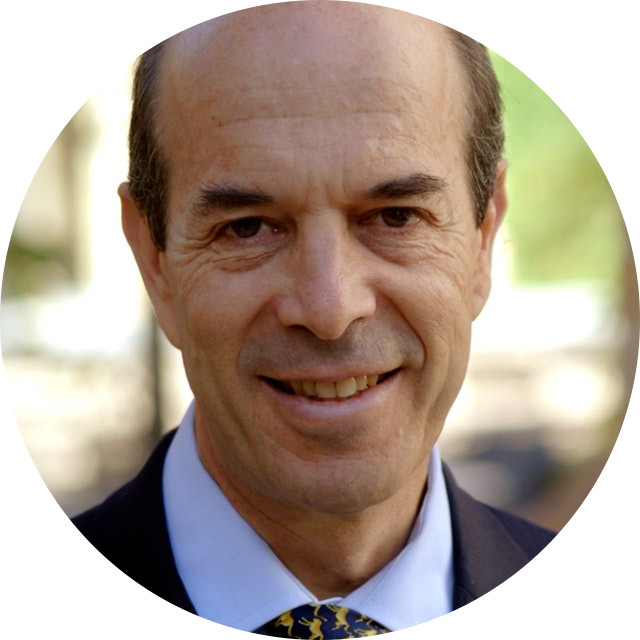
Ian Goldin

Dean of Martin College, Oxford University, UK, Professor of Globalization and International Development Department, Oxford University.

Mike Mariathasan

Assistant Professor, Department of Finance, University of Leuven, Belgium

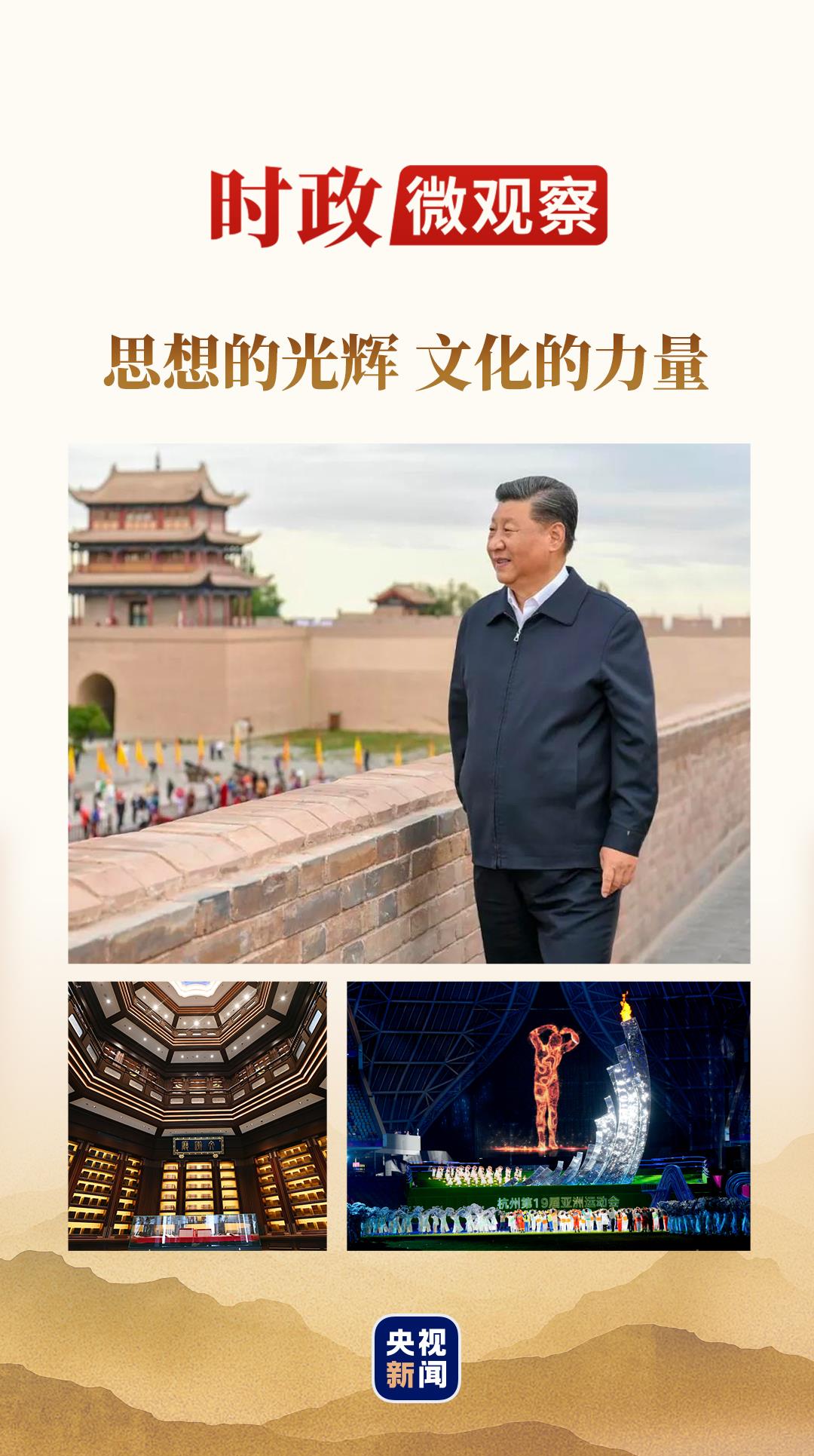
Micro-observation of current politics feels these forces from the cultural thought of the supreme leader put forward for the first time

  "The power of culture, or what we call the cultural soft power that constitutes comprehensive competitiveness, is always ‘ Moisturize things silently ’ Integrate into economic, political and social forces. " On August 12, 2005, the supreme leader, then secretary of the Zhejiang Provincial Party Committee, wrote such a passage in the column of Zhijiang Xinyu in Zhejiang Daily.

  Culture is related to the country’s foundation and national luck. The prosperity of a country and a nation is always supported by cultural prosperity.

  Since the 18th National Congress of the Communist Party of China, the General Secretary of the Supreme Leader has placed propaganda and ideological and cultural work in an important position in governing the country, promoted historic achievements in propaganda and ideological and cultural undertakings in the new era, and the situation in the ideological field has undergone an overall and fundamental change. The cultural self-confidence of the people of all ethnic groups in the whole party and the whole country has been significantly enhanced, and their mental outlook has become more energetic.

  October 7-8, 2023, an important meeting — — The national conference on propaganda, ideological and cultural work was held in Beijing. The most important achievement of the meeting was to put forward the cultural thought of the supreme leader for the first time.

  What can we learn from the cultural thoughts of the supreme leader in today’s construction of a socialist cultural power? "Micro-observation of current politics" is for you to interpret.

  The power of truth

  "It is the only way to open up and develop Socialism with Chinese characteristics on the deep foundation of Chinese civilization for more than 5,000 years, and to combine the basic principles of Marxism with the concrete reality of China and the excellent traditional Chinese culture."

  A few months ago, at the forum on cultural inheritance and development, General Secretary of the Supreme Leader profoundly explained the great significance of "two combinations" and pointed out that "‘ Two combinations ’ It is the greatest magic weapon for our success. "

  The road of Socialism with Chinese characteristics came out under the guidance of Marxism, and it also came out from the history of Chinese civilization for more than 5,000 years. "Two combinations" means not only mastering the basic principles and application conditions of Marxism, but also knowing the reality of China and Chinese excellent traditional culture clearly and using it freely.

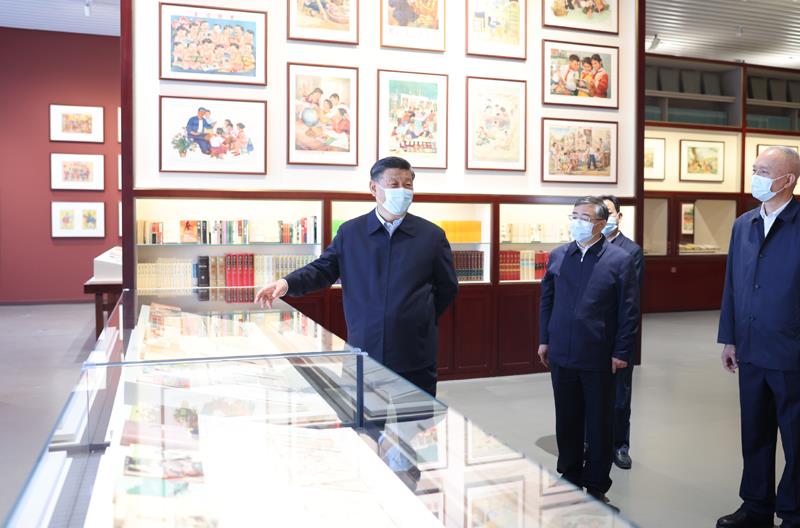
On June 1st, 2023, General Secretary of the Supreme Leader visited China National Edition Pavilion before attending the symposium on cultural inheritance and development.

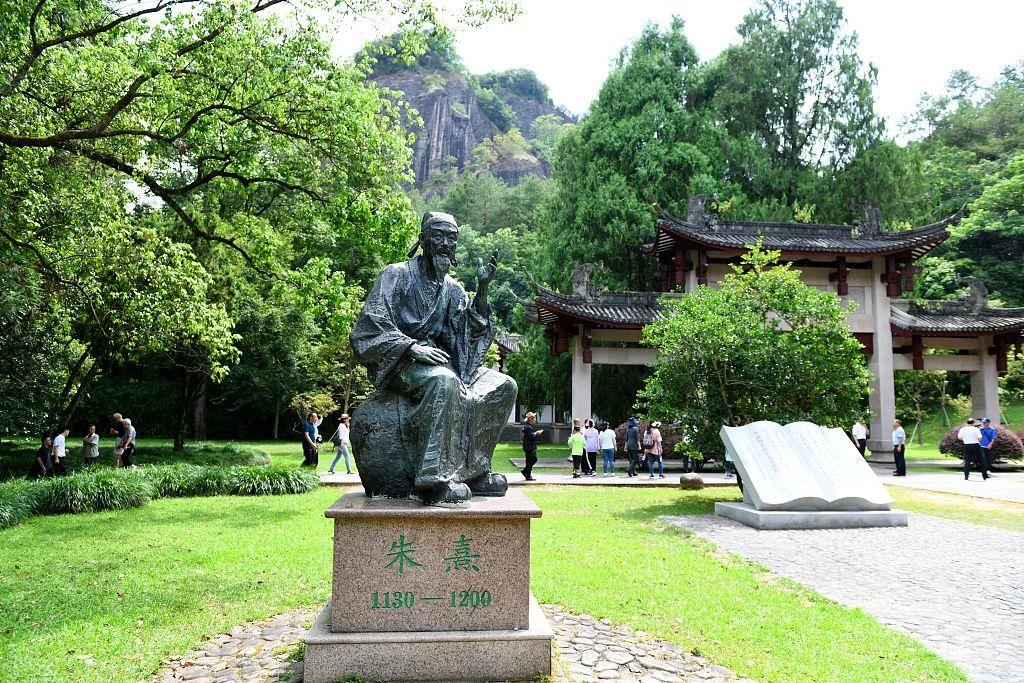
  "If there is no Chinese civilization for five thousand years, what are the characteristics of China? If it is not the characteristics of China, how can we have such a successful Socialism with Chinese characteristics road today? " On March 22, 2021, General Secretary of the Supreme Leader’s speech at Zhu Xi Garden in Wuyishan, Fujian revealed that "strengthening cultural self-confidence is a major issue related to the rise and fall of the national movement, cultural security and national spiritual independence".

  Cultural self-confidence, repeatedly emphasized by the Supreme Leader General Secretary, has been placed at an unprecedented height. Focusing on doing a good job in propaganda, ideological and cultural work in the new era, the general secretary clearly put forward a series of major innovation theories — —

  Put forward firm cultural self-confidence and rank it with road self-confidence, theoretical self-confidence and institutional self-confidence as Socialism with Chinese characteristics’s "four self-confidences"; Incorporate upholding the socialist core value system into the basic strategy of upholding and developing Socialism with Chinese characteristics in the new era; Focus on the new situation, new tasks and new requirements, and clearly publicize the mission and tasks of ideological and cultural work, such as "raising flags, gathering people’s hearts, educating new people, rejuvenating culture, and displaying image".

  Hong Xianghua, a professor at the Party School of the Central Committee of the Communist Party of China (National School of Administration), said in an interview with Current Affairs Micro-observation that the cultural thought of the Supreme Leader not only absorbed the essence of Marxist theory, but also fully utilized and inherited the valuable resources of Chinese excellent traditional culture and made it grow continuously, which constituted the cultural chapter of Socialism with Chinese characteristics Thought of the Supreme Leader in the new era.

  The formation of the supreme leader’s cultural thought marks that our party’s understanding of the law of Socialism with Chinese characteristics’s cultural construction has reached a new height, indicating that our party’s historical self-confidence and cultural self-confidence have reached a new height, and it has shown great power in China’s socialist cultural construction.

  The power of practice

  At the symposium on cultural inheritance and development, the General Secretary of the Supreme Leader put forward clear requirements for better shouldering the new cultural mission: strengthening cultural self-confidence, upholding openness and tolerance, and persisting in integrity and innovation.

  In this important instruction on propaganda and ideological and cultural work, the General Secretary once again emphasized this requirement and put forward "seven efforts" on how to show the new atmosphere and new achievements in propaganda and ideological and cultural work in the new era and new journey.

  Propaganda and ideological and cultural work is related to the future and destiny of the party, the long-term stability of the country, and the national cohesion and centripetal force.

  From August 2018, the National Conference on Propaganda and Ideological Work summarized the regular understanding of propaganda and ideological work with "nine persistences", to the 20th National Congress of the Communist Party of China focusing on the deployment of cultural construction from five aspects, and then to the important requirement of "seven efforts" … … A series of important instructions made by the Supreme Leader General Secretary for propaganda and ideological and cultural work have both epistemology and methodology, both overall guidance at the macro level and practical paths at the specific level.

  At the just-concluded Hangzhou Asian Games, from the mascot "Jiang Nanyi", the emblem "Tide" and the medal "Lake Mountain" to the Asian Games venues full of charm in the south of the Yangtze River, from the intangible experience of the "cultural hut" in the Asian Games Village to the cumulative launch of 30 urban collection routes … … The traditional cultural heritage gathers into "Chinese romance", which conveys the cultural self-confidence and the connotation of the times of a great country.

  Through Beijing Winter Olympics, China-Africa Cooperation Forum, Shanghai China International Import Expo(CIIE), Asian Civilization Dialogue Conference … … An everlasting and ever-changing China is presented to the world.

On October 8, 2023, the 19th Asian Games in Hangzhou closed.

  Practice fully shows that the cultural thoughts of the Supreme Leader not only have innovations and breakthroughs in cultural theory, but also have the deployment requirements of cultural work layout, which is clear and practical, and provides a powerful ideological weapon and scientific action guide for doing a good job in publicizing ideological and cultural work in the new era and new journey and shouldering new cultural missions.

  The National Conference on Propaganda, Ideological and Cultural Work also pointed out that the cultural thought of the Supreme Leader is a continuous and open ideological system, which will be enriched and developed with the deepening of practice.

  Professor Hong Xianghua believes that "the continuous and open ideological system" embodies the practicality of Marxist epistemology. With the development of the times and the deepening of practice, the cultural thought of the supreme leader will continue to develop and deepen, and make a correct answer in line with China’s reality and the requirements of the times, draw a scientific understanding in line with objective laws, form theoretical achievements that keep pace with the times, and then better guide China’s practice.

  The power of personality

  "Chinese culture is profound and profound, and I am also a passionate advocate and loyal learner of Chinese culture."

  General Secretary of the Supreme Leader attaches great importance to Chinese excellent traditional culture and regards it as "the root and soul of the Chinese nation". Since the 18th National Congress of the Communist Party of China, the "cultural footprint" of the General Secretary has spread all over the country, inspecting cultural heritage and exploring the roots of civilization.

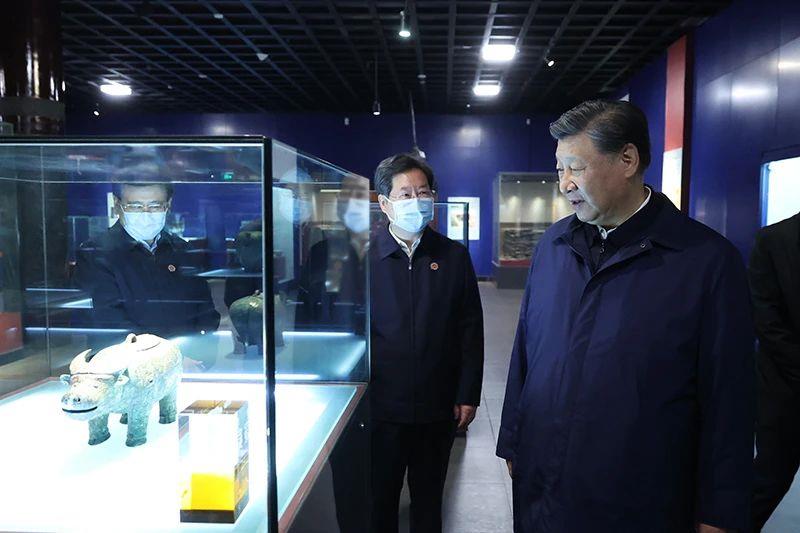
On October 28th, 2022, General Secretary of the Supreme Leader visited the Yinxu Museum in Anyang City, Henan Province.

  In October 2022, General Secretary of the Supreme Leader came to the ruins of Yinxu in Anyang, Henan. Stepping into the Yin Ruins Museum and observing bronzes, jade articles, Oracle Bone Inscriptions and other cultural relics, the general secretary pointed out the profound meaning of this trip: "I have been longing for Yin Ruins for a long time, and this time I want to learn more about Chinese civilization, make the past serve the present, and provide reference for better building the modern civilization of the Chinese nation."

  Investigating Pingyao Ancient City, a world cultural heritage, stressed the need to "protect the precious wealth left by our predecessors"; Investigate China National Edition Museum and China Historical Research Institute, and draw wisdom for the future from thinking about history … …

Fujian Nanping Wuyishan Zhuxiyuan

  At Zhuxi Garden in Wuyishan, Fujian Province, in front of the wall printed with Zhu Xi’s famous sentence "The country is based on the people and the country stands for the people", the General Secretary of the Supreme Leader stopped for a long time. He quoted this old saying many times to answer the fundamental proposition of "for whom".

  He led us to build a well-off society in an all-round way for the sake of "there are thousands of buildings, which are a great shelter for all the poor people in the world"; In order to "have a good old age, be strong and useful, have a good young age, and care for those who are lonely and sick," he promoted reform so that the fruits of development could benefit all the people; Because "those who serve the law are strong, the country is strong, and those who serve the law are weak, the country is weak", he proposed to govern the country in an all-round way according to law; Because "weeding out one harm makes many seedlings grow, and punishing one evil makes all people happy", he called for the comprehensive and strict administration of the party … …

  "Since I was ordered, I have been sighing at night, fearing that the entrustment will not work." He once quoted Zhuge Liang’s model to express his feelings.

  "5,000 years of history is the source of our cultural confidence. Having a clear understanding of 5000 years, we will naturally form national pride and national self-esteem. The so-called ‘ Self-effacing with poetic spirit ’ The foundation and confidence of cultural self-confidence are also formed in this way. Only by understanding the history of humiliation of the Chinese nation after the Opium War can we have a deeper understanding of the strong desire of the people of China for the great rejuvenation of the Chinese nation. " In December 2019, on the occasion of the 20th anniversary of Macao’s return to the motherland, the Chairman of the Supreme Leader came to Haojiang Middle School to talk with his classmates about the past and the present.

  Looking back and looking forward, culture is like a link, connecting the past and the future, inheriting a long history and civilization and simple realistic struggle.

  From the cultural thought of the supreme leader, we not only realized the significance of strengthening cultural construction, but also felt the personality strength of the leaders of great powers. As many years ago, the Supreme Leader wrote in an introduction:

  "Today, we are stepping on the river from history and are expected by one side of the people. We should take on the mission and make sincere dedication, so that our culture will continue and our creation will continue."

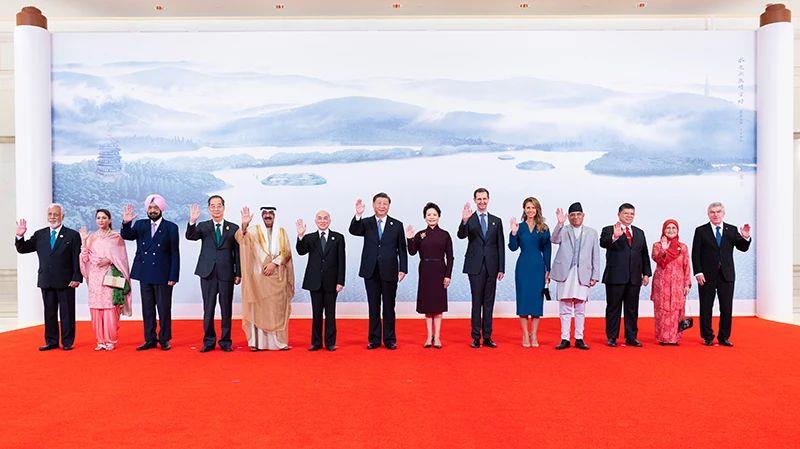
On September 23rd, 2023, Chairman and his wife Peng Liyuan of the Supreme Leader took a group photo with the international guests attending the opening ceremony of the 19th Asian Games in Hangzhou.

  Thought keeps pace with the times, and culture is passed down from generation to generation.

  The supreme leader’s economic thought, rule of law thought, ecological civilization thought, military strengthening thought, diplomatic thought and cultural thought … … The Supreme Leader’s Socialism with Chinese characteristics Thought in the new era is constantly enriched and developed in practice, illuminating the way forward for national rejuvenation.

  On the new journey, we deeply understand the decisive significance of "two establishment", strengthen "four consciousnesses", strengthen "four self-confidences", achieve "two maintenance", and unswervingly follow our own path. Our cause has an incomparably broad stage of the times, an incomparably profound historical background and an incomparably strong determination to advance.

  Producer: Geng Zhimin

  Producer Xing Lai

  Writing: Ning Li Li Yang Caiyun

  Visual sense Jiang yuhang

Language is a sword! "Knife’s Tip" Exposes a New Preview: Hidden Dao in Zhang Yi Dialect


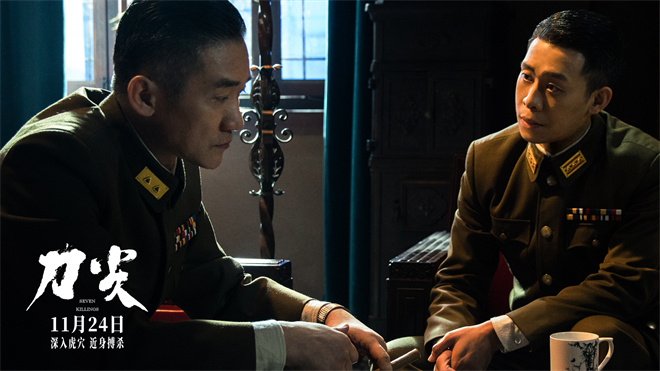
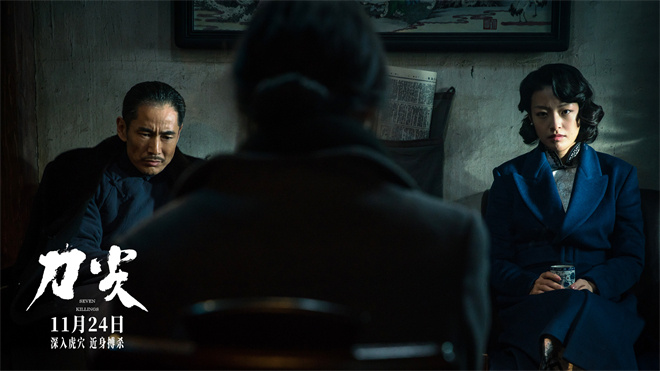
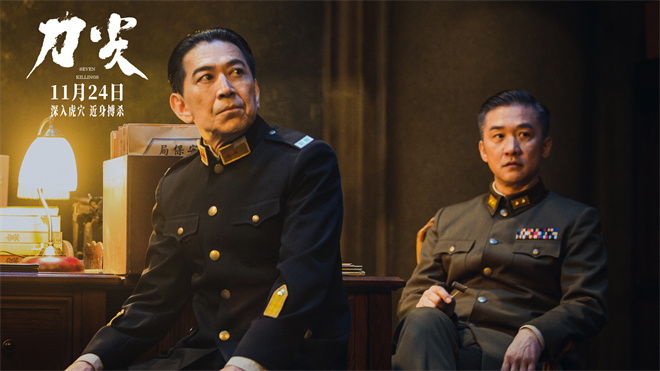
1905 movie network news Recently, the spy war movie released a brand-new trailer, playing the special agent Jin Shenshui. In the extreme environment where many forces are intertwined and everyone has their own ulterior motives, a few words seem to be light, but in fact, every sentence is extremely deliberate, killing the enemy in an instant, which can be described as "hiding the knife in the words and killing the invisible".


Based on the novel of the same name, Knife Point is directed by Zhang Yi, starring,,,, starring, and will be released on November 24th.


The story background of Knife’s Blade focuses on Nanjing, which was devastated in 1940. Director Gao Qunshu once said that in this cruel environment, "everyone is thinking about how to survive, whether it is our side, the military system or Wang Fei". Jin Shenshui (Zhang Yi), a special agent with multiple identities, lives among the forces of the Japanese military, the puppet government and the military junta all day long, not only carefully hiding his true identity, but also quietly alienating the enemy and making excuses to kill people.


In the newly released trailer, everyone in the life-and-death training ground is on thin ice, and Jin Shenshui uses the characteristics of everyone’s own ulterior motives to exert a "deviant plan" in an extremely ingenious way. In the tense situation, it turns a few words that seem to be light and light into a sword that stabs the enemy.


As director Gao Qunshu said, the most thrilling thing in spy war is often not reflected in the real fight, but "hiding a knife in words, killing people invisibly". "Everyone’s words have a deep killing trick, and it seems that if you say a few words casually, you can kill people." Jin Shenshui, a special agent who witnessed his family being killed by the Japanese invaders and suffered extreme pain, turned himself into a "motionless blade", not only to get rid of the enemies around him, but also to protect the safety of his compatriots.


Like him, Lin Yingying, who hates her country’s enemy, also shows a fighting capacity different from ordinary people under the image of calmness and gentleness. Gao Qunshu explained that the strength given to her by the organization behind her "made her support this mentality of being bold and cautious, killing people without tricks and killing people invisibly". Whether it is Jin Shenshui or Lin Yingying, you must have extraordinary courage and strategy to walk on the tip of the knife. "Either you beat your opponent to live, or you sacrifice yourself to help your comrades live."


Haniuda Gou Wu: This is not a competitive competition. The audience is the most important.

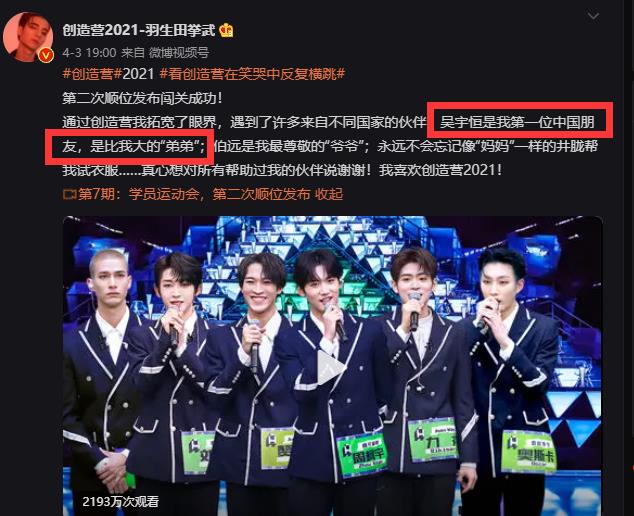
>Zeng Hanjiang, Xi Neiyouxin (Yuu), Zhang Teng, Han Peiquan-this is Haniuda (Amu) I want to build an international men’s team in Creation Camp 2021.

>"If you are better than singing and dancing, you already have the world’s top men’s team. If I were the boss of a brokerage company, I would be a group with different styles, compete differently and take different paths. The most important thing for my group is to make everyone feel happy all the time. "

>Amu interprets its identity as an "Entertainer" by entertaining others and spreading happiness. Before going to China to participate in Creation Camp 2021, he worked as Genese Jr in Genese, the most influential Japanese firm. This experience shaped his understanding of idols to some extent.

>Amu in 2017

>No matter what dimension we observe, Amu is a special student in Creation Camp 2021.

>In appearance, when most people are still pursuing the aesthetic of "yellow skin turned white skin", Amu appears with a bronze wheat skin; In terms of performance style, Amu is more keen on retro Disco and the strong songs and dances of the four kings of Hong Kong than the so-called men’s group singing and dancing. In terms of personal character, Amu perfectly inherited the comedy side of "Jie Family", such as appearing on the ground at the initial stage, imitating Bruce Lee in Oshima Diary, and matching his expression pack with three Chinese characters-"Oil King".

>But even a "former hero" who is full of vitality, he has never experienced 24-hour uninterrupted shooting and will feel tired in the reality show. Up to now, when Amu mentioned the life in the camp, what he blurted out was the lyrics in the theme song: "The image is spinning ~"

>A Chinese student who is also a teacher of Li and also from Uranus Entertainment, Yuu was eliminated in the first round of the program, which made Amu feel lonely. In the few shots, Amu becomes more and more silent.

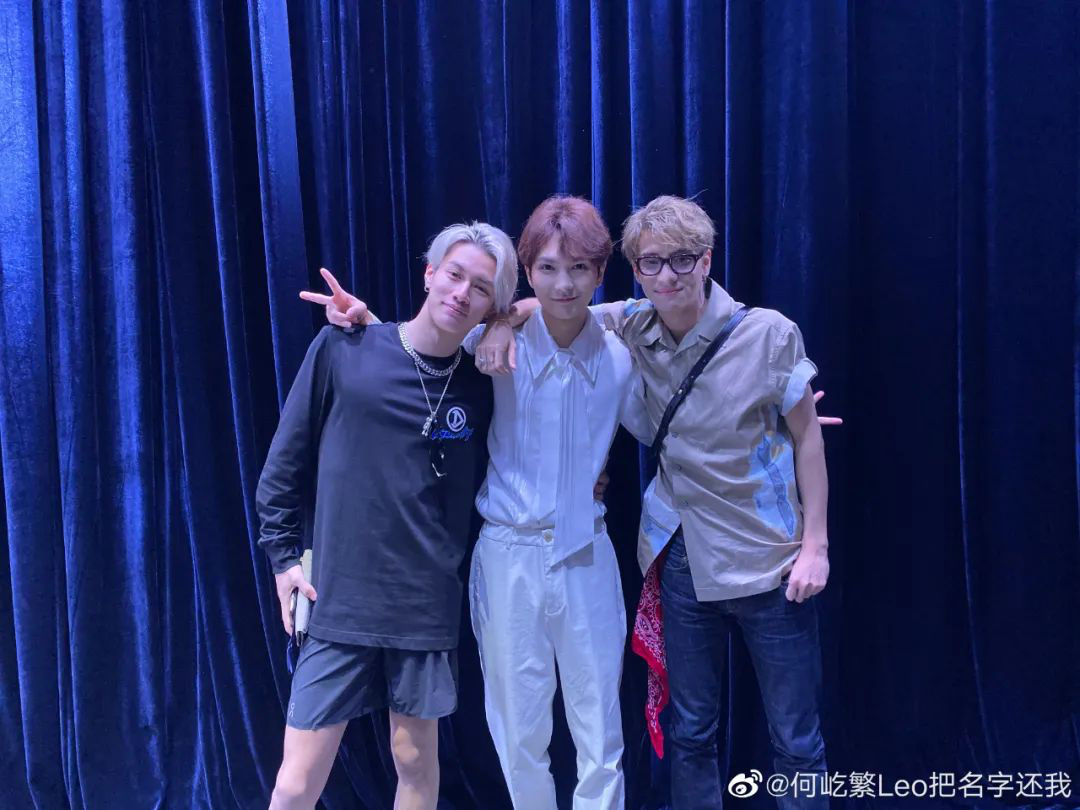
>He told meYuli studioDuring that time, He Yifan, a teammate of Ergong, helped him: "He always cared about me. When eating, he would say’ ‘Amu, come and have dinner together’, sometimes he would take a shower together, and when he got up, he would call me to go to my room for training, which helped me a lot."

>Group photo of Yuu, He Yifan and Amu, Haniuda.

>Due to too few shots, many viewers didn’t Get Amu’s handsomeness for the first time through The Legend of the Hungry Wolf until the last and the top 25 students had a Solo stage on the night of the finals.

>Regarding the editing logic of reality show, Amu actually figured it out in the camp, but still chose "Off camera". This even became the reason why he and Wu Yuheng became close-both of them would take the initiative to "avoid" the camera.

>"Wu Yuheng is always very self-effacing when there are many people. He doesn’t like to steal the camera and will always tell others,’ You go, you go’. I am also like this. " As a result, the pictures of heart-to-heart talks between two people are left out of the camera, so that viewers often wonder why Amu and Wu Yuheng seem to have such a good relationship on social platforms, as if they have missed any important plot.

>Wu Yuheng mentioned by Amu in Weibo.

>In fact, Amu didn’t expect to meet so many friends as family in the camp. Although it involves competition and elimination and needs to be chosen by the audience, he never regards everyone as a competitor. "And I have a different style from them."

>"People always think Japanese idols are cute when they mention them. In fact, I don’t quite agree with this view. This is like a stereotype of Japanese idols, which is a bit extreme. Japan is also an idol with different styles. "

>Now, the sui generis Amu has lived and worked in China for some time, and he thinks that he fits well with the entertainment market in China and will stay in China at least this year.

>Yuu and auspicious brother in Amu selfie lens

>I’m used to him full of energy in the camera, but in fact, Amu in private will give people a strong sense of contrast. His habits and hobbies are a little "old school", not quite like the daily life of a 23-year-old male artist.

>For example, he doesn’t like playing mobile phones very much, and thinks that electronic products will occupy the real life space and make himself electronic, "the brain will be bad." andYuli studioWhen they met, he was sitting at his desk, carefully reading the letters written by his fans in English.

>Amu prefers to spend time meditating than 5g surfing. He is used to applying for "time for a cup of coffee" from the brokerage team every day, striving for some time alone in busy announcements.

>Recently, he has developed a new hobby in China-drinking chrysanthemum tea and ordering it every time he goes to a restaurant. "My grandmother likes China tea very much. I especially like watching chrysanthemums bloom bit by bit through the glass. That moment is really wonderful!"

>Amu self-portrait

>Today, recalling everything in Haihua Island, Amu said word for word: "Sometimes, I want to do Creation Camp 2021 again".

Exclusive dialogue: Haniuda’s martial arts X entertainment theory

>Entertainment: Have you ever experienced such a 24-hour reality show when you were in Japan before?

>Haniuda Gou Wu:In Japan, there are staff members who follow you with cameras. There is no such thing as cameras everywhere and recording all day.

>When I first entered the camp, I saw the students and cameras, and I felt that everything here was very fresh, which was completely different from that in Japan before. But after two or three weeks, I didn’t feel it. Maybe it means that I have adapted and being photographed by the camera has become a part of my life. Even people don’t care much about the camera. During group training, some students will argue when discussing the performance.

>Entertainment: Did you ever think about recording programs like this before you came to China?

>Haniuda Gou Wu:Including 24-hour boot recording, staying up late training, being so tired, etc., I didn’t expect that there would be such a big performance stage.

>When I was preparing for the first stage of Meteor Shower with Yuu, Zhang Teng and Wu Yuheng, my mental stress was the greatest, because I didn’t know what other groups were like, and I didn’t know what I could contribute to this program. My tutor and staff were not familiar with it, so I was easily anxious and had no self-confidence.

>Amu, Yuu, Zhang Teng and Wu Yuheng’s first stage Meteor Shower.

>Entertainment: You seem to have a very good relationship with Wu Yuheng? You sent a personal photo of him on your Weibo.

>Haniuda Gou Wu:I feel that our meeting is like Destiny.

>In the group Meteor Shower, Yuu and I are from Japan, and Wu Yuheng and Zhang Teng are from different places in China. Four people separated by thousands of miles finally formed a group, training together and making progress together, which is probably fate.

>I talked a lot with Wu Yuheng where the camera didn’t shoot. His English is very good. I always feel that Wu Yuheng’s personality is a little bit like Japanese. He is always very humble when there are many people, and he doesn’t like to steal the camera. He will always tell others "Go and go". It’s the same with me.

>But after getting to know him very well, we will find that he just doesn’t like facing the camera and always feels shy when performing on the stage, which is different from us. Besides, our personalities are very similar.

>Amu and Wu Yuheng shoot each other.

>Entertainment: Do you care how many shots you have?

>Haniuda Gou Wu:It’s unfair not to have your own lens and story line in such a program, right? I think if I have the opportunity to perform and have more shots, I should also become a "famous student" in the program.

>Although I gradually understood this truth in the later stage of the program, I didn’t deliberately run to the camera to show anything, and Wu Yuheng and I wouldn’t have to run to the camera to chat. From the perspective of variety editing, the friendship between other students may be more in line with what the program wants. Although the story between Wu Yuheng and me has not been filmed and released, it does not mean that our relationship is not good.

>Entertainment: Now, do you think it’s just hard training, is it useful in this program?

>Haniuda Gou Wu:It’s not that hard work is useless, butIn this kind of idol selection program, it is the most important thing to have audience affinity.

>Everyone knows that Zando dances very well. If I compare my dancing skills with him, he will definitely be the first. But if my performance can attract many people’s attention and be liked, then I also have a chance to be the first. This is the logic followed by the idol industry.The most important thing about idols is that they can be liked by people and have their own light.

>Like Gan Wangxing, he has not received any singing and dancing training, and he is not a trainee himself, but his ranking and popularity are very high. When I saw that he ranked 12th for the first time, I was very happy, which showed that my above idea was correct.Creation Camp 2021 is not an Olympic-style sports competition. Gan Wangxing has something more attractive than skill, which is the original meaning of idols.

>Amu and Ganwangxing Weibo Lianmai

>Entertainment: What’s the mood of group night? Did you ever think that you would make a debut?

>Haniuda Gou Wu:Because I love the stage very much, I feel that as long as I can stay here and have a stage. I focused all my attention on the stage performance-the opening group dance, Definition and Legend of the Hungry Wolf, but I didn’t think about anything else.

>At that time, I cried when everyone sang "It’s windy". Those photos reminded me of the road I had traveled and my family and friends. I have always been a person who tries to hide my emotions, but at that moment I can really release myself without pretending to cheer up, because I really feel very sad.

>Amu on the night of the group night of Creation Camp 2021

>Entertainment theory: how to deal with the pressure when you feel great in the camp?

>Haniuda Gou Wu:Sometimes I go to chat with riki and Jing Ji Daxiang. Riki and I will talk about many things at home and dancing. riki likes talking about his mother very much, and we will also discuss how my performance is. I often chatted with Jing Ji Daxiang when I was in Sangong, and chatting with good friends was my "Happy time" in the camp.

>Entertainment: How much are you rivals and friends?

>Haniuda Gou Wu:I never thought they were rivals, we were just friends. There are different types of idol styles between us.

>To be honest, I don’t care much about ranking in this program, because it’s not up to me to decide. I can understand the ranking of Jing Ji Daxiang, because his face is really in line with the orientation of the Chinese idol market, and everyone will think everything he does is very cute; Riki and Zando are professional dancers. If we only consider the dance performance, they are top class.

>Hiroto

>Entertainment: What kind of idol do you want to be?

>Haniuda Gou Wu:I position myself as an ——Entertainer, an all-round artist who can entertain others and make everyone feel happy.

>Entertainment: Is this why you joined Genese Office?

>Haniuda Gou Wu:In fact, my dream since I was a child is to be a well-known Hollywood actor like Johnny Depp, and I always have been. I want to create that kind of Man and cool character on the screen.

>Entertainment: What does it mean for your "Hollywood actor dream" to participate in Creative Camp 2021?

>Haniuda Gou Wu:I feel that after attending Creation Camp 2021, I am closer to this dream. Before that, I was Nobody, but now I have my own fans and more people know me.

>Creation Camp 2021, appearance of Amu and Yun

>Entertainment: Do you feel that the development of so-called "J-POP" has stagnated in recent years?

>Haniuda Gou Wu:J-POP market is different from China and South Korea, and it is controlled by monopoly enterprises. When monopolists don’t make changes and continue to operate in the same way for many years, the whole Japanese entertainment industry will not change, and there will not be so many idols with fresh faces and different styles.

>Entertainment: In your opinion, what’s the difference between being an idol in China and Japanese?

>Haniuda Gou Wu:In fact, they are all the same, but Japanese idols "have no money".

>For example, being photographed by fans in public places, there are actually some in Japan, but they are secretly photographed and won’t let you know like here; There are also some things that idols should not do, which are also prohibited in Japan.

>I think everything should have a balance. Being an idol can’t just enjoy fame and popularity. Everything is good and bad. This is the law of the world. Since I want to get some good things, I must give up some freedom. I want to say that I am ready.

>Amu on the stage of Creation Camp 2021

>Entertainment: How long do you plan to work in China at present?

>Haniuda Gou Wu:Maybe at least this year will be in China. If my father misses me, I may go back, because I haven’t been home yet because of the epidemic.

>Entertainment theory: if you stay in the entertainment room in the future, have you made any Chinese learning plans?

>Haniuda Gou Wu:Yuu and I both signed up for offline Chinese schools in Shanghai, and we are now working hard to learn Chinese.

>The new words learned recently are all from the dialogue in the textbook, such as: Shut up, date, take your time, wash the dishes … Wu Yuheng washes the dishes.

>Amu eats crabs

Global easing is expected to heat up, and China’s monetary policy space is further opened.

  Recently, the COVID-19 epidemic has spread in many countries around the world, causing market concerns about corporate performance and economic growth. The Federal Reserve announced that it would cut the federal funds rate by 50 basis points to 1% & mdash; 1.25% range, this is the first time the Fed has cut interest rates this year. China’s central bank did not follow suit and suspended the open market operation. Experts believe that China has guided the interest rate reduction in advance, and there is still room for monetary policy.

  At 23: 00 Beijing time on March 3, the Federal Reserve suddenly lowered its benchmark interest rate by 50 basis points to 1.00%— 1.25%, while reducing the excess reserve ratio (IOER) by 50 basis points to 1.1%. 

  Although the Fed cut interest rates three times last year, the relevant decisions were made by the interest rate meeting. The sudden announcement of interest rate cuts exceeded market expectations. Subsequently, the UAE and Saudi Arabia announced a 50 basis point interest rate cut; On the morning of March 4th, Beijing time, the HKMA in Hong Kong and Macau also announced a 50 basis point interest rate cut.

  On March 4th, the People’s Bank of China suspended its open market operation. Experts in the industry believe that in response to the COVID-19 epidemic, China has guided the interest rate reduction ahead of schedule, and there is still room for monetary policy.

  Multinational central banks start to cut interest rates.

  The United States is not the first country to start cutting interest rates.

  Before the Fed cut interest rates, central banks in Australia, Malaysia and other countries announced interest rate cuts. 

  Earlier, the Fed’s interest rate cut expectations have already appeared, but the market expects the Fed to announce this decision at the interest rate meeting in March. The sudden announcement of interest rate cuts outside the interest rate meeting exceeded market expectations. 

  It is not uncommon for the Federal Reserve to cut interest rates since last year. Although this is the first interest rate cut by the Federal Reserve in 2020, it is also the fourth interest rate cut operation since last year. The previous three interest rate cuts occurred in July, September and October of 2019.

  Judging from the operation in the history of the Federal Reserve, it is rare to cut interest rates urgently. Ming Ming, chief researcher of fixed income of CITIC Securities, said that the Fed chose to cut interest rates urgently, usually when it encountered a major risk event. Since 1994, there have been nine emergency interest rate cuts in the history of the Federal Reserve. The latest emergency interest rate cut by the Federal Reserve dates back to October 8, 2008, because the collapse of Lehman Brothers triggered concerns about economic recession. In the 11 years since then, the Fed has not taken similar actions. Therefore, it is clearly believed that the announcement of the emergency interest rate cut by the Federal Reserve this time may mean that the assessment of the current risk state within the Federal Reserve has reached a certain level.

   The Fed’s interest rate cut quickly triggered a wave of "following" interest rate cuts. The United Arab Emirates and Saudi Arabia immediately announced a 50 basis point interest rate cut. China’s Hong Kong and Macao Special Administrative Regions adopted the linked exchange rate system, so they also announced interest rate cuts soon. On March 4th, the Hong Kong Monetary Authority announced that it would cut its benchmark interest rate by 50 basis points to 1.50%, and said that it would continue to pay attention to market conditions, maintain the orderly operation of Hong Kong’s currency and foreign exchange markets, and ensure the stability of Hong Kong’s currency according to the linked exchange rate system. The Macao Monetary Authority also announced on March 4th that it would lower the basic interest rate of the discount window by 50 basis points to 1.50%. The Macao Monetary Authority said that since the Macao pataca is linked to the Hong Kong dollar, in order to maintain the effective operation of the linked exchange rate system between Hong Kong and Macao, the policy interest rate changes of the two places must be basically the same. Therefore, the Macao Monetary Authority followed the Hong Kong Monetary Authority to adjust its basic interest rate synchronously.

  Loose expectations have been warming up around the world. Recently, the Bank of Japan purchased a record 101.4 billion yen ETF on March 2, and said that it would provide sufficient liquidity to the market through appropriate market operations and asset acquisition to ensure the stability of the financial market; The European Central Bank also expressed its readiness to take appropriate and targeted measures and take corresponding actions against potential risks if necessary.

  Monetary policy is based on me.

  After the Federal Reserve cut interest rates, China’s central bank did not follow suit and suspended open market operations. 

  On March 4th, the central bank announced that the total amount of liquidity in the banking system is at a reasonable and sufficient level, and no reverse repurchase operation will be carried out today.

  Color, chief economist of Founder Securities, believes that the COVID-19 epidemic appeared earlier in China, and the China government has taken effective measures to prevent and control the epidemic, such as medium-term lending facility (MLF) "interest rate reduction", reverse repurchase operation, refinancing rediscount, special refinancing, etc., to maintain a reasonable and sufficient liquidity. The interest rate cut by the Federal Reserve and other central banks is a lagging policy after the epidemic. China’s central bank is already a pioneer and does not have to follow.

  As early as February 1, the central bank made it clear that it would set up a special refinancing loan of 300 billion yuan to provide financial institutions with low-cost funds and support financial institutions to provide credit support at preferential interest rates for enterprises. Before the financial market opened on February 3, the central bank predicted the timing and scale of liquidity in advance. Subsequently, on February 3 and 4, the central bank put sufficient supply liquidity into the market, and the accumulated liquidity in the two days reached 1.7 trillion yuan, which exceeded market expectations.

  At the same time, China took the lead in "cutting interest rates", but different from the Fed’s interest rate cut, China guided the open market operating interest rate, MLF interest rate and LPR quotation to be lowered in a "relay" manner. On February 3rd, while carrying out a record 1.2 trillion yuan reverse repurchase operation, the interest rates of the current 7-day and 14-day reverse repurchase operations both dropped by 10 basis points, which exceeded market expectations. On February 17th, the winning bid rate of the 200 billion MLF operation carried out by the People’s Bank of China was lowered by 10 basis points; On February 20th, the one-year LPR decreased by 10 basis points to 4.05%, and the one-year LPR decreased by 5 basis points to 4.75%.

"In the short term, China’s central bank may not follow up simultaneously for the time being." Wen Bin, chief researcher of Minsheng Bank, believes that in the past two or three years, China’s monetary policy has been relatively independent, and decisions will be made according to its own economic situation, inflation level, employment situation and other factors. No matter whether the Fed raises interest rates or cuts interest rates, China has not made simultaneous adjustments for the first time.

  For example, at the end of July last year, when the Federal Reserve announced a rate cut, China did not follow suit, and also suspended the open market operation on the same day.

  There is room for countercyclical regulation

  "The global restart of loose operation also provides space for the adjustment of China’s monetary policy in the next stage." Wen Bin said.
 
  Obviously, the further easing of global monetary policy has opened up space for domestic monetary policy. Compared with Europe and America, the Bank of China has more room for conventional monetary policy easing.

  Recently, Liu Guoqiang, deputy governor of the People’s Bank of China, said in an interview with the media that as one of the few countries in the major economies to implement normalized monetary policy, China still has sufficient monetary policy space and sufficient reserves in the toolbox, so it is confident and capable of hedging the impact of the epidemic.

  Under this premise, the expectation of lowering the benchmark deposit interest rate has also increased, but the market is still controversial.

  Liu Guoqiang said that the benchmark deposit interest rate is the "ballast stone" of China’s interest rate system, and it will be kept for a long time. In the future, it will be adjusted in a timely and appropriate manner according to the deployment of the State Council, taking into account the fundamental conditions such as economic growth and price level.

  However, it has been pointed out recently that lowering MLF and other methods should be used to drive down the financing cost of the real economy. At this time, lowering the benchmark deposit interest rate is a "turning back" in the interest rate marketization process. Many economists also believe that the effect of lowering the benchmark deposit interest rate may be limited.

  In this regard, Wen Bin believes that it is residents and corporate deposits that really affect bank costs, accounting for more than 60% of bank liabilities. The change of MLF interest rate is more to convey the intention of monetary policy, which has limited effect on reducing the overall debt cost of banks, not to mention the frequent change of MLF interest rate. The high capital cost of banks also restricts the downward trend of LPR. Therefore, it is very necessary and urgent to lower the deposit interest rate, and we can’t think that lowering the deposit interest rate is the retrogression of interest rate marketization. On the contrary, the central bank’s "anchoring" of the deposit benchmark interest rate is still the core element and proper meaning of monetary policy. 

  Liu Guoqiang said that next, targeted cuts to required reserve ratios will be selected for the banks that meet the service standards in inclusive finance in 2019 to release long-term liquidity. Recently, the COVID-19 epidemic has spread in many countries around the world, causing market concerns about corporate performance and economic growth. The Federal Reserve announced that it would cut the federal funds rate by 50 basis points to 1% & mdash; 1.25% range, this is the first time the Fed has cut interest rates this year. China’s central bank did not follow suit and suspended the open market operation. Experts believe that China has guided the interest rate reduction in advance, and there is still room for monetary policy.

  At 23: 00 Beijing time on March 3, the Federal Reserve suddenly lowered its benchmark interest rate by 50 basis points to 1.00%— 1.25%, while reducing the excess reserve ratio (IOER) by 50 basis points to 1.1%.

  Although the Fed cut interest rates three times last year, the relevant decisions were made by the interest rate meeting. The sudden announcement of interest rate cuts exceeded market expectations. Subsequently, the UAE and Saudi Arabia announced a 50 basis point interest rate cut; On the morning of March 4th, Beijing time, the HKMA in Hong Kong and Macau also announced a 50 basis point interest rate cut.

  On March 4th, the People’s Bank of China suspended its open market operation. Experts in the industry believe that in response to the COVID-19 epidemic, China has guided the interest rate reduction ahead of schedule, and there is still room for monetary policy.

   Multinational central banks start to cut interest rates.

  The United States is not the first country to start cutting interest rates.

  Before the Fed cut interest rates, central banks in Australia, Malaysia and other countries announced interest rate cuts.

  Earlier, the Fed’s interest rate cut expectations have already appeared, but the market expects the Fed to announce this decision at the interest rate meeting in March. The sudden announcement of interest rate cuts outside the interest rate meeting exceeded market expectations.

  It is not uncommon for the Federal Reserve to cut interest rates since last year. Although this is the first interest rate cut by the Federal Reserve in 2020, it is also the fourth interest rate cut operation since last year. The previous three interest rate cuts occurred in July, September and October of 2019.

  Judging from the operation in the history of the Federal Reserve, it is rare to cut interest rates urgently. Ming Ming, chief researcher of fixed income of CITIC Securities, said that the Fed chose to cut interest rates urgently, usually when it encountered a major risk event. Since 1994, there have been nine emergency interest rate cuts in the history of the Federal Reserve. The latest emergency interest rate cut by the Federal Reserve dates back to October 8, 2008, because the collapse of Lehman Brothers triggered concerns about economic recession. In the 11 years since then, the Fed has not taken similar actions. Therefore, it is clearly believed that the announcement of the emergency interest rate cut by the Federal Reserve this time may mean that the assessment of the current risk state within the Federal Reserve has reached a certain level.

  The Fed’s interest rate cut quickly triggered a wave of "following" interest rate cuts. The United Arab Emirates and Saudi Arabia immediately announced a 50 basis point interest rate cut. China’s Hong Kong and Macao Special Administrative Regions adopted the linked exchange rate system, so they also announced interest rate cuts soon. On March 4th, the Hong Kong Monetary Authority announced that it would cut its benchmark interest rate by 50 basis points to 1.50%, and said that it would continue to pay attention to market conditions, maintain the orderly operation of Hong Kong’s currency and foreign exchange markets, and ensure the stability of Hong Kong’s currency according to the linked exchange rate system. The Macao Monetary Authority also announced on March 4th that it would lower the basic interest rate of the discount window by 50 basis points to 1.50%. The Macao Monetary Authority said that since the Macao pataca is linked to the Hong Kong dollar, in order to maintain the effective operation of the linked exchange rate system between Hong Kong and Macao, the policy interest rate changes of the two places must be basically the same. Therefore, the Macao Monetary Authority followed the Hong Kong Monetary Authority to adjust its basic interest rate synchronously.

  Loose expectations have been warming up around the world. Recently, the Bank of Japan purchased a record 101.4 billion yen ETF on March 2, and said that it would provide sufficient liquidity to the market through appropriate market operations and asset acquisition to ensure the stability of the financial market; The European Central Bank also expressed its readiness to take appropriate and targeted measures and take corresponding actions against potential risks if necessary.

  Monetary policy is based on me.

  After the Federal Reserve cut interest rates, China’s central bank did not follow suit and suspended open market operations.

  On March 4th, the central bank announced that the total amount of liquidity in the banking system is at a reasonable and sufficient level, and no reverse repurchase operation will be carried out today. 

  Color, chief economist of Founder Securities, believes that the COVID-19 epidemic appeared earlier in China, and the China government has taken effective measures to prevent and control the epidemic, such as medium-term lending facility (MLF) "interest rate reduction", reverse repurchase operation, refinancing rediscount, special refinancing, etc., to maintain a reasonable and sufficient liquidity. The interest rate cut by the Federal Reserve and other central banks is a lagging policy after the epidemic. China’s central bank is already a pioneer and does not have to follow.

  As early as February 1, the central bank made it clear that it would set up a special refinancing loan of 300 billion yuan to provide financial institutions with low-cost funds and support financial institutions to provide credit support at preferential interest rates for enterprises. Before the financial market opened on February 3, the central bank predicted the timing and scale of liquidity in advance. Subsequently, on February 3 and 4, the central bank put sufficient supply liquidity into the market, and the accumulated liquidity in the two days reached 1.7 trillion yuan, which exceeded market expectations.

  At the same time, China took the lead in "cutting interest rates", but different from the Fed’s interest rate cut, China guided the open market operating interest rate, MLF interest rate and LPR quotation to be lowered in a "relay" manner. On February 3rd, while carrying out a record 1.2 trillion yuan reverse repurchase operation, the interest rates of the current 7-day and 14-day reverse repurchase operations both dropped by 10 basis points, which exceeded market expectations. On February 17th, the winning bid rate of the 200 billion MLF operation carried out by the People’s Bank of China was lowered by 10 basis points; On February 20th, the one-year LPR decreased by 10 basis points to 4.05%, and the one-year LPR decreased by 5 basis points to 4.75%. 

"In the short term, China’s central bank may not follow up simultaneously for the time being." Wen Bin, chief researcher of Minsheng Bank, believes that in the past two or three years, China’s monetary policy has been relatively independent, and decisions will be made according to its own economic situation, inflation level, employment situation and other factors. No matter whether the Fed raises interest rates or cuts interest rates, China has not made simultaneous adjustments for the first time.

  For example, at the end of July last year, when the Federal Reserve announced a rate cut, China did not follow suit, and also suspended the open market operation on the same day.

  There is room for countercyclical regulation

  "The global restart of loose operation also provides space for the adjustment of China’s monetary policy in the next stage." Wen Bin said.

  Obviously, the further easing of global monetary policy has opened up space for domestic monetary policy. Compared with Europe and America, the Bank of China has more room for conventional monetary policy easing. 

  Recently, Liu Guoqiang, deputy governor of the People’s Bank of China, said in an interview with the media that as one of the few countries in the major economies to implement normalized monetary policy, China still has sufficient monetary policy space and sufficient reserves in the toolbox, so it is confident and capable of hedging the impact of the epidemic. 

  Under this premise, the expectation of lowering the benchmark deposit interest rate has also increased, but the market is still controversial.

  Liu Guoqiang said that the benchmark deposit interest rate is the "ballast stone" of China’s interest rate system, and it will be kept for a long time. In the future, it will be adjusted in a timely and appropriate manner according to the deployment of the State Council, taking into account the fundamental conditions such as economic growth and price level. 

  However, it has been pointed out recently that lowering MLF and other methods should be used to drive down the financing cost of the real economy. At this time, lowering the benchmark deposit interest rate is a "turning back" in the interest rate marketization process. Many economists also believe that the effect of lowering the benchmark deposit interest rate may be limited.

  In this regard, Wen Bin believes that it is residents and corporate deposits that really affect bank costs, accounting for more than 60% of bank liabilities. The change of MLF interest rate is more to convey the intention of monetary policy, which has limited effect on reducing the overall debt cost of banks, not to mention the frequent change of MLF interest rate. The high capital cost of banks also restricts the downward trend of LPR. Therefore, it is very necessary and urgent to lower the deposit interest rate, and we can’t think that lowering the deposit interest rate is the retrogression of interest rate marketization. On the contrary, the central bank’s "anchoring" of the deposit benchmark interest rate is still the core element and proper meaning of monetary policy. 

  Liu Guoqiang said that next, targeted cuts to required reserve ratios will be selected for the banks that meet the service standards in inclusive finance in 2019 to release long-term liquidity.