[Black Inventory] In 2018, so many environmental assets were auctioned by the judiciary.

  The past 2018 was a year of violent turmoil in the environmental industry. Policies, markets and capital have all changed, and the pressure on enterprises has increased sharply, making it difficult to survive. Under this circumstance, there have been many events such as large-scale bargain-hunting of state-owned assets and equity assets trading of listed companies. In addition to these well-known large-scale transactions in the industry, there are more small and medium-sized equity assets transactions happening constantly. According to the statistics of China Water Network, there were … many, many environmental assets auctioned by the judiciary this year. This paper takes stock of some typical cases for reference.

  The past 2018 was a year of violent turmoil in the environmental industry. Policies, markets and capital have all changed, and the pressure on enterprises has increased sharply, making it difficult to survive. Under this circumstance, there have been many events such as large-scale bargain-hunting of state-owned assets and equity assets trading of listed companies. In addition to these well-known large-scale transactions in the industry, there are more small and medium-sized equity assets transactions happening constantly. According to the statistics of China Water Network, there were … many, many environmental assets auctioned by the judiciary this year. This paper takes stock of some typical cases for reference.

  Equity category

  Shenwu Energy Saving and Shenwu Environmental Protection (300156, stock bar) held by Shenwu Technology Group Co., Ltd.

  Subject matter: 31,820,462 shares restricted by Shenwu Energy Saving and 929,415 shares restricted by Shenwu Environmental Protection.

  Starting price: 183,238,473.2; It has been filmed.

  Beijing Chenxing Jiye Environmental Protection Technology Group Co., Ltd. holds 17% equity of Hunan Hequan Industrial Co., Ltd.

  Starting price: 22,672,400 yuan; Not finished.

  10% equity of Ningxia Ningdong Resource Recycling Technology Development Co., Ltd. held by Ningxia Renhe Environmental Protection Technology Development Co., Ltd.

  Starting price: 20,312,945.84; Not finished.

  300,000 yuan equity of Cixi Xinlianxin Environmental Protection Technology Co., Ltd.

  Starting price: 210,000; Not finished.

  Equity of Jiangsu Jinhu Rural Commercial Bank Co., Ltd. held by Jiangsu Jiuzhou Water Co., Ltd.

  Transaction price: 1,608,600 yuan.

  48% shareholder’s equity of Sihui Tiankuo Water Treatment Co., Ltd. held by Zunhuang Advertising Company.

  Starting price: 26,081,330.4 yuan has been auctioned.

  73% equity of Xintaiyuan Sewage Treatment Co., Ltd., Yangdong District, Yangjiang City

  Starting price: 14,342,093.92 yuan has been auctioned.

  17% equity of Anhui Tongbao Environmental Protection Technology Co., Ltd.

  Starting price: 6,200,000 yuan has been auctioned off.

  Value of all shareholders’ rights and interests of Huizhou Tianyuan Environmental Protection Water Co., Ltd.

  Starting price: 55,040,000 yuan has been auctioned off.

  Equity of Hainan Biyang Environmental Protection Technology Co., Ltd.

  The transaction price is 350,000 yuan.

  48.5% equity of Anhui Fumao Environmental Protection Technology Co., Ltd. held by Anhui Fumao Renewable Resources Recycling Technology Co., Ltd.

  The transaction price is 31,889,529 yuan.

  Hangzhou Fuxing Group Co., Ltd. on the equity of Qingdao Fuxing Environmental Protection Engineering Co., Ltd.

  Starting price: 237,000 yuan has been auctioned.

  8% equity of Yixing Ruixin Investment Guarantee Co., Ltd under the name of Jiangsu Yujie Environmental Technology Co., Ltd.

  The transaction price is 807,300 yuan

  15% equity value of Nanjing Kai Kai Kai Sheng Kai Neng Environmental Protection Energy Co., Ltd. held by Guangdong Kaineng Environmental Protection (300272, Guba) Energy Co., Ltd.

  The current price of 80,000,000 yuan has been auctioned

  Liaoning Fuxing Hengyang Environmental Protection Engineering Co., Ltd. holds 100% equity share.

  The transaction price is 809,018 yuan.

  35% equity of Wuyuan County Sewage Treatment Co., Ltd. held by Shanghai Optimized Construction Technology Company.

  Transaction price: 543,000 yuan

  Company as a whole

  Overall assets of Jiangsu Luyiyuan Environmental Protection Technology Co., Ltd.

  The transaction price is 93,724,131 yuan.

  All property of xinmi city Huanxin Domestic Waste Treatment Co., Ltd.

  Starting price: 25,255,454.4 has been auctioned off.

  Overall assets of Jiangsu Xinfeng Environmental Engineering Technology Co., Ltd.

  Transaction price: 19,440,000

  Overall assets of Jiangsu Jinjieyu Environmental Protection Equipment Co., Ltd.

  Transaction price: 15,746,768 yuan.

  54 patent assets under the name of Jiangsu Xinzhong Environmental Protection Co., Ltd.

  The transaction price is 245,300 yuan

  Overall assets of Yixing Guohao Bio-environmental Protection Co., Ltd.

  The transaction price is 7,136,730 yuan.

  Overall assets of Jiangsu Ruitianshui Treatment Technology Co., Ltd.

  Transaction price: 1,004,200 yuan.

  Assets of Jiangsu Zhengda Environmental Protection Engineering Co., Ltd. (real estate and ancillary facilities, including land transfer fees)

  The transaction price is 27,000,000 yuan.

  The real estate and equipment owned by Hangzhou Fuming Environmental Technology Co., Ltd. located in Building 6, No.1 Weiye Road, Puyan Street, Binjiang District.

  The transaction price is 36,900,000 yuan.

  Overall assets of Yixing Zijing Environmental Protection Equipment Co., Ltd.

  The transaction price is 5,630,016 yuan.

  Overall assets of Jiangsu Hongqi Environmental Protection Engineering Co., Ltd.

  The transaction price is 22,780,000 yuan.

  Registered capital of Zhenjiang Yasheng Energy Saving and Environmental Protection Materials Co., Ltd.

  The transaction price is 848,991.07 yuan.

  Zhangjiagang Yongfengtai Environmental Protection Technology Co., Ltd. went bankrupt and liquidated the inventory assets of factory buildings, land and equipment.

  Transaction price: 184,160,000 yuan.

  All the land and workshops of Qingdao Fengjing Energy Conservation and Environmental Protection Materials Co., Ltd.

  Transaction price: 25,701,372.8 yuan.

  Jiangsu Zhengnan Environmental Protection Technology Co., Ltd. owns the real estate and ancillary facilities located at No.389 Jianshe West Road, Jinhu County.

  Transaction price: 12,632,530.96 yuan.

  Jinhua Boli Environmental Protection Equipment Manufacturing Co., Ltd. owns industrial real estate located in Caozhai Town, jindong district, Jinhua City.

  Transaction price: 16,980,000 yuan.

  All buildings, land use rights and machinery and equipment owned by Shanxi Runhe Environmental Protection Co., Ltd.

  Starting price: 43,306,992.9 yuan has been auctioned off.

  Land, workshop and its appurtenances of Changshan Nanyang Environmental Protection Technology Co., Ltd

  Transaction price: 8,808,000 yuan.

  All state-owned industries owned by Nanda (Zhejiang) Environmental Protection Technology Co., Ltd. transfer land use rights, real estate and other property.

  Transaction price: 147,070,000 yuan.

  All the inventory and equipment of Zhejiang Yitianneng Environmental Technology Co., Ltd.

  Starting price: 340,100 yuan has been auctioned.

  property; assets

  Projects under construction in Binhai New Area, east of Bohai No.40 Road and south of Yellow River Road in Lingang Economic Zone, as well as plant structures and sewage treatment station equipment.

  Starting price: 319,939,600; Not finished.

  Land use right, buildings and ancillary facilities and equipment of Jiangsu Hongyun Environmental Protection Technology Co., Ltd.

  Starting price: 46731039.00 yuan; Not finished.

  The land use right of Henan Zhuocheng Environmental Protection Technology Co., Ltd. and the ground attachments such as steel structure workshops and office buildings.

  Starting price: 19,000,000 yuan; Not finished.

  Rooms 03 and 05, 15th floor, office building, Xinghui Center, changping town, Dongguan, under the name of Dongguan Baosheng Environmental Protection Investment Co., Ltd.

  Starting price: 1,707,832 yuan; Not finished.

  Anhui Dongyuan Environmental Protection Co., Ltd. is located at No.290 Tebu Avenue, Bengbu City, with the house property and land use right.

  Starting price: 75,703,250 yuan; Not finished.

  Land and above-ground buildings, structures, machinery and equipment and supporting facilities of Lanzhou Daxiang Environmental Protection Technology Co., Ltd.

  Starting price: 9,694,384 yuan; Unfinished

  Land and ground attachments of Jiuquan Yiren Garden Environment Engineering Co., Ltd.

  Transaction price: 2,887,808 yuan.

  Real estate owned by Shangyu Hengyuan Environmental Technology Co., Ltd.

  Transaction price: 8,680,000 yuan.

  All machinery and equipment of Wuxi Suchen Environmental Protection Technology Co., Ltd.

  Starting price: 1,652,225 yuan has been auctioned.

  Luoyang Antuo Kiln Environmental Protection Co., Ltd. is located in the industrial real estate and some properties in the courtyard of Tianhu Industrial Cluster in Songxian County.

  Starting price: 4,172,960 yuan has been auctioned.

  Two sets of straw gas generating units of Peixian Huasheng Environmental Protection and Energy Saving Gas Company.

  Starting price: 115,200 yuan has been auctioned.

  Peixian Huasheng Environmental Protection and Energy Saving Gas Company has two large gas tanks.

  Starting price: 215,040 yuan has been auctioned.

  All machinery and equipment of Wuxi Suchen Environmental Protection Technology Co., Ltd.

  Starting price: 1,739,184 yuan has been auctioned.

  Rooms 03 and 05, 15th floor, office building, Xinghui Center, changping town, Dongguan, under the name of Dongguan Baosheng Environmental Protection Investment Co., Ltd.

  Starting price: 2,134,790 yuan has been auctioned.

  A batch of machinery and equipment of Fujian Dezhixian Environmental Protection New Material Co., Ltd.

  Starting price: 190,120 yuan has been auctioned.

  Huizhou Jinyu Environmental Protection Technology Co., Ltd. is a group of water pipes located in the park of Huizhou Jinze International Logistics Co., Ltd.

  Starting price: 1,088,552 yuan has been auctioned.

  Houses, land, structures, accessories and equipment occupied by Fujian Guoxing Environmental Protection Co., Ltd.

  The transaction price is 10,000,000 yuan.

  Land of Shandong Jufu Environmental Protection Technology Co., Ltd. and a building on the land

  Starting price: 13,538,400 yuan has been auctioned.

  An edge milling machine XB-9000 owned by Sichuan Bailin Xinneng Environmental Protection Technology Co., Ltd.

  Starting price: 137,000 yuan has been auctioned.

  Real estate owned by Shangyu Jinya Environmental Protection Technology Co., Ltd.

  Transaction price: 18,340,000 yuan.

  Houses, land, structures, accessories and equipment occupied by Fujian Guoxing Environmental Protection Co., Ltd.

  Starting price: 10,000,000 yuan has been auctioned off.

  Portfolio of Dongying Hengfeng Environmental Protection Material Manufacturing Co., Ltd.

  Starting price: 10,392,064 yuan has been auctioned off.

  Anhui Beiguo Environmental Protection Building Materials Co., Ltd. is located in the workshop, land and accessories (excluding equipment) of Yangmiao Town, Changfeng County.

  Starting price: 4,130,047 yuan has been auctioned off.

  Some assets owned by Yushi (Linyi) Environmental Protection Equipment Co., Ltd.

  Transaction price: 24,690,000 yuan.

  Land and attached real estate owned by Jiangsu Suneng Environmental Protection Technology Co., Ltd. located in Dongfeng Road, tongshan district Economic Development Zone, Xuzhou City.

  Transaction price: 6,702,340 yuan.

  Jinghai District Tianjin Ziya Environmental Protection Industry Yuanzi Wangdao No.8 Industrial Real Estate

  Transaction price: 6,000,000 yuan

  Office supplies left by Chengdu Zhongneng Environmental Protection Development Co., Ltd.

  Starting price: 7,282.8 yuan has been auctioned.

  A batch of workshop production equipment of Hunan Jiakai Environmental Protection Technology Co., Ltd.

  Starting price: 686,400 yuan has been auctioned.

  State-owned land use right and above-ground buildings under the name of Baotou Jiade Environmental Protection High-tech Building Materials Co., Ltd.

  Starting price: 40,240,341.76 yuan has been auctioned.

  Shaoxing Qingmao Environmental Protection Assistant Co., Ltd. is located in Building 1 and 2 of Xin ‘er Village, Binhai Industrial Zone, Keqiao District, Shaoxing City.

  Transaction price: 13,502,004 yuan.

  A batch of machinery and equipment owned by Hangzhou Yuansu Environmental Protection Technology Co., Ltd.

  Starting price: 504,000 yuan has been auctioned.

  Jinhua Boli Environmental Protection Equipment Manufacturing Co., Ltd. owns industrial real estate located in Caozhai Town, jindong district, Jinhua City.

  Starting price: 16,980,000 yuan has been auctioned off.

  Machinery and equipment of Jiaozuo Chaoda Environmental Protection Technology Co., Ltd.

  Starting price: 861,420 yuan has been auctioned.

  A batch of machinery and equipment owned by Guangdong Huaxin da energy conservation and environmental protection co., ltd.

  Transaction price: 181,000 yuan

  Houses, land use rights, ground attachments and machinery and equipment under the name of Earth Guardian Environmental Protection New Materials Co., Ltd.

  Transaction price: 170,000,000 yuan

  Property, land use right and ground attachments of Dezhou Dongfang Environmental Protection Technology Co., Ltd.

  Transaction price: 10,900,000 yuan

  A batch of office facilities and equipment owned by Foshan Dasen Environmental Technology Co., Ltd.

  Transaction price: 12,212 yuan

  The real estate owned by Zhejiang Yongjie Environmental Technology Co., Ltd. is located at No.13 Qianxi Road, Taozhu Street, Zhuji City.

  Starting price: 50,000,000 yuan has been auctioned off.

  All machinery and equipment of Suzhou Tepu Agricultural Environment Technology Co., Ltd.

  Starting price: 37,200 yuan has been auctioned.

  (Note: The data in this article comes from "Ali Auction")

  More hot articles

  Sanju Environmental Protection (300072, Share Bar) transferred accounts receivable with a face value of 3 billion yuan, and Yuecai Trust undertook it with nearly 2.6 billion yuan.

  2 billion Xinyang Shihe Phase III Water Environment Comprehensive Treatment Project PPP project started bidding.

  [Inventory] From today, these environmental protection-related laws and standards will be implemented soon.

  E20 Water Industry Research Center: Annual Inventory of Water Industry in 2018

  Wang Shouqing talks about one of the three people with the most neutral attitude towards PPP (with precious audio and video lectures)

  Hebei xiong’an new area master plan approved! The three major markets of water, land and air broke out in an all-round way.
This article first appeared on WeChat WeChat official account: E20 Water Network Solid Waste Network. The content of the article belongs to the author’s personal opinion and does not represent Hexun.com’s position. Investors should operate accordingly, at their own risk.
(Editor: HN666)

Transformation and upgrading of household appliances stimulate consumption potential

From January to June this year, enterprises in the home appliance industry achieved revenue of 914.5 billion yuan, a year-on-year increase of 7.1%; The profit was 67.49 billion yuan, a year-on-year increase of 20.2%. Facing the future, with the accelerating pace of promoting stock renewal, expanding quality supply and guiding home appliances to the countryside, the development potential of home appliance industry will be further stimulated.

Precise planning path superposition mop self-cleaning, upgraded sweeping robot makes daily cleaning easier; The air purifier equipped with brand-new sensors not only has low noise and low energy consumption, but also can remove aldehyde and supply air remotely with one button; Real-time video guidance, automatic steam cleaning, and the new steaming, roasting and frying machine make the kitchen novice fall in love with cooking … Walking around the appliance store, different categories are dazzling, and new ideas are coming.

The continuous innovation of major home appliance brands reflects the surging vitality of the home appliance industry. As a traditional dominant industry in China, the home appliance industry is also an important engine for steady industrial growth and consumption promotion. What are the new features of the home appliance industry this year? Where should we start to better stimulate the role of the home appliance market in promoting consumption and expanding domestic demand? The reporter interviewed industry experts and some home appliance companies.


Enhance innovation ability

Develop whole-house intelligence

The data shows that from January to June this year, enterprises in the home appliance industry achieved revenue of 914.5 billion yuan, a year-on-year increase of 7.1%; The profit was 67.49 billion yuan, a year-on-year increase of 20.2%.

Where does the growth resilience of home appliance industry come from? From continuous innovation towards the middle and high end.

"Since the beginning of this year, the demand for high-end products has been strong. In the second quarter, online sales of smart air purifiers increased by 8.6% year-on-year, and the growth was mainly contributed by mid-to high-end models with a price of more than 3,000 yuan. " Lu Yi, product manager of Xiaomi Environmental Electrical Appliances, introduced.

"At present, China’s home appliance market has entered a stage of upgrading characterized by high-end." The relevant person in charge of Hisense Video Technology Co., Ltd. said.

According to Xu Dongsheng, vice chairman of China Household Electrical Appliances Association, this year, the structural transformation and upgrading trend of China’s household electrical appliances industry is more obvious, and the supply of high-end products characterized by green intelligence is sufficient and effective, driving the industry to run steadily.

Walking into the intelligent open laboratory of Huawei Ark No.1 space, with a handheld intelligent central control panel, the whole house appliances are interconnected: when watching TV, you can turn on the viewing mode with one button and enjoy the immersive audio and video; When sleeping, voice awakens AI assistant, and remotely controls lighting and air conditioning …

"From smart home appliances to whole-house intelligence, the growth space of the home appliance industry is constantly expanding." Shao Yang, president of the whole house intelligent product line of Huawei Terminal Co., Ltd., said that relying on the ecology of HarmonyOS, all intelligent devices in the living space are organically connected, which better meets people’s demand for intelligent life. By the end of June this year, there were more than 200 nationwide stores of Huawei’s whole house intelligence, and more than 5,800 smart items could be connected to the whole house intelligence.

Haier founded the whole house intelligent scene brand "Three-winged Bird", and Midea released the whole house intelligent product system of "Midea Meijia" … "A variety of intelligent products cooperate, and more powerful intelligence capabilities are integrated, which is making smart home appliances more user-friendly." Xu Dongsheng said that the transformation of the whole house intelligence has not only brought personalized and customized experience to users, but also become a new engine to stimulate the growth of the home appliance industry.


Promote stock renewal

Perfect applied ecology

The data shows that from January to June, the sales of household appliances and audio-visual equipment were 427 billion yuan, and the year-on-year growth rate changed from a decrease of 3.9% last year to an increase of 1.0%. "The efficiency level of major home appliance enterprises has improved significantly, but there is still room for further expanding home appliance consumption." Xu Dongsheng said.

"China’s mature household appliances have a high penetration rate, and industry demand is more from stock renewal." Xu Jianwei, a researcher at the Industrial Research Institute of China Macroeconomic Research Institute, said that with the continuous improvement of the durability of household products, the product renewal cycle is long, and if the new features of products cannot effectively improve the pain points of consumption, the demand for renewal will shrink.

Take the air purifier as an example. "With the continuous improvement of air quality and stricter control of formaldehyde emission from building materials, the demand for formaldehyde removal from products is gradually weakening." Lu Yi said that at present, the company is developing more kinds of gas sensors and filtration technologies, and at the same time adding intelligent standby function to reduce the frequency of filter element replacement, thus reducing the use cost.

More brands are rejuvenating traditional household appliances with integration. Casarte Xingyun air conditioner integrates the functions of air conditioner, humidifier, purifier, sterilizer, air fan, etc., so that one machine can be used all the year round; Hisense integrated the ultrasonic eyewear washing device on the basis of the original product, which can wash clothes as well as glasses and jewelry … "The integration of functions is not a random combination of household appliances, but according to the user’s operating habits in a specific scene, to meet the user’s needs to the maximum extent." Xu Dongsheng said that integration is allowing traditional household appliances to release more room for growth.

"The new categories, new scenes and new applications that continue to expand are the potential for the growth of the home appliance industry." Xu Jianwei said that at present, intelligent innovation is active in the field of home appliances, but the application ecology of different brands of home appliances is not connected or even compatible enough, which has become a shortcoming that hinders the consumption of home appliances.

There are more and more intelligent devices, and it is inevitable to connect ecological islands and realize cross-brand interconnection. "The construction of whole house intelligence is inseparable from the participation of many parties such as home appliances, home, communications, the Internet, and content service providers." Xu Dongsheng introduced that in June this year, China Household Electrical Appliances Association and china communications standards association jointly issued the White Paper on Smart Home Interconnection in China (2023), which further promoted the interconnection standard of smart homes from "yes" to "good".


Expand quality supply

Expand the rural market

As the main field of traditional consumption, household appliances consumption is also an important force to restore and expand consumption. How to treat its growth prospects?

"From the perspective of industry trends, the market penetration rate of major household appliances such as refrigerators, air conditioners and washing machines is increasing year by year." Xu Dongsheng said. Relevant data show that the scale of China’s smart home appliance market exceeded 550 billion yuan in 2021, exceeded 650 billion yuan in 2022 and is expected to exceed 730 billion yuan in 2023.

"Compared with some developed countries, there is still a gap in the ownership level of every 100 smart home appliances in China, and there is a lot of room to improve its penetration rate. Home appliance consumption has great growth potential and strong motivation." Xu Jianwei said.

Stepping into the stock market, how can the home appliance industry move from high-speed growth to high-quality development to better stimulate the consumption potential of home appliances?

On the one hand, we will continue to expand high-quality supply and promote the upgrading and added value of smart home appliances.

"With the continuous optimization of the competition pattern in the home appliance industry, the industry concentration has been further improved. Driven by leading enterprises and innovative enterprises, the proportion of green smart home appliances has increased significantly, providing solid support for expanding home appliance consumption." Xu Jianwei pointed out that in order to adapt to the upgrading of household appliances consumption, it is necessary to make precise policies in the aspects of exchanging old appliances for new ones, promoting intelligent integrated household appliances, and recycling used household appliances.

Recently, the "Notice on Measures to Restore and Expand Consumption" clearly proposes to promote smart home appliances, integrated home appliances, functional furniture and other products to improve the level of intelligent greening of homes. He Yaqiong, director of the Consumer Products Industry Department of the Ministry of Industry and Information Technology, said that the next step will be to support the home appliance industry to promote customization and lean development with users as the center, realize real-time response to demand, real-time visualization of the whole process and seamless docking of resources, and continuously introduce more scene-oriented, intelligent and serialized home appliances.

On the other hand, we will continue to expand the rural market and accelerate the promotion of green smart home appliances to the countryside.

With the continuous improvement of farmers’ income and living standards, the rural market is becoming a new growth point to stimulate the demand for household appliances. The data shows that in the first five months of this year, the sales of home appliances for trade-in and green smart home appliances to the countryside increased by 83.7% and 12.6% respectively. Xu Jianwei proposed that we should speed up the construction of multi-level consumer centers, vigorously promote green smart home appliances to the countryside, and better improve the after-sales service system of rural home appliances.

A "Nantah" robbed several families, and the emerging abbreviations added a lot of "troubles"

  In recent years, with the development of the Internet and mobile terminals, especially the popularity of smart phones, network language has gradually ushered in the climax of development, and has formed a certain impact and influence on Chinese itself, and new words such as "call" and "children’s shoes" have appeared. These emerging abbreviations, mixed words, alphabetic words and homophonic words are not only popular on the Internet, but also "popular" in various scenes of life. So, how should we treat these new words and whether we need to standardize them? In this issue, we invited four scholars to discuss the above issues for readers.

  A robbery by several "Nantah" families refers to a case-solving case several years ago. In 2015, Nanchang University published the Charter of Nanchang University in official website, and named it "Nanda" for short, which was a repetition of the long-established abbreviation of "Nanjing University" and aroused public concern. During the discussion, people think that Nanning University can only be called Ningda if it is not called Nanda, but Ningxia University and Ningbo University have problems again. Ningxia University is called "Xiada", which coincides with the pronunciation of "Xiamen University". This has stimulated the humorous ability of netizens to create gimmicks, such as calling Xiamen University "the big door", Shantou University "the big head" and Taiyuan University "too big", and so on.

  Why do colleges and universities attach so much importance to abbreviations? First, according to the statistics of econometrics, the frequency of Chinese words depends largely on the length of words, and the longer the words, the lower the frequency of use. That is to say, a university has a short and loud abbreviation, which will have unexpected effects on improving the visibility of the school and making it easier for people to mention it. Secondly, in people’s daily communication, the abbreviation ru sentence is often more in line with the rhythm and rhythm of speech. For example, "troops stationed in Beijing" and "people coming to Shanghai" are more in line with the reading and breathing habits of "2+2" rhythm than "troops stationed in Beijing" and "people coming to Shanghai", so they are easier to be selected by speakers. Thirdly, it is easier for listeners to remember the object of conversation by using abbreviations. For example, "China University of Science and Technology has developed rapidly in recent years" is better than "China University of Science and Technology has developed rapidly in recent years".

  The abbreviation of universities belongs to the category of abbreviated words in linguistics. It is generally believed that people like to use abbreviations because the speaker always wants to make his meaning clear in the shortest possible words (inertia psychology under the principle of language economy); Another reason is that the human brain’s information processing ability is limited. If the sentence is too long, the listener will remember the back and forget the front, so compressing some parts of the sentence can be more conducive to sentence understanding. Then there is the self-expression advantage of the university abbreviation mentioned above. For these reasons, languages of all ethnic groups have the habit of using abbreviations. For example, in English documents, some long units and concepts will be marked with acronyms when the word appears for the first time, such as the World Trade Organization, and when it is mentioned later, it will be replaced by WTO. There are also many ways to abbreviate Chinese. Besides English, there are also ways to abbreviate words: ① Abbreviation (Internet celebrity — Online celebrity); Section division (such as the abbreviation "CPPCC" for "Political Consultative Conference"); ③ Headword sharing method (such as "universities, primary and secondary schools, import and export, entry and exit", etc.); (4) Co-deletion of headwords (such as "being more advanced than learning, catching up with the advanced, helping the advanced and surpassing the advanced" constitutes "being more advanced than learning");⑤ Sentences are condensed into words (such as "conversion from military to civilian, upgrading from college to undergraduate, changing profits into taxes"); ⑥ Once contracted and then contracted, abbreviations are shortened again according to the occasion of use (such as "People’s Republic of China (PRC)" — "China" — "medium"); ⑦ "consonant", part of phonemes are selected from two syllables to form a new syllable ("two" — "Two" and "Three" — "three", "no need" — "Don’t") and so on.

  In recent years, the convenience and speed of network communication have stimulated the creativity of netizens, and a large number of new abbreviations have entered the field of communication and extended from online to offline. Such as "rich soil, camp reform, Gao Fushuai, plain and sweet, ignorant, eager to make progress, unwilling to dismantle people’s difficulties, and refusing to move ten times". Many of these new abbreviations compress a complete event into three or four syllables. However, the new abbreviations are widely used, and their negative effects are rapidly emerging. First, the newly created abbreviations are too random and have poor stability, and they are produced and disappeared almost every day, which has caused the user’s memory burden; Second, some abbreviations are relatively obscure in meaning, and many people often don’t know what they mean, resulting in communication barriers; Third, out of the pursuit of fashion, primary and secondary school students use network abbreviations in daily communication and composition, which blurs the learning of standardized language.

  So, how should abbreviations be standardized? On the one hand, we must be strict. Network abbreviations should not be used or appear in official documents, publications and school teaching. On the other hand, we should be tolerant. No matter how novel the network abbreviation language is, after all, it aims at communication. This factor determines that it can’t be too outrageous, and some distinctive new abbreviations will also settle down and enter the standard words. Back to the university abbreviation mentioned at the beginning, there are the following solutions: First, respect history. In recent decades, "Nanda" has gradually become a recognized abbreviation of Nanjing University. Lingnan University and Nankai University, which were originally called "Nanda", were renamed "Lingnan" and "Nankai" respectively. Second, respect the authority. The abbreviations determined in the university articles of association approved by the Ministry of Education first, and those declared later, should be avoided. For example, Nanchang University, Nantong University and Nanning University should no longer be referred to as "Nanda". Third, now everyone has accepted three-syllable words and four-syllable words, and university abbreviations don’t have to be reduced to two syllables, such as "Beijing Normal University" and "Northeast Normal University" are also good choices.

  (Author: Wu Changan, Wu Na, professors of Northeast Normal University and postdoctoral fellow of Sun Yat-sen University)

Volvo’s new XC90 is released, with an upgraded powertrain

[Global Network Comprehensive Report] According to US media reports on February 22, the new Volvo XC90 was released on the 22nd. The car’s exterior and interior have undergone minor changes, as well as power system and energy efficiency upgrades.

Russell Datz, a Volvo spokesperson, has confirmed that the new XC90 will go on sale later this year as a 2020 model year and that the new powertrain will not be available in the early US market. Other market models will be equipped with a new braking-by-wire system, which includes a kinetic energy recovery function. The mild hybrid system works with Volvo’s existing internal combustion engine to recover lost energy during braking. Volvo expects the system to improve fuel economy by 15 per cent and reduce emissions from the XC90 by 15 per cent.

Volvo will mark the new powertrains with a "B". Other market models outside the US will be available in gasoline or diesel versions of the XC90 B5, or B6 petrol models. Volvo says these powertrains will eventually become standard for the brand.

It is not clear when the new powertrain will be available on US models, but the existing T8 powertrain has increased its battery capacity from 10.4 to 11.6kwh. Worldwide, the T6 and T8 powertrains with 2.0-liter turbocharged and supercharged inline-4-cylinder engines also feature braking-by-wire technology similar to the B5 engine. Volvo says the new car’s range has also increased by 15%. The T8 powertrain can now deliver 420 horsepower, compared to 400 horsepower previously. But Datz says the only change on US models is the larger battery size, while the T6 and T8 powertrains have not yet changed.

In terms of appearance, the 2020 XC90 features a new grille design, new wheels, and new exterior color options. In terms of interior, the new car is equipped with a new luxury wool blend trim and new leather seats. The car is available in six- and seven-seat versions.

Active safety features include a blind spot monitor and automatic steering auxiliary features for the pedestrian detection system. In addition, the new car is equipped with a lane deflection reminder function to help relieve lane traffic pressure.

The 2020 XC90 will begin production at the Torslanda plant in Sweden this May.

(Internship Compiler: Li Yumin, Reviewer: Liu Yang)

"A Typical Case of Sponsored Education" —— Anhui Normal University: Insisting on Education Orientation and Constructing "144" Quality System

In recent years, Anhui Normal University has conscientiously implemented the General Secretary of the Supreme Leader’sThe Important Thought of Poverty Alleviation and Development, the funding education work as education project, people’s livelihood project, aroundThe fundamental task of "cultivating people by virtue" is to adhere to the working concept of "student-oriented, helping people as much as possible, subsidizing and educating people", and initially form a working mechanism of "unified leadership of schools, overall guidance of departments, and implementation by colleges", and realize the "four highs and four zeros" funding work with high funding coverage, high funding amount, high success rate, high satisfaction, zero complaints, zero mistakes, zero arrears and zero dropout.144”Quality system of subsidizing education.

First, solve the problem and independently develop a smart system.

Relying on the easy-shift platform, the school promoted the informatization construction of funding work, independently developed a smart funding system, and initially realized the following functions:The first is accurate identification.The quantitative index system of poor students identification is developed by using mathematical model, and the quantitative identification system is developed.So as to distinguish students with difficultiesgroup, and canIdentify itThe degree of difficulty has greatly improved the scientific and accurate identification of students with difficulties.The school has been fully implemented"Online identification+class evaluation+field visit verification" is a new identification model for students with financial difficulties.The second isAccurate funding.The school analyzed the data of the demand ratio of financial aid for poor students in three poverty levels and established the evaluation index of demand and financial aid.Carry out classified funding.2018In, all the poor students in the school were assisted.0.510,000 yuan, of which the average poverty level is0.810,000 yuan, the difficulty level is average.0.5Ten thousand yuan, the average difficulty level.0.3Ten thousand yuan,realizeWe should do our best to help.The third is accurate distribution.The subsidy for difficulties does not need to be applied by students, and is directly distributed to students’ campus cards according to the system data. The school also independently developed."wish1+1"module, according to the needs of poor students to buy warm clothes and school supplies, through the entrusted express mail directly to the aided students.The fourth is accurate inquiry.The realization of customized and accurate query of all kinds of information has laid a solid foundation for accurate funding. At present, data information can be quickly connected with national and provincial funding systems.

Second, highlight the humanities and make every effort to promote it."Four Warms Accompanied" Project

According to the season, the special period of study, family accidents and other factors, timely organize and carry out.The "Four Warnings Accompanied" project, to achieve "where the poor students are, where the funding work is".One is"Warm Spring Action".Spring is a special time when students have heavy study tasks, concentrated examination and research, and increased pressure on life.Festival. Before the state grant has been issued, the school will provide students with sudden family changes during the winter vacation.Orphans and disabled students, martyrs, special care recipients, etc.Special hardship groups issue temporary hardship subsidies to solvetheirLife problems.The second is"Operation Warm Winter".The school is located along the river, in winter.Wet and cold. Before the arrival of winter, the school distributed warm clothes to the poor students to let them spend the cold winter with peace of mind.The third is"Warm Learning Action".On the eve of the final exam and postgraduate entrance examination, subsidies will be given to students from poor families who participate in work-study programs, so that they will no longer participate in work-study programs and review for the exam with peace of mind.The fourth is"Warm Road Action".In the season of employment and postgraduate re-examination, transportation subsidies for job hunting and postgraduate re-examination are provided for difficult graduates.2018In, the school passed.Four warm companions"Project fundingFamily economic difficultiesgrow9478Person-times, with a total amount of442.69Ten thousand yuan.

Third, grasp the demand and focus on building"40%" education mode

1. Cultivate and inspire ideasI want to be a success."Love

According to the growth needs of students from poor families, ideological cultivation is carried out, which effectively stimulates poor students.The feeling of "I want to be a talent"The first is to compile teaching materials for aiding education.The book is divided into seven chapters, including career planning, interpersonal communication, self-improvement, gratitude and dedication, honesty and trustworthiness, mental health, innovation and entrepreneurship, with 170,000 words. According to the reading characteristics of poor students, the question-and-answer writing method is adopted to solve their growth confusion. At present, the teaching materials are being published. It will become the first subsidized education textbook specially written for students from poor families in Anhui Province.The second is to create"Moss Flower" inspirational class.according toBased on the principle of "one classroom, two classrooms", a "menu" and "open" curriculum system with ideals and beliefs, self-motivation, gratitude and dedication, honesty and trustworthiness, career planning, interpersonal communication, mental health and innovation and entrepreneurship as the main contents is constructed, which requires every poor student.It needs to be completed every year28A study task of 10 hours,Realize the full coverage of hierarchical and classified education for poor students in the whole school;depend on"Binghui Scene Simulation Laboratory" opened the "Moss Flower" Theater, and put the story of subsidizing education on the stage, so as to achieve one theme, one tutor, one comment and one experience in each period, so that poor students can receive more vivid and vivid education. This year has been held.sixA special training,Students from poor familiesparticipate in3720People.The third isChoose excellent models of trees.By carrying outTop Ten Self-improvement Stars”“Top ten volunteers”“Top ten college students"Waiting for the selection activities, looking for inspirational role models around you, Wu Qingshan, winner of the May Fourth Youth Medal in China, has emerged one after another.China college students’ self-improvement star pacesetter"Guzilinur·Ainiwal et al.190Many poor students are typical. Hold an annual awardThe award ceremony and scholarship awarding ceremony were strengthened by designing mascots, taking photos on the red carpet, reviewing and looking forward to short films, drawing prizes by friends of students, telling stories of peers, and awarding prizes by leading professors.Students from poor familiesThe sense of ritual education, enhance their self-confidence and sense of honor.2018In 2000, the awarding ceremony and awarding ceremony were held at two levels.36Second, do itFamily financial difficultiesStudents participate in full coverage.

2. Personality guidance, promotionA trip to "I can become a talent"

Through the construction of two-level development counseling stations in schools and colleges, implementPomegranate seedProject, promoteA trip to "I can become a talent".First, there is a platform for guidance.around"Students from poor families need in-depth counseling and personalized counseling", and the school actively promotes the school.Two-level development counseling station construction, and issued management and assessment methods. At present, there are two levels of school and college.17A development counseling station.The second is to guide a team.The school has set up a team of professional development counseling teachers with qualifications such as career planning guidance, employment guidance, entrepreneurship guidance and psychological counseling. At present, there are full-time and part-time development counselors at the school and college levels.126People, including subtropical high or above.32People.Third, there are methods for guidance.exploreone-to-one"The combination of personalized counseling and group counseling helps students analyze their shortcomings and advantages and clarify the direction of success.2018In, the two-level development counseling station was launched.Individualized counseling and group counseling8200Remaining person-times.Fourth, the guidance has characteristics.For Xinjiang nationalityStudents from poor familiesimplementGranite seed"Engineering,passPoint-to-Point"Pairing mode, targeted personality guidance.Granite seed"engineeringObtain the approval of provincial offices and exchange experiences; The school conducts it every year.Hundreds of scholars visit hundreds of schools."Activities, in-depth understanding of students’ family situation, rightStudents from poor familiesConduct personality guidance.2018Year,138The famous academic staff paid a return visit.632A poor family.

3. Classified training, propulsion"I can become a talent" move

according toThe principle of "make up for weaknesses and grow talents", implement classified training and promote the move of "I can become a talent".The first is to set up"Double Support" project, focusing on development planning.Shuangfu"The project is designed for the weak.homeStudents with financial difficulties in courtSet up a platform, set up teams and individuals to plan projects, and let them improve their work by combining pairing assistance or individual independent design.Career planning ability.2018Year,Shuangfu"project approval and initiation35Item, item30Item, yes356A poor student participated in the project.The second is to implement work-study programs and strengthen self-reliance.The school has built a work-study mode combining internal and external affairs, with weak arrangement ability.homeStudents with financial difficulties in courtParticipate in the school work-study program and arrange for the instructor to carry out it.one-to-one"Guidance and assistance; Encourage othershomeStudents with financial difficulties in courtTake part in off-campus work-study programs to improve their labor skills.The third is to hold academic competitions to improve professional quality.encouragehomeStudents with financial difficulties in courtJoin robot contest, normal students’ skill competition, innovation and entrepreneurship competition, career planning competition, patent competition, etc. in combination with their majors, so as to enhance their professional learning interest and professionalism.2018Year, yes693namehome

4. Effectiveness evaluation, realizationThe dream of "I have become a talented person"

Explore and form a set of quantitative evaluation system of subsidized education with five first-level indicators such as gratitude and honesty, self-improvement, study and practice, communication and development achievement as the core. Evaluation haircurrent,2012Since,Family financial difficultiesStudents have made remarkable progress in obtaining scholarships, graduation, employment, further studies, organizational development and voluntary service. such as2018In, the organizational development rate of students from poor families was higher than the average level of the whole school.3.69Percentage points, the employment rate is higher than the school average.4.67Percentage points, the enrollment rate is higher than the school average.6.49Percentage points, the scholarship rate is higher than the school average.14.6The winning rate of competitions at or above the provincial level is higher than the average level of the whole school.0.46Percentage points, volunteer service time is higher than the average level of the whole school.0.5Wait an hour.

studyThe results of the school’s financial aid work deeply touched every poor student, and they spontaneously issued a love relay initiative., establishedLove relay"Fund, return to the alma mater. In recent years,studySchool alumni Chen Liqin, Wang Daming and other alumni donated more than0.5100 million yuan, for the school to set up scholarships, strengthen infrastructure, etc., of which the donors are in school.Family financial difficultiesRaw accounts for one third.studyCharacteristics of school-funded educationdoFrance attracts Fudan University and Hefei University.University of Fertilizer Technology, Shanghai University, etc.10Many brotherly colleges and universities in and out of the province came to our school for investigation and exchange, which was reported by official website, the Ministry of Education.

Seventy years later, India’s 200 million Dalits are still "like dirt", making it difficult to break through the caste barrier.

  After 70 years, India’s 200 million Dalits are still "like dirt" and it is difficult to break through the caste barrier

  [Special correspondent of Global Times in India Zhou Liangchen Special correspondent of Global Times Zhang Xiaozhu Global Times reporter Xing Xiaotong] On the 25th, India officially welcomed Cowende, the president from the untouchable class. This is the second untouchable president in 20 years. Because Cowend’s campaign opponent is also an "untouchable", this makes many people feel that "untouchable" is getting more and more attention in India, and their spring has come. The actual situation is far from so optimistic. In the decades since Indian law abolished the caste system, although the lives of the people in Park Jung Su (also known as untouchables) at the bottom have been greatly improved, and many elites have emerged from the political and business circles, they are, after all, a very small number of the 200 million untouchables. In Indian society dominated by Hinduism, especially in rural areas, most "untouchables" are still deeply bound by traditional "hidden rules". Although the modern democratic electoral system has made "untouchables" the darling of the election season, the reality is that "someone here is not disturbed by his life experience when he becomes president, and it is embarrassing to be murdered and raped there."

Data map: Indian people

  Contrast-someone is president and someone is on hunger strike.

  "A Da Park Jung Su has become the president of this country, but in a village in Andhra Pradesh, 300 Da Park Jung Su families are facing social exclusion." On the 25th, Cowende, who was born as a Dalit, was formally sworn in as the President of India, which was a big day for the large Dalit class. However, the website of India Today reported that more than 300 Dalit families in Andhra Pradesh began to hunger strike indefinitely on the same day to protest against discrimination by high caste groups.

  The incident originated on April 24th when the local people in Park Jung Su erected a statue of Ambedkar (a lawyer from "Dalit" background, known as "the father of Indian Constitution"), but it was opposed by the high caste community, and the statue was removed by unidentified people within a few hours. Moreover, because Da Park Jung Su people mainly work in agriculture but have no land, high-caste landowners refuse to continue to employ them.

  On the 26th, New Delhi TV station paid attention to the reaction of Park Jung Su community in Bonda, the northern part of Cowend’s hometown. According to the article, Cowend’s inauguration as president has hardly caused repercussions in the village of Mubarakpur, where Park Jung Su people are the majority, and everyone can’t agree whether he will bring good luck to the people of Park Jung Su. A pharmacist in Da Park Jung Su mentioned that local villagers had recently built a separation wall. According to this report, in another Da Park Jung Su village 5 kilometers away, many people still don’t know who Cowende is.

  Not only the people in Park Jung Su who are at the bottom, but also to many Indians, Cowend is a stranger. Some analysts said that the ruling People’s Party launched Cowende in order to win the votes of the "untouchables" in the 2019 general election. After all, there are 200 million people in this group. There are "untouchables" complaining. Instead of this, it is better to let "untouchables" enter the temple and get water from the well …


  Participation in the situation-from discrimination to violence

  "Dalits, like the word proletariat, stand for’ oppressed people’ and have been widely used in Indian society in recent years." Manorankin Mohanty, chairman of the Institute of China Studies in India and former professor of political science at Delhi University, said in an interview with the Global Times that "the Indian Constitution explicitly opposes caste discrimination, and the law allows Dalits to enter temples and fetch water, but that is only at the legal level. The discrimination against Dalits has not been eliminated in real life."

  About 80% of Indians believe in Hinduism, and they were born in the caste order. According to the traditional teachings of Hinduism, people of high caste are polluted just by seeing Da Park Jung Su, let alone touching it. Da Park Jung Su had to carry a bag with him when he went out in ancient times, so as not to pollute the land. If they travel during the day, they should bring a bell and ring it in advance to remind people to avoid it.

  Even today, in some Indian rural areas, if you see someone walking with their shoes in their hands instead of on their feet, it must be Da Park Jung Su. Because "Dalits" must be barefoot when they pass through the residential areas of high castes. There are also "untouchables" who ride through high-caste residential areas and have to get off and push them.

  Walking around the Indian countryside, you will find that many villages are composed of two parts. Outside the village is a small residential area, and this "village outside the village" is the residence of "Dalits". Ordinary villagers generally don’t visit the homes of "Dalits", and "Dalits" don’t visit the village except to provide services. The temples used by ordinary villagers do not allow "untouchables" to enter, and the wells do not allow them to use them.

  An article in The New York Times about Indian "caste discrimination" once told a case: a grieving father reported to the police that his daughter was missing, but the police asked, "What caste are you?" When he revealed that he belonged to a low caste, the police laughed at him and gave him no attention. A few hours later, the bodies of his 12-year-old daughter and 14-year-old niece were found hanging from a tree, and both were raped.

  According to the article, the upper castes are rarely put into prison for raping da Park Jung Su people, and if they need to defend themselves, they can always find a statement: We will never touch women with lower castes. In a case in 1995, the accusation of gang rape made by a woman in Park Jung Su was rejected by the judge on the grounds that "it is impossible for an upper-caste person to rape a lower-caste woman to get dirty".

  According to a report of the Indian National Human Rights Commission in 2010, crimes against Da Park Jung Su people occur every 18 minutes; On average, three da Park Jung Su women are raped and two are murdered every day. Park Jung Su people are not only worried about their safety, but also their overall quality of life is quite low: about 37% of Park Jung Su people live below the poverty line, 83 out of every 1,000 children in Park Jung Su die before their first year, and 12% do not live to their fifth year.

  According to the statistics of the National Crime Records Bureau of the Indian Ministry of Interior, from 2009 to 2015, there were about 227,000 recorded crimes against Park Jung Su people. From 2009 to 2013, there were 3,194 murders in Da Park Jung Su, and 7,849 women in Da Park Jung Su were raped. Because the defendants and their supporters (including the police) destroyed evidence, obstructed trials and threatened witnesses, the conviction rate in these cases was very low.


  Care-decades of "reservation policy"

  Indian society does not turn a blind eye to what happened to the Da Park Jung Su people. After India’s independence in 1947, under the vigorous advocacy of the civil rights leader of Dalit, Ambedkar, the Indian Constitution not only explicitly stipulated that caste discrimination was illegal, but also implemented a "reservation policy" for Dalit and remote tribes, that is, reserved certain places for them in government departments, state-owned enterprises and institutions of higher learning. Because these ethnic groups are listed in the schedule of the Constitution, they are called "scheduled castes" and "scheduled tribes".

  When visiting Nehru University in India, the Global Times reporter found that the proportion of care for "list castes" here is quite large. It can be said that nearly half of the students are "disadvantaged classes" who are taken care of, and many of them are far away from their hometowns in southern or northeastern India. The common feature of these students is that they are diligent and eager to learn.

  The reporter has a doctor friend at Nehru University, with dark skin and a belief in Buddhism. Later, it was pointed out that those people who look "very Indian" but believe in Buddhism are probably from Park Jung Su, but they rarely mention their origins, but struggle silently.

  In order to get rid of the fate of oppression, many people in Park Jung Su changed their religious beliefs. According to statistics, nearly 90% Buddhists, 1/3 Sikhs, 1/3 Catholics and most Muslims in India were once "untouchables". But on the whole, proselytes are still a minority.

  The Indian government has promulgated many laws for the people of Park Jung Su, such as the Civil Rights Protection Act of 1955 and the Anti-Atrocities Act of 1989. In 2015, the amendment to the Anti-Atrocities Act clearly pointed out that Da Park Jung Su people have the right to use public facilities and have the right to enter religious places of worship. If anyone intentionally interferes, it will be considered as a violation of the Anti-Atrocities Act.

  For decades, many efforts have made great achievements, especially the "reservation policy" has played a positive role in breaking the occupational hereditary caused by the caste system and improving the social status of "untouchables". Outstanding figures from "untouchable" backgrounds appear constantly. In politics, there are two presidents, the chief justice and the speaker. Mayawati, known as the "untouchable queen", has served as the chief minister of Uttar Pradesh, the most populous state, for four times.

  The attention paid to "Dalits" can be seen from this presidential election. The Indian Express said that when the chairman of the People’s Party announced Cowend as a candidate, he mentioned his caste background 15 times, and the Congress Party was forced to introduce the candidate of Da Park Jung Su. "Being a Da Park Jung Su suddenly became a virtue of Indian politics."

  However, in the eyes of some da Park Jung Su people, once the election is over, I’m afraid no one will continue to care about their situation. Moreover, although Da Park Jung Su people have a certain proportion of seats in the legislature, there are not many people who actively speak for them. On the one hand, these politicians are limited to belonging to different parties, on the other hand, they are afraid of their high-caste superiors.

  Caste-at the core and secretive.

  Some Indian scholars believe that the caste system can be said to be the core of Indian society to some extent. Just because it is at the "core", it can’t be seen on the surface, and it is secretly affecting the operation of this society. The caste system is very complicated. It is related to skin color but not absolute. It is related to occupation but not absolute.

  A reporter from Global Times once saw a doctor in a hospital in New Delhi. He met a doctor with fair skin and elegant speech. Seeing that his signature was Sharma, he was basically a Brahmin. However, in contemporary India, there are also special cases in which Hindus from lower castes convert their families to other religions or even change their surnames. Sometimes in the workplace, people will consciously dilute the traces of caste, and some people with low castes like to "hide their names", such as all calling themselves "Kumar". A reporter from Global Times called the Indian Ministry of Foreign Affairs to find a staff member Mr. Kumar whom he had met before. As a result, there was laughter on the other end of the phone: There are more than a dozen Kumar in our office. Which one are you looking for?

  Caste is a sensitive topic in India. If you ask Indians, many people will say that the caste system has died out and there is no caste discrimination. Many people are even more secretive about the situation of the "untouchables" at the bottom of the caste order. Recently, Global Times reporters interviewed several Indians, including two Indian journalists and a scholar, on the issue of untouchability, but they were all declined.

  The complexity of the caste problem in India is also reflected in the "reverse discrimination" riots that have repeatedly erupted in recent years. At the beginning of last year, a high-caste ethnic group named Jat in Haryana strongly demanded to enjoy the preferential policies given by the state to low castes. Demonstrators blocked roads, burned down vehicle buildings and destroyed water delivery channels in many parts of the state, leaving tens of millions of people in the capital area facing water shortage.

  Mohanty told the Global Times reporter that in cities, the situation of "Dalits" is much better, and many great scholars, writers, scientists, judges and civil servants all have the background of "Dalits". But in rural areas, discrimination is still common. It is a slow process to completely eliminate caste discrimination, which can not be achieved only by introducing legal provisions, but also by creating other corresponding conditions, such as land ownership and policy decision-making power.

  Mohanty believes that the appearance of two "Dalit" presidents is undoubtedly an incentive to the "Dalit" class and enhances their "pride", but it can’t bring them benefits. Democratic elections and the "Dalit" rights movement have contributed to promoting social equality, but there is still a long way to go to achieve the goal of "eliminating caste" proposed by Ambedkar.

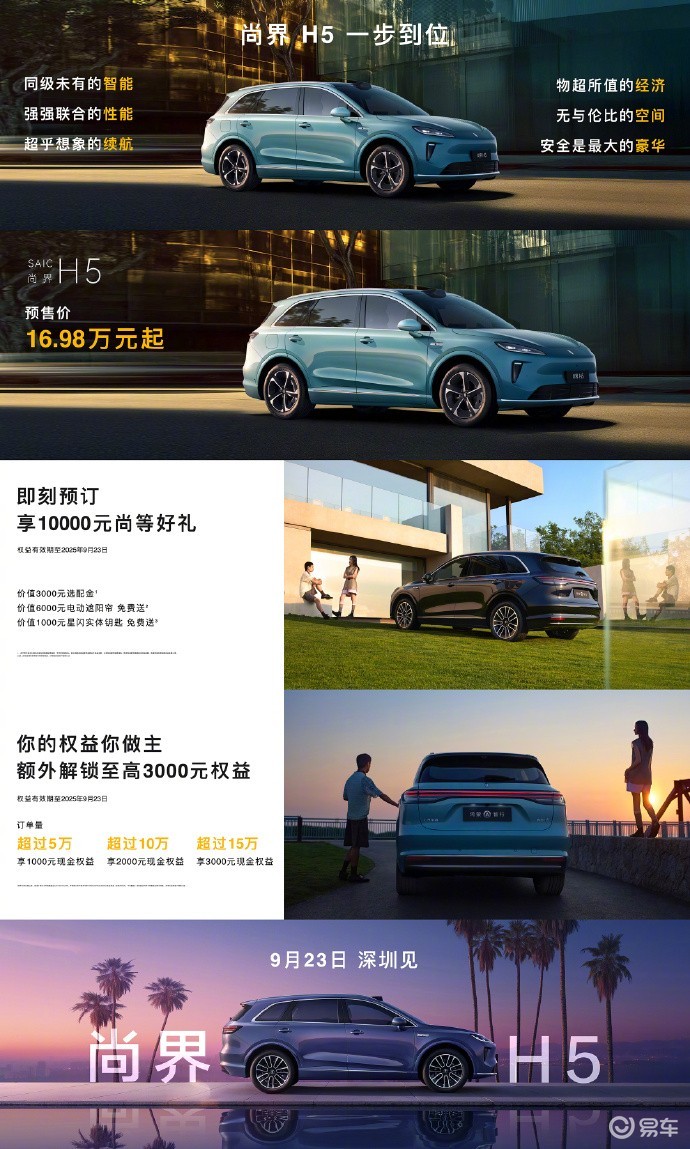
Pre-sale started at Shangjie H5 from RMB 169,800/listed on September 23rd.

A few days ago, Jiang Ge learned from the official that the pre-sale was officially opened. The pre-sale price started at 169,800 yuan, and the new car will be officially listed on September 23. Shangjie H5 is a combination of Huawei’s leading intelligent technology and SAIC’s profound car-making heritage. Its appearance is simple and atmospheric, its space is spacious and practical, its battery life meets the needs of the whole scene, and it is equipped with HUAWEI ADS 4 auxiliary driving system. According to the latest official data, Shangjie H5 opened a one-hour pre-sale order and exceeded 25,000 units.

In terms of appearance, the new car adopts the closed front face of new energy vehicles, and the latest brand logo is hung in the center of the front face. The roof is equipped with a laser radar, and the new car is also equipped with a luminous logo and a smart blue light. The overall appearance is full of technology.

From the side of the car body, the overall lines of the new car are relatively smooth, and the traditional door handle is adopted instead of the popular hidden door handle design. In terms of body size, the length, width and height of the new car are 4780/1910/1657 (1664) mm.

When we arrive at the rear of the car, we can see that the design of the rear of the new car also adopts simple design techniques. At present, the popular through-type taillight group, and the central part of the taillight is also equipped with the Shangjie brand logo.

In terms of interior, the new car adopts the popular minimalist design style, creating a fashionable and warm interior atmosphere. In terms of specific configuration, the front row of the new car is equipped with a liquid crystal instrument and a large-size floating central control panel. In addition, it is equipped with three flat-bottomed steering wheels, a wireless charging panel for mobile phones and a panoramic canopy.

The rear space looks extremely spacious and the seats look very comfortable. In addition, we also see that the rear row of the new car is not only equipped with a central armrest, but also provides an entertainment screen.

?

In terms of power, the new car offers two options: pure electricity and extended range. The pure electric version is equipped with a battery pack with a capacity of 80kWh. The CLTC has a pure battery life of 655 kilometers and a comprehensive power consumption of 13.4kWh per 100 kilometers. The extended-range version has a pure battery life of 235 kilometers, a comprehensive battery life of 1360 kilometers and a comprehensive fuel consumption of 4.44L per 100 kilometers.

Parents are embarrassed early after school in primary schools: how to solve the "3: 30 problem"?

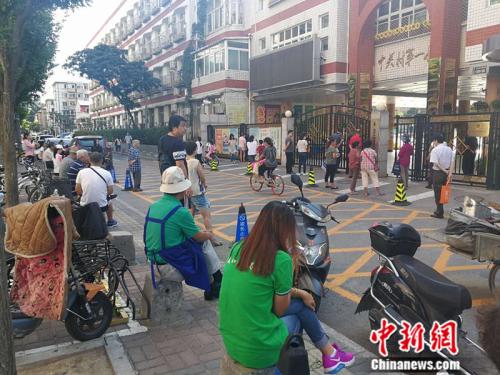
  BEIJING, Beijing, September 14 (Reporter Zhang Ni) In recent years, with the promotion of burden reduction in primary and secondary schools, the school hours of primary schools in many areas have advanced to around 3: 30. However, children leave school early and parents leave work late, which makes many parents feel embarrassed — — It is unrealistic to ask for leave, and there are many concerns about the custodian. How should we solve the "3: 30 problem"?

  Parents are worried about picking up their baby after school at 3: 30.

  "When I get to school, I have a headache. My wife and I both go to work. The off-duty time is five or six o’clock, but children usually leave school at three or four o’clock, and picking up children has become a problem." Mr. Wang, a citizen who lives in Haidian District, Beijing, said that every time he started school, he began to worry about picking up the baby.

  Mr. Wang’s son is in the fourth grade. Before that, Mr. Wang’s mother helped to pick him up, but in the past two years, because his mother was in poor health, he had to pick him up with his wife.

  "Now the school has after-school activities three days a week, and the school time is relatively late. I will rotate with my wife for the remaining two days. Whoever is not busy will pick up the children in advance." Mr. Wang said that because the school is close to home, he and his wife planned to let the children go to school by themselves after they entered the fifth and sixth grades, but he was still a little worried.

  Mr. Wang’s experience is also a portrayal of the real life of many young parents. In order to solve the problem, many elderly people took the initiative to take over the heavy responsibility of receiving the baby. Ms. Shen, 66, is one of them.

  Ms. Shen lives in Haidian District. Her grandson is in the first grade of primary school this year. Because both her son and daughter-in-law have to work, the job of picking up and dropping off the children is given to her.

  "I have to go back and forth between home and school several times a day, and I have to walk on the road for nearly an hour a day." Ms. Shen said that because she is in good health, she can accept it, but I am afraid that the elderly who are in poor health will be a little overwhelmed.

  "Last year, my son asked for a second child, and I hired a nanny to take the second child at home. I can still be busy when I send the boss. When the second child starts to go to kindergarten, I have to pick up two. Without a nanny, I will definitely be too busy." Ms. Shen said.

  Market demand gives birth to trusteeship fever

  The problem of parents picking up their children has also left business opportunities for off-campus hosting institutions, and the fees of such institutions are expensive.

  A few days ago, the reporter consulted a primary school care institution in Zhongguancun, Beijing, and learned that the cost of hosting a primary school student in this institution is 1,480 yuan per month, while the student’s meal fee is calculated separately, which is the charging standard for each meal in 20 yuan. In this way, if a primary school student has dinner once a day in a custody institution, the monthly expenses add up to nearly 2,000 yuan, which is not a small expense for many parents.

  Even so, because of the large demand, the number of custody places of custody institutions is also very popular.

  "The number of students we can accept is limited, so we usually start to register in mid-August, and there will be very few places left when the school starts." A staff member of the agency told reporters.

  For such a custodian, parents also have their own concerns.

  "One depends on whether the price charge is acceptable. In addition, if we really want to send our children to such a custody institution, we must also check the qualifications, safety facilities, the level of teachers, the quality of food, etc. We are all concerned." Mr. Wang expressed his concern.

  The teacher vomited: it is very tiring to organize after-school activities.

  In the first half of this year, the Ministry of Education issued the Guiding Opinions on Doing a Good Job in After-school Services for Primary and Secondary School Students. Among them, it is clear that we should give full play to the role of the main channel of after-school service in primary and secondary schools. The majority of primary and secondary schools should make full use of their advantages in management, personnel, venues and resources, and take the initiative to assume the responsibility of students’ after-school service.

  The reporter learned that after-school expansion activities have been carried out in primary schools in many areas, including Beijing. However, in the process of school implementation, there are also many practical problems.

  Lin Lin (pseudonym), who works as an English teacher in a primary school in Chaoyang District, Beijing, said in an interview that her primary school will hold community activities three days a week, but because of the limited resources of teachers in the school, some interest activities need to be outsourced to hire teachers.

  "Schools should also increase their funding, not only paying the class fees of external teachers, but also paying some remuneration to the class teachers." Lin Lin said.

  "Community activities usually disrupt classes, and it is difficult for teachers to manage classroom discipline. Therefore, each class should be equipped with a class supervisor. Once the class is over, children like to have classes in disorder, so the class supervisor must always be nervous to prevent danger." Lin Lin told reporters that he will arrive at school at seven o’clock every day, and his usual workload is already very heavy. Coupled with the arrangement of extracurricular activities, he is very tired at the end of the day.

  After school at 3: 30, did the students reduce their burden?

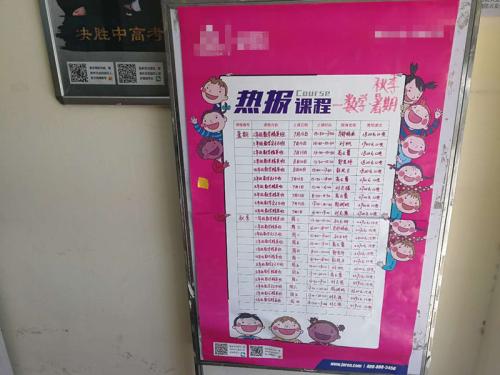
  On the one hand, the school leaves school early, on the other hand, the students’ schoolwork burden has not really been alleviated. Many primary school students hurried to the off-campus cram school after leaving the school gate. Xiaoding, who is in the sixth grade this year, is one of them.

  "I don’t have cram schools now except Monday and Sunday, and I have extracurricular classes the rest of the time." Xiaoding told reporters.

  Xiaoding’s school is a key primary school in Beijing. It will finish school before three o’clock every Tuesday and Friday, but he still has cram schools to attend. Usually, Xiaoding goes to cram school by bike every time he comes home from school to pack his things, and many students in the class have similar situations.

  "We are under great pressure as parents. Some of our children’s classmates were recruited by key middle schools in the fourth and fifth grades. If they can’t be recruited, they can only participate in computer allocation, which is quite anxious." Mr. Zhu, who lives in Haidian District, expressed emotion in an interview.

  Mr. Zhu also has a daughter who has just entered the sixth grade. Because he is worried that his child will be sent to a bad middle school, he began to take his child to take some key middle school exams very early.

  "In fact, children have very little homework in school and can finish it soon, but we also reported three or four extracurricular classes to our children, so it is not easy." Mr. Zhu said that as long as the child’s junior high school is not solved one day, his heart will always be hanging.

  How to solve the problem?

  On the one hand, the state advocates reducing the burden and letting students leave school early. On the other hand, schools and parents are faced with various implementation problems. How to solve the contradictions?

  In fact, in recent years, many local governments have introduced relevant policies to solve the problem.

  For example, Beijing, Chengdu and other places have established a financial guarantee mechanism. Public primary schools in Shanghai generally provide free after-school care services to students who have difficulties in family care. Qingdao and other places "take the school family Committee as the leading factor and the school participates in cooperation" and rely on the school’s premises and equipment to carry out after-school service.

  "Solve ‘ 3: 30 problem ’ It is still necessary to let the school play an active role and carry out more extracurricular activities, but this requires a policy tilt, focusing on giving teachers subsidies and improving teachers’ enthusiasm. " Gu Mingyuan, honorary president of China Education Association, stressed in an interview with Zhongxin. com.

  Gu Mingyuan analyzed that while the government gives financial support to schools, it should also give them autonomy in running schools. "Education should also be shared, so that schools can fully tap and utilize all social resources, even including inviting parents with special skills to participate in after-school activities. Children should not be pushed to training institutions because of school."

  Chu Zhaohui, a researcher at the China Academy of Educational Sciences, believes that students should also be given some time for independent activities, rather than just "going to school — — Going home is a two-point and one-line life, and the part that is in contact with society is missing.

  "In the process of children’s growth, it is not only the school that has an educational role, but also the society. Education should return to a normal state, so that children can participate in social activities independently and find their own interests." Chu Zhaohui said.

  In addition, Chu Zhaohui emphasized that if the disguised junior high school entrance examination still exists, then the children are still tied to the examination and academic performance, so it is difficult to really reduce the burden. (End)

New ideas and practices of governing the country: strictly administering the party and governing the power according to law

  [New Ideas and Practice of Governing the Country]

  Since the 18th National Congress of the Communist Party of China, remarkable achievements have been made in strictly administering the Party in an all-round way, but the building of a clean and honest party style and the struggle against corruption still have a long way to go. In his speech at the Seventh Plenary Session of the 18th Central Commission for Discipline Inspection, the Supreme Leader pointed out that to further promote the comprehensive and strict administration of the Party, we must treat both the symptoms and the root causes. The key to cure the problem is to innovate institutional mechanisms, improve laws and regulations, strengthen inner-party supervision, establish and improve institutionalized and legal governance mechanisms, comprehensively promote the rule of law, and strictly manage the party and power according to law.

  The essence of strictly administering the party is to strictly govern power and rule power according to law.

  The Communist Party of China (CPC) is the ruling party. To ensure our party’s long-term governance, we must adhere to the principle of strictly administering the party and governing power according to law. The key to strictly administering the Party lies in strictness and governance, which requires strengthening the awareness of the rule of law and rules, standardizing the operation of power according to law, and strengthening the supervision of power. The Sixth Plenary Session of the Eighteenth Central Committee of the Communist Party of China pointed out that it is necessary to improve the restriction and supervision mechanism of power operation, and form an institutional arrangement in which the right must be responsible, the use of power must be responsible, and the abuse of power must be held accountable. This is actually the concrete embodiment of the thought and important concept of the supreme leader comrade about putting power into the system cage. Montesquieu once pointed out that "all people with power are prone to abuse their power, which is an eternal experience". If the dam of laws and party rules is broken, the abuse of power will be like a flood. Strictly administering the party in an all-round way and strengthening power supervision means institutionalizing and legalizing supervision. Specifically, we should do the following two things.

  Power should be bound by the Constitution and laws. Article 5 of the Constitution stipulates: "All state organs and armed forces, political parties, social organizations, enterprises and institutions must abide by the Constitution and laws. All violations of the Constitution and laws must be investigated. No organization or individual may have privileges beyond the Constitution and laws. " Constitution of the Communist Party of China also emphasized in the general program: "The Party must act within the scope of the Constitution and laws." Our party is the ruling party. Whether we can adhere to the rule of law, correctly lead legislation, take the lead in abiding by the law and ensure law enforcement is of great significance to comprehensively promote the rule of law. Therefore, governing according to law is the key to governing the country according to law. The implementation of ruling by law first requires the party to govern the country according to the constitution and laws. Adhering to the rule of law means that the supervision of power must be ruled by law and form a long-term mechanism of supervision, which will not change with the passage of time and personnel changes.

  Power should be bound by the laws and regulations of the party. In order to manage a big party with more than 88 million party member, the traditional management method has many unsuitable places. In the new historical period, the internal and external environment faced by the Party is becoming more and more complicated, and the task of self-construction is becoming more and more serious. These changes have put forward higher requirements for the Communist Party of China (CPC)’s leadership style and ruling style, and objectively it is necessary to govern the Party according to the internal laws and regulations of the Party. State-owned laws, the party has party rules, and governing the country according to law requires the party to govern the country according to the Constitution and laws, and also requires the party to govern the party according to the internal laws and regulations of the party. Comrade Supreme Leader pointed out that it is necessary to "respect party constitution and strictly implement norms and regulations". Inner-party laws and regulations require the behavior standards of all party member and Party organizations, while laws require the behavior standards of all social members, and the behavior standards required by inner-party laws and regulations are stricter than laws. The Communist Party of China (CPC)’s Code of Integrity and Self-discipline and the Communist Party of China (CPC)’s Regulations on Disciplinary Actions, which came into effect in January 2016, have clearly defined party member’s high standards and the discipline of managing the Party. The Constitution and laws are the basis for ensuring the Party to be in power according to law, while the internal laws and regulations of the Party are the rule basis for managing and administering the Party. Only by organically combining laws and party rules can we provide institutional guarantee for the comprehensive and strict administration of the party and lay a solid foundation for comprehensively promoting the rule of law.

  The core of strictly administering the party and governing power according to law is to safeguard the central authority according to law and ensure the smooth flow of central government decrees.

  The leadership of the Party is the most essential feature of Socialism with Chinese characteristics and the greatest advantage of the Socialism with Chinese characteristics system. To strictly manage the party and power according to law, we must adhere to, improve and implement democratic centralism, and organically combine centralism on the basis of democracy with democracy under centralized guidance. To establish a normal order of inner-party life and ensure the unity of will and actions of the whole party, we must adhere to the fundamental principles that individuals obey the party organization, the minority obeys the majority, the lower organizations obey the higher organizations, and the whole party obeys the central government. The basis of this fundamental principle is that the minority obeys the majority, and the core is that the whole party obeys the Central Committee.

  To uphold the party’s leadership, we must safeguard the authority of the central government, ensure the centralization and unity of the party, ensure the smooth implementation of the party’s central government decrees and orders, and prevent and overcome acts that are unorganized and undisciplined, have orders that are impossible, have prohibitions, and go their own way. We must resolutely put an end to the phenomenon that there are policies at the top and countermeasures at the bottom. We can’t "you have your closing plan and I have my jumping over the wall". If the party wants to be in power according to law, it must ensure that the central government decrees are smooth and the decision-making takes root by legal means. This is to be good at making the party’s ideas become the will of the state through legal procedures, formulating laws and regulations, and ensuring their strict implementation. In our country, the constitution is the concentrated expression of the will of the party and the people, and it is the fundamental law formed through scientific and democratic procedures. The party leads the people and formulates laws and regulations through legal procedures in accordance with the Constitution, which is to implement democratic centralism, safeguard the authority of the central government and ensure the smooth implementation of government decrees. Because in a society ruled by law, the law is supreme, the law has the highest status, and the rule of law includes equality before the law, and its rules have universal applicability. Compared with the rule of man, it is more certain and predictable. The ancient legalists in China compared the law to the size, rope ink, rules, balance stones, bucket hoops, angular measurement, etc., which was intended to emphasize the unity, fairness and universal applicability of the law. Therefore, to ensure the smooth flow of central government decrees, we should establish and improve the guarantee mechanism of rule of law. At present, in order to maintain the authority of the central government and keep the government decrees unblocked, we must improve the construction of relevant systems with the rule of law, and establish a linkage system between the deployment and implementation of policies at the higher and lower levels.Ensure that the lower-level policy suggestions can be fed back to the higher level in time, and enable the higher-level policy deployment to be effectively communicated to the lower level. At the same time, it is necessary to establish an assessment and inspection system for policy implementation, and evaluate and inspect the policy communication in all links. Organizations and individuals that hinder policy communication should be held accountable according to law.

  The key to strictly administering the party and governing power according to law is the leading cadres in party member.

  Our party is the ruling party, and some leading cadres not only hold positions within the party, but also take charge of public power. In order to ensure their exercise of power according to law, public power must be restrained by law, which is also the proper content of regulating public power with the rule of law. The key point of strictly administering the party and governing the power according to law is "the key minority", which requires leading cadres in party member to firmly establish the awareness of the rule of law, cultivate the ideas and habits of advocating, respecting and acting in strict accordance with the law, always have awe of the law, bear in mind that the legal red line cannot be crossed and the legal bottom line cannot be touched, strictly exercise their functions and powers within the scope of the Constitution and laws, and no one can enjoy privileges other than those stipulated by the Constitution and laws. Must adhere to the administration according to law, the law does not authorize, and the statutory authority must be. Leading cadres in party member should take the lead in abiding by the law, set an example in obeying the law, and play an exemplary role in the whole society. Strictly administering the party and governing power according to law also needs to solve the problem of supervision by the top leaders. The top leaders in leading bodies at all levels are the "key minority". The more important the responsibilities and positions of leading cadres are, the more important it is to strengthen supervision. China’s revised Administrative Procedure Law stipulates that "the person in charge of the accused administrative organ should appear in court to respond to the lawsuit", which strengthens the supervision of the chief executive from the legal point of view. In order to ensure the leading cadres in party member to exercise their functions and powers according to law, we must also improve the accountability mechanism, and insist that the responsibility must be asked and the accountability must be strict.Without clear responsibility, implementation and accountability, it will be difficult to truly manage the party strictly.

  At present, China is in the stage of social transformation, with profound changes in economic system, social structure, interest pattern, ideas and concepts, and various social contradictions constantly emerging. The basic function of law is to settle disputes and stop disputes, and the law will program the schemes and ways to solve various disputes, providing the most stable and effective solutions for the settlement of social contradictions and disputes. Resolving social contradictions and disputes through law can avoid arbitrariness and differences in dispute resolution and ensure fairness. In practice, some leading cadres are indifferent to the law and lack the consciousness of exercising their functions and powers according to law, which is not only not conducive to resolving contradictions, but may lead to further intensification of contradictions. In this context, it is more important for leading cadres in party member to establish the rule of law thinking and be good at using the rule of law.

  Strictly administering the party and governing power according to law must guarantee party member’s democratic supervision rights according to law and regulations.

  Strengthening inner-party supervision focuses on daily life and perseverance. Strengthening party member’s democratic supervision right is an important measure to effectively prevent decision-making mistakes and abuse of power. In reality, some party member cadres, bending the law, constantly touch the legal bottom line, the most fundamental reason is the lack of supervision. Therefore, it is necessary to unblock the channels for party member to participate in the discussion of inner-party affairs, broaden the channels for party member to express his opinions, and create a political atmosphere for democratic discussion within the party. Comrade Supreme Leader pointed out that some party organizations and party member lacked the courage to use the weapon of criticism and self-criticism, which ultimately hurt the party’s cause. Making good use of criticism and self-criticism to safeguard party member’s democratic supervision right is an important way to improve inner-party supervision.

  To strengthen inner-party supervision, we must establish and improve the effective mechanism of inner-party democratic supervision, and effectively protect the rights of democratic supervision in party member according to law. According to the provisions of the Constitution of the Communist Party of China, every party member enjoys the right to criticize, report and demand recall. In recent years, our party has attached great importance to the construction of the inner-party supervision system and established a series of specific democratic systems, such as the democratic life meeting system, the democratic appraisal of party member system, the inner-party reporting and accusation system, and the rights protection system in party member. The two inner-party laws and regulations that came into effect in January this year are both the guarantee and the basis for institutionalizing democratic supervision. On the one hand, supervision must be carried out in accordance with laws and regulations, which requires the full protection of party member’s democratic supervision rights through party rules, so as to realize the institutionalization and legalization of democratic supervision in party member. At the same time, practical measures should be taken to ensure that party member’s democratic rights, such as democratic participation, democratic election, democratic decision-making and democratic supervision, stipulated by party constitution, are fully exercised. On the other hand, in order to further play the role of democratic supervision in party member, it is necessary to institutionalize supervision and establish comprehensive, systematic and operable procedures and rules. We should constantly broaden and improve the channels of inner-party democracy, so as to realize party member’s extensive participation, effective management and effective supervision of inner-party affairs. In addition, we should broaden the channels of reporting, exposing, appealing, accusing and petitioning in party member, formulate a specific and strict system with strong operability, and expand the scope of party member’s participation in the management and supervision of cadres.

  The key to strictly administering the party and governing power according to law is to punish corruption according to law and ensure equality before the law.

  Strictly administering the party in an all-round way and punishing corruption must be firmly grasped. Comrade Supreme Leader pointed out that anti-corruption should be carried out with no forbidden zone, full coverage and zero tolerance, and efforts should be made to curb the spread of corruption and punish unhealthy practices and corruption around the masses. To punish corruption, we must insist on investigating every case and correcting every mistake. Since the 18th National Congress of the Communist Party of China (CPC), the anti-corruption campaign has been "fighting tigers" and "swatting flies" simultaneously, severely punishing corruption, promoting the implementation of responsibilities with serious accountability, showing a new atmosphere in the political life within the Party, winning the hearts and minds of the Party and providing an important guarantee for creating a new situation in the cause of the Party and the country. Judging from the anti-corruption cases that have been disclosed, it has truly achieved "no forbidden zone against corruption" and "zero tolerance" for corruption. This shows that there is no special citizen in our country, and there is no special party member in our party, which truly implements equality before the law and party rules. However, it must be noted that the anti-corruption situation is still grim, and we must always maintain a high-pressure situation against corruption. We must prevent corruption fundamentally by strictly administering the party and the country according to law and relying on the system. In accordance with the requirements of comprehensively administering the country according to law and strictly administering the party in an all-round way, accountability and investigation of cases of violation of law and discipline should be carried out in strict accordance with the law and regulations. Dare to investigate and handle cases, dare to be disciplined and accountable, and dare to touch the truth. At the same time, it is necessary to carry out organizational and institutional innovation, promote the reform of the national supervision system, comprehensively integrate anti-corruption resources, expand the scope of supervision, and establish a centralized, unified, authoritative and efficient supervision system and mechanism.

  Comrade Supreme Leader pointed out that "popular support is the greatest politics, and justice is the strongest force". Governing the country must first govern the party, and the party must be strict. To strictly manage the party in an all-round way, we must govern power according to law and comprehensively promote the rule of law, which can provide long-term and effective institutional guarantee for strictly administering the party in an all-round way.

   (Wang Liming is the executive vice president of China Renmin University)

It is difficult to make an appointment with the network! The morning rush hour will take 40 minutes in Tianhe, Guangzhou.

■ At night, the transportation department dispatches taxis to Guangzhou South Railway Station to ensure the "night returnees" to travel. (Photo courtesy of the interviewee)

■ New Express reporter Dai Guohui

Recently, many Guangzhou residents have reported that it is difficult to take a taxi through the online car platform, especially in the Tianhe business district and the Pearl River New Town around the rush hour and around 11: 00 at night. At the same time, it is also difficult to take a taxi in the residential gathering area during the rush hour.

phenomenon

Didi taxis line up hundreds of people.

It is difficult to make an appointment with a car during peak hours.

Ms. Liang, a citizen of Guangzhou, told the reporter about the difficulty of taking a taxi in Tianhe South 1 ST Road next to Tianhe City on August 17. It was Valentine’s Day, and around 11 pm, she wanted to take a taxi back to her residence near Tangxia. She used the "Didi Chuxing" APP to make an appointment for an online car. "There are more than 100 people waiting in line in front, and the system estimates that the waiting time is 1 hour and more than 20 minutes." Ms. Liang told reporters.

On the other hand, the reporter learned from a drip driver that it was even more difficult to take a taxi in Tianhe business district that day. The driver surnamed Luo told the reporter, "At that time, it usually took two hours to take a taxi in Tianhe City."

Mr. He, a citizen, told the reporter that he took a taxi at 8: 00 a.m. a few days ago. He wanted to call the network car in a hurry, but the system showed that the queue had to wait for 40 minutes. "There is no subway nearby, and the taxi is full of people. I got on the bus at 8: 40 and was late."

The reporter interviewed a number of network car users, and users have different degrees of experience about the difficulty of getting a car. However, most of these situations occur during the rush hour and around 11 pm, and the locations only occur in residential areas, Pearl River New Town, passenger hub stations and some business districts.

Network car enterprise

Users are advised to carpool.

Regarding the situation that it is difficult to get a car in some areas of Guangzhou at a specific time, the relevant person of Didi Company responded to an interview with the New Express reporter and said that it did receive such a reflection from users and suggested that users travel by car.

Didi said: "Recently, the platform has received many reports from users that the success rate of taxis in some areas has decreased during peak hours, and the waiting time has become longer. I would like to remind users to plan their travel modes as far as possible in advance, and travel more by making an appointment or carpooling, and the success rate will be relatively high …"

Taxi company dispatches vehicle security

South Station "Night Return" Travel

During the summer vacation, it is also difficult to take a taxi after 11 pm at Guangzhou South Railway Station. Mr. Zhong told reporters that it took him more than half an hour to get a network car after 11 pm on August 14th.

In order to alleviate the difficulty of taxiing, from 23:00 on Fridays and Saturdays to 0:30 the next day, Guangzhou Transportation Department organized Guangzhou Public Transport Group to arrange a certain amount of taxi capacity to Guangzhou South Railway Station to do a good job. When the capacity of Guangzhou South Railway Station is insufficient, the municipal transportation department will dispatch other empty taxis to carry passengers through the information system to ensure that citizens can enjoy taxi services in time.

On the other hand, Guangzhou Public Transport Group also encrypts the departure density of night buses in the South Railway Station area, and at the same time opens passengers who arrive in Guangzhou at night at the bottom of the special line.

interlinkage

In July, the number of violations of the network car decreased by nearly half compared with last month.

On August 20, the Law Enforcement Bureau of Guangzhou Communications Commission announced the list of companies suspected of violating the rules in taxis and online cars in July this year. By comparing the law enforcement announcements in the past three months, some enterprises have been listed on the same law enforcement project more than once. Another striking thing is that the number of violations of the network car has been greatly reduced.

● Statistics

Non-compiled enterprises with illegal operations have been listed three times.

The reporter noticed that in the investigation and handling of non-compiled drivers by law enforcement officers of the Law Enforcement Bureau of the Communications Commission, there were taxi companies on the list for three consecutive times, and more than 50 non-compiled operations were investigated. Guangzhou Lishifeng Automobile Co., Ltd. has been investigated for 50 non-compiled operations for three consecutive months; Guangzhou Xianfu Taxi Co., Ltd. was investigated for 52 cases of non-compiled operation for three consecutive months.

On the other hand, according to the published data, the operating violation rate of taxi companies has decreased compared with May. In May, the violation rate of the top taxi companies reached 19.27%. In July, the number one taxi company’s violation rate dropped to 14.49%. It should be pointed out that this data is still at a high level.

The number of violations of the network car has declined

The number of violations of the network car operation has been significantly reduced. In May, the Law Enforcement Bureau of Guangzhou Communications Commission investigated and dealt with 252 cases of illegal operation of online car, which was reduced to 143 cases in June and 73 cases in July.

The reporter learned from the Law Enforcement Bureau of the Municipal Communications Commission that the illegal operation of the network car is mainly concentrated in the driver’s license of the network car driver and the transportation license of the operating vehicle. According to the relevant regulations, the driver of the network car will face a fine of 10,000 to 30,000 yuan for operating without a license.

● Cases

The same taxi meets Baiyun Airport.

Law enforcement officers investigated and dealt with a "full clone taxi"

On August 15th, when law enforcement officers visited the south first floor of T1 departure hall of Baiyun Airport, they found that the body color of a Guangdong A***RA "Guangfa" taxi was slightly different. After systematic investigation, the taxi with the license plate number A***RA happened to be located in T2 Terminal 1 km away. After verification, the possibility of deviation caused by GPS signal instability was ruled out, and law enforcement officers initially determined that Guangdong A***RA in T1 was a fake taxi.

Law enforcement officers parked the two cars side by side for further investigation, and found that the model, license plate, ceiling light, internal control and even the advertisement of the rear glass of the car body in T1 were exactly the same as those in T2. The law enforcement officers carefully checked the license plate, frame number and invoice information. The T1 Guangdong A***RA license plate did not match the frame number, and the invoice information was also inconsistent. The invoice supervision telephone number was not the number of Guangfa Company, but it was indeed a "full clone taxi". The law enforcement officers temporarily detained the counterfeit taxi on the spot according to law.

Non-compiled list of operating violations of cruise taxi companies (top 5)

No. Enterprise Name Number of Violation Cases

1 Guangzhou Lishifeng Automobile Co., Ltd.17

2 Guangdong Xiecheng Car Rental Co., Ltd. 16

3 Guangzhou Gode Passenger Transport Co., Ltd. 14

4 Guangzhou Xianfu Taxi Co., Ltd. 14

5 Guangzhou Fanyun Taxi Company Limited 13

List of illegal operating rates of cruise taxi companies (top 5)

Serial number Enterprise name Vehicle violation rate

1 Guangzhou Huangqi Transportation Co., Ltd. 14.49%

2 Guangzhou Baiyun Yuntong Car Rental Co., Ltd. 14.35%

3 Guangzhou Guangda Taxi Co., Ltd. 12.30%

4 Guangdong Yingfeng Automobile Service Co., Ltd. 11.76%

5 Guangzhou Qide Taxi Co., Ltd. 11.24%