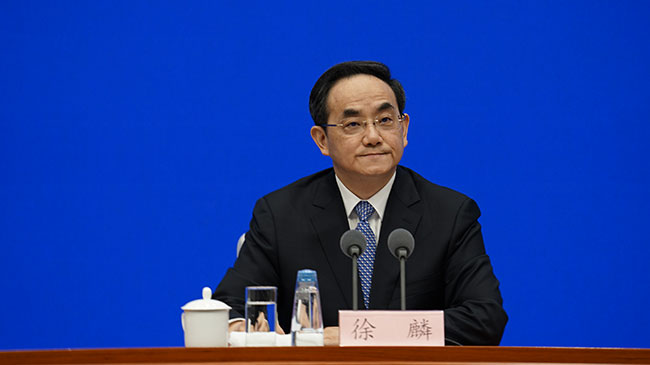
Xu Lin, Director of the State Council Press Office: Some foreign politicians and media have engaged in "presumption of guilt" on the source of the virus, which has aroused strong indignation among the

CCTV News:The State Council Information Office today (June 7) released the white paper "China Action against COVID-19 Epidemic" and held a press conference to introduce the white paper.

Xu Lin, deputy director of the Propaganda Department of the Central Committee and director of the the State Council Press Office, pointed out in response to a reporter’s question from NBC that some foreign politicians and media engaged in "presumption of guilt" on the source of the virus, "tagged" the virus, politicized the epidemic, and concocted and hyped the so-called "China Source Theory", "China Concealment Theory" and "China Responsibility Theory", which were groundless, unreasonable and disrespectful, and aroused the people of China. The media in China have no intention to fight the so-called "information war". However, in the face of rumors, slanders and attacks against China, the China media must and will respond. Of course, this kind of response is not "bickering", but radical, distinguish right from wrong, restore facts and truth, spread justice and jurisprudence, and safeguard morality and conscience.

Industry Big Coffee Gathering in China Film Science and Technology Innovation Summit on Science and Technology and Talent Development

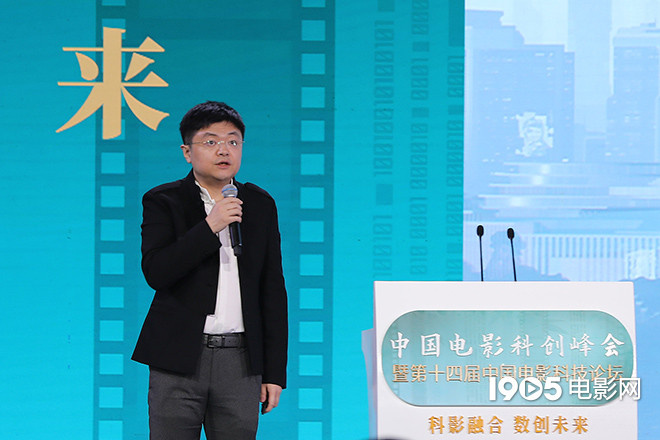
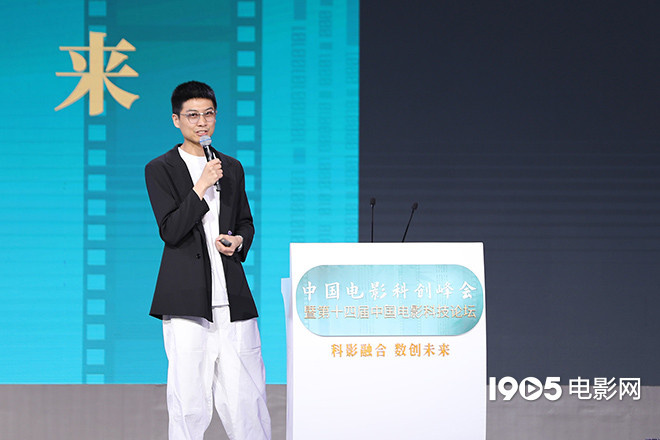
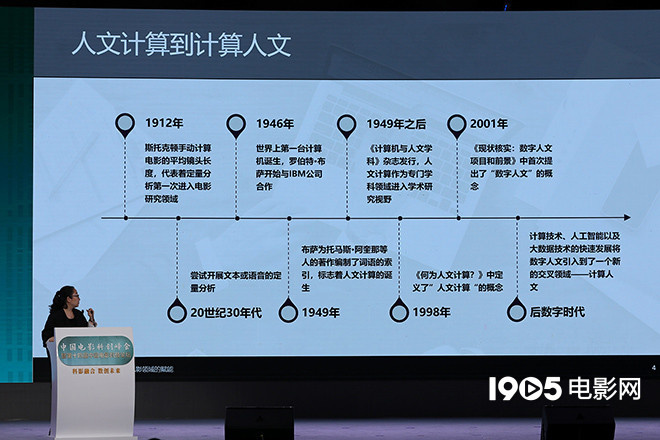
Bo Yihang, an associate professor at the Academy of Fine Arts of Beijing Film Academy, shared AI’s empowerment in the film field from the perspective of digital humanities.


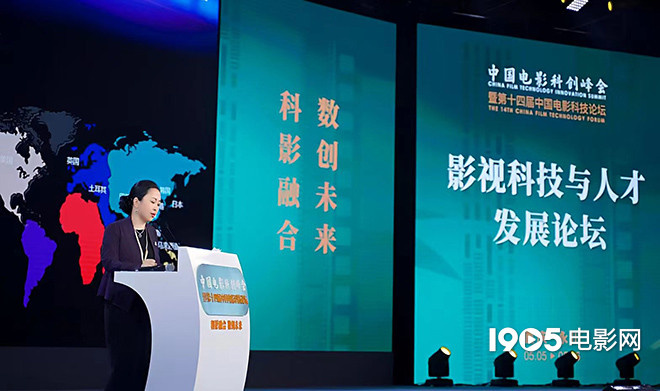
1905 movie network news Science and film merge to create the future. On May 5th, the China Film Science and Technology Summit and the 14th China Film Science and Technology Forum held a forum on film and television technology and talent development in Yongchuan, Chongqing, where representatives from the film and television industry, experts and scholars gathered together to make suggestions and suggestions for promoting the development of domestic film and television high technology and talent training, and to help achieve the goal of building a film power and a cultural power.

In the sharing session of film and television technology, six industry representatives gave speeches and exhibitions around different themes. Bo Yihang, an associate professor at the Academy of Fine Arts of Beijing Film Academy, first brought a share entitled "AI Empowering the Film Field from the Perspective of Digital Humanities", and expounded her research and thinking on cutting-edge theories such as computational film, the prosperity and decline of AI, machine learning, intelligent metrological cinematography, and the cultivation of algorithm consciousness.

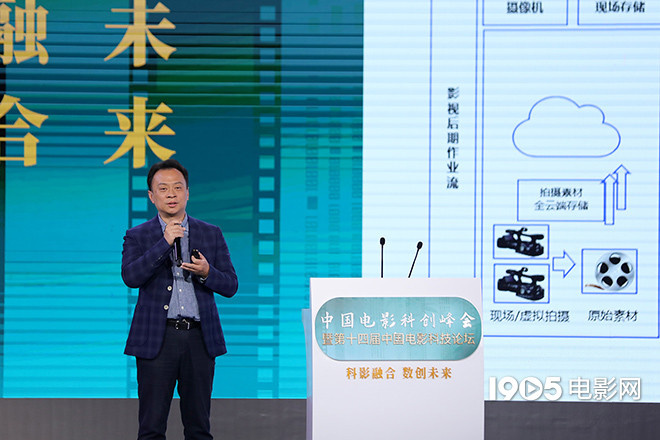
Ma Ping, deputy general manager of China Film Digital Production Base, shared realistic science fiction and imaginative technology.

Ma Ping, deputy general manager of China Film Digital Production Base, took the film as an example, and put forward the enlightenment and prospect for the integration of science and film in the new era. He believes that science fiction movies have multiple meanings for the integration of science and technology culture. "Science fiction promotes the development and innovation of science and technology; Improve the development level of division, specialization and process of film industry production; Ignite the enthusiasm of the whole people for science and technology and improve the influence of science and technology education; The unique grand narrative background of science fiction movies inspires people’s patriotic feelings and recognizes and thinks about the future destiny of mankind. " 

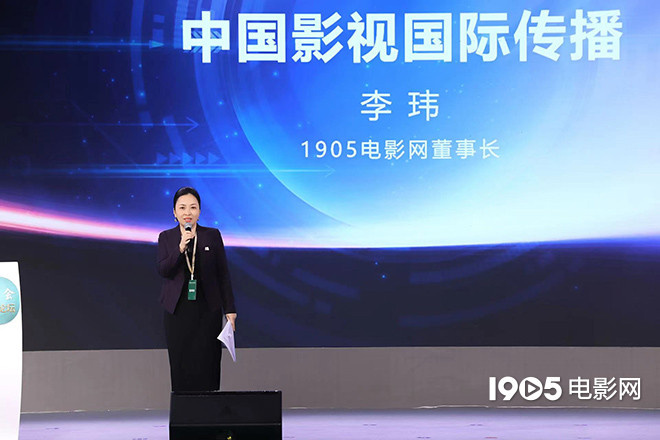
Wei Li, Chairman of 1905 Film Network

Wei Li, the chairman of 1905 Film Network, introduced the mode, main body, cases, characteristics, opportunities and challenges of overseas dissemination of China film content with the theme of "Science and Technology Innovation Empowering China Film and Television International Communication", and took the overseas distribution of 1905 Film Network as an example to share and explore the development path of China film and television going abroad.

Wei Li said that the overseas distribution of 1905 Film Network has three stages. The first stage is to manually hand in AI intelligence, and more content "going out" becomes possible. 1905 Film Network promotes high-quality Chinese film and television works to overseas TV stations and new media platforms, sells copyrighted content to international first-line streaming media websites, and also distributes content to pay TV stations and network platforms in East Asia (Japan and South Korea), Southeast Asia (New Matai) and South Asia (India).

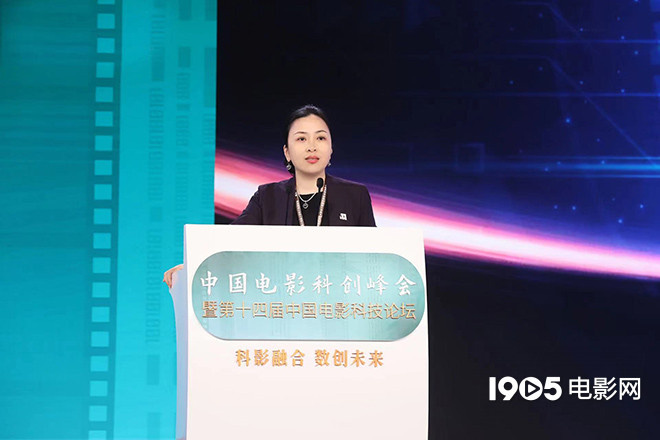
Wei Li, Chairman of 1905 Film Network, participated in the Forum on Film and Television Technology and Talent Development.

The second stage is to lead the research and development of the 1905 GO platform, and to transform "borrowing a ship to the sea" into "shipbuilding and sailing". With the implementation of the "going out" strategy of Chinese culture, the international communication of Chinese culture presents a new feature of platform going out to sea. Platform construction is helpful to grasp the dominant position of international communication and improve the initiative of foreign promotion.

The third stage is to operate the content matrix accurately with technology and innovation as the engine. "As of May 2023, 1905 Movie Network has built 18 matrices on overseas social media platforms, reaching 240 countries and regions. In terms of platform construction, there are more than three aspects: the multinational landing of movie channels, the establishment of multilingual channels, and multi-dimensional interaction. " Wei Li said that the 1905 brand overseas matrixing captures and analyzes user portraits and user habits more accurately from the data analysis level by leveraging technical means, and formulates data promotion strategies in a targeted manner; From the level of productivity, comprehensively improve the efficiency of work and coordination and increase productivity; And there is still a lot of room for various AI tools to further empower the brand internationalization road.

Wei Li, Chairman of 1905 Film Network, talks about scientific and technological innovation to empower China films to spread internationally.

In the new era, scientific and technological innovation will help film production and empower film marketing. Science and technology and cross-border cooperation will promote the internationalization of China films. Facing the grand goal of building a socialist cultural power in 2035, Wei Li said, "We filmmakers will bravely shoulder the mission, seize the day, and effectively improve the overseas communication effect and influence of China’s film and television content through strategies such as resource integration, technology empowerment, and going to sea together, accelerate the internationalization process of China’s film and television industry, and promote the excellent Chinese culture to go out, be determined to move forward, and be stable and far-reaching."

Deputy general manager of Lingyun Guangyuan Guest Vision shared the creation of a vivid and beautiful digital world.

Zhang Kai, co-founder of Beijing Tiantu Wanjing Technology, shared perception of virtual production and virtual production process management.

Director of Lingran Chuangzhi Industrial Meta-Universe Joint Research Center of Tianjin University shared the platform of digital movie cloud collaborative production and integration of production and education for meta-universe.

In addition, Li Miao, deputy general manager of Lingyun Guangyuan Guest Vision, introduced how to create a vivid and beautiful world of digital intelligence; Zhang Kai, co-founder of Beijing Tiantu Wanjing Technology, shared high technologies such as perceptual virtual production and virtual production process management. Wang Yifu, director of Lingran Chuangzhi Industrial Meta-Universe Joint Research Center of Tianjin University, explained the platform of digital movie cloud collaborative production and integration of production and education for meta-universe.


During the dialogue and exchange, the guests gave full play to their expertise and expressed their opinions, and put forward many constructive suggestions around the two major topics of domestic film and television science and technology development and film and television talent development, encouraging the exploration of new technologies, strengthening the scientific and technological literacy of industry talents, and accelerating the high-quality development of China film and television.


The movie "The Heavenly Way of the Sun II" was finalized. 2.12 Gao Shuai knights parachuted into the battlefield


1905 movie network news The movie "The Heavenly Way of the Sun II" will meet the fans on February 12th. Previously, the producers had produced many popular national works such as Super Seminary series, Xiongbinglian series, and Lieyang Tiandao I online movie.


 The Spring Festival file ushered in the most powerful country, and the fantasy plot climaxed again.


As a sister collection of Fierce Yang Tiandao II, it mainly tells the growth story that Di Tianlin, the founding father of Fierce Yang Kingdom, entrusted the young girl of Fierce Yang Star to Pan Zhen, and with the help of Pan Zhen, Dilena grew into the third generation of Fierce Yang King. In the story, Tirana, who was in a rebellious period, got rid of Pan Zhen’s discipline and came to earth. Just at this time, the earth was attacked by gluttonous stars, so she stayed on earth to cooperate with the implementation of the "Heaven Plan".


Although it is a sister collection of Fierce Yang Tiandao I, compared with Fierce Yang Tiandao I, Fierce Yang Tiandao II has richer story content, more fantastic plot and more three-dimensional scene. In addition, many "good-looking, fun and interesting" attractions have been added to Fierce Yang Tiandao II. Let’s take a look at what they are.


Gao Shuai knight Nusa parachuted into the battlefield to enrich the content. 


As a synonym for handsome and decisive, Nusa had participated in the "Deno Star Wars" before participating in this "gluttonous star attack war", and repeatedly carried out assassination missions for Carl, and quietly eradicated the big lords who refused to accept Carl in the universe for many times and then spread the belief of death.


Although Nusa played for the villain this time, his murderous look could not stop his handsomeness. As soon as he appeared, everyone was reluctant to give up the villain’s "lunch box", hoping that he could fight with Tirana a little longer. There are even netizens who hope that they can fight a new spark.


Three-dimensional preparation field display makes the scene more detailed.


Following the perfect integration of oriental aesthetics into the scene design of the Heavenly Palace in the Sun, the Heavenly Palace in the Sun II has greatly upgraded all indoor scenes, making us feel like we are in a fantasy world. In "Lieyang Tiandao II", the ordinary cabin that can only take people in Lie 1 is upgraded to a shuttle cabin that can detect and predict the information needed for various battles.Brother monkey buys wine"The unpretentious scene was upgraded to a bar where we could drink beautiful wine together, and the ordinary training ground in Lie 1 was upgraded to a high-tech martial arts field.


Every scene in "The Heavenly Way of the Sun II" has become more advanced, and every detail has been portrayed more completely. Let the audience have an immersive experience.


The cool captain and the Lolita players make the plot more interesting.


Fierce 1 is full of hard shots. It can be said that the dashing Dilena touches the hot monkey brother. In Lie 2, a sweet and salty little loli was added — — Sue Xiaoli. Although Xiaoli and Monkey Brother have similar genes, their personalities are totally different, which adds more unpretentious interest to the ordinary war.

Take stock of the "dialogue" that attracted worldwide attention in the international political arena in the first half of the year.

  BEIJING, July 5 (Xinhua)-Confrontation and dialogue, conflict and compromise have always been two opposing and interdependent aspects in the international political arena. In the past six months in 2013, the global situation has been fluctuating, and there are many tense confrontations and dialogues that attract worldwide attention, from which we can find some threads of the development of the international situation.

  The first US dollar dialogue: "No tie" lights up Sino-US diplomacy.

  There is no 21-gun salute, no honor guard and welcoming ceremony, and there is no need to sit at the negotiating table … At the beginning of June this year, the meeting between the heads of state of China and the United States, unlike the previous "no tie", attracted the attention of Chinese people and the whole world.

  On June 7-8, the Supreme Leader of president, China and US President Barack Obama met in California. This is the first face-to-face contact between the Chinese and American heads of state after the change of government.

  The dialogue between the heads of state of China and the United States is very special. The meeting place was not the White House, but the picturesque California manor. The leaders of the two sides opened their shirts and collars without ties, saving all red tape. The "no tie" dialogue enabled the two heads of state to have heart-to-heart and in-depth exchanges on major issues in a relaxed and private environment.

  In the two days, the time spent by the heads of state of China and the United States together exceeded eight hours. Diaoyu Island issue, South China Sea issue, cyber security, North Korean nuclear issue, economic cooperation … At this "no tie meeting", the two heads of state openly and frankly communicated and discussed many issues. The two sides not only talk about cooperation, but also avoid differences. The time, quality, depth and breadth of interaction are unprecedented.

  As a result of the talks, the two heads of state agreed to work together to build a new type of relationship between China and the United States, promote the construction of a new type of military relationship between China and the United States, and respect each other and win-win cooperation. The handshake between China, the world’s largest developing country, and the leader of the world’s largest developed country, the Supreme Leader, and Obama at California Manor opened a new chapter in Sino-US "trans-Pacific cooperation".

  Dialogue between the Korean and Korean authorities: it seems like a bright future, but the mountains are heavy.

  In the first half of this year, the situation on the Korean Peninsula seemed to be on a "roller coaster", which rose and fell in just a few months, but suddenly turned around at the critical moment. However, even if you are willing to "talk", it is still full of twists and turns.

  In the past few months, the situation on the peninsula has really made people sweat: North Korea conducted a nuclear test, South Korea-US military exercises, the hotline between South Korea and North Korea was cut off, North Korea restarted its nuclear reactor, and the Kaesong Industrial Park completely stopped running … All kinds of signs once made the outside world think that the Korean peninsula had reached a state of "war is imminent".

  However, since May, North Korea has clearly expressed its willingness to talk to the international community by receiving the Japanese Prime Minister’s adviser and sending a special envoy to visit China. At the beginning of June, North Korea even abandoned its previous tough attitude and made a rare proposal for intergovernmental dialogue to South Korea.

  The South Korean government quickly seized the opportunity of North Korea’s "goodwill". Just a few days later, the director-level working talks between the ROK and the DPRK were held in Panmunjom, paving the way for the next ministerial talks.

  然而,就在外界看好局势发展的当口,情况却发生转折性变化。朝鲜以韩方会谈团长“级别过低”为由,单方面宣布取消原定于12日举行的当局会谈。

  韩朝6月初的政府间对话就这样几乎在最后一刻中断,但7月4日,新的消息传来:韩朝一致同意于6日在板门店举行工作会谈。此外,朝鲜还表示愿意重返六方会谈。韩朝间看似“柳暗花明”、实则“山重水复”的沟通能否顺利继续,值得关注。

  美国、阿富汗、塔利班:陷入“三角债”困局的谈判

  12年前,美军进入阿富汗与塔利班武装人员作战,打响“9?11”袭击后的反恐战争“第一战”,就在历经12年战争、死伤数千人之后,阿富汗局势似乎初露和谈曙光,但却因美国、阿富汗政府、塔利班之间的“三角”纠葛搁浅。

  6月18日,阿富汗塔利班宣布在多哈开设和谈办公室,随后有美国官员确认美方将与塔利班进行直接谈判。此举引起阿政府不满,阿总统卡尔扎伊19日宣布中止阿美《双边安全协议》协商进程,同时取消阿高级和平委员会赴多哈和谈安排。由于遭到阿政府强烈抗议,原定于20日举行的美国和塔利班首次会面被取消。

  When the news of the talks was released, international public opinion was cautiously optimistic about it. Some analysts believe that the deep-seated reason for the delay in the negotiations is that the three parties have their own "wishful thinking", and the negotiations will be a dilemma with no end in sight.

  Through negotiations, the United States wants the Taliban to publicly renounce its relations with Al Qaeda, end its violence in Afghanistan and recognize the Afghan Constitution. The United States should avoid giving people the impression of walking away and seek a dignified withdrawal from Afghanistan; The purpose of the Afghan government is to "woo" the Taliban, persuade them to lay down their arms, join the government-led reconciliation process, and maintain and consolidate the government’s orthodoxy and legal status; The Taliban, from the position of strength, tried to share power with the government through negotiations, so as to gain time, gradually expand and restore the Taliban regime.

  The analysis believes that after more than 10 years of war, the balance of power among the three parties has undergone a fundamental change. Although the three parties came to the negotiating table under the banner of reconciliation process, they all wanted to get something that could not be achieved on the battlefield at the negotiating table, which doomed the negotiations to be difficult to make substantive progress.

  Just when the negotiations ran aground, the violence cast a heavier shadow on them. On June 25, the presidential palace in Afghanistan was attacked by Taliban militants, and four armed men died in an exchange of fire with the police. This is an attack launched by the Taliban against the highest-level targets in Afghanistan since its offensive in April this year.

  Although after the violence, US President Barack Obama and Afghan President Hamid Karzai reiterated their support for negotiations with the Afghan Taliban. However, it is still difficult to predict when the peace talks facing many variables will start. The peace process in Afghanistan remains worrying.

  Difficult situation in Syria: domestic dialogue is hopeless and international conference is difficult to produce.

  In the middle of 2013, the Syrian crisis, which lasted for more than two years, is still far from being resolved. Bashar al-Assad, who "sticks to" the presidency, has very different political views from the Syrian opposition. The two sides are still mired in the deadlock of confrontation and confrontation, and the road to dialogue and reconciliation is still long.

  In January this year, Assad put forward a new peace initiative and transition plan, calling for national dialogue to end internal conflicts. However, Assad’s peace initiative did not bring dawn to the chaotic situation in Syria. The Syrian opposition said that unless Assad stepped down or did not have any preconditions, there would be no dialogue.

  For more than half a year, the Syrian government forces and the opposition have continued to wage a tug-of-war in Syria’s major towns. The two sides have blamed each other on whether to use chemical weapons and whether to kill civilians indiscriminately. The extent to which the domestic security situation in Syria has deteriorated is not difficult to see from the latest data released by the United Nations-it is conservatively estimated that at least 93,000 people have died in the Syrian crisis.

  In addition, the Geneva International Conference on Syria, which was expected to find a political solution to the Syrian crisis, was also delayed. Since the beginning of June, the United Nations, the United States, Russia, Syria and other parties have held many consultations, but still failed to reach an agreement on key issues such as the convening time and participants. On June 25th, the United Nations-Arab League Joint Special Representative for Syria Brahimi said that the meeting scheduled for July could not be held as scheduled because the Syrian opposition was still not ready.

  At the same time, at the beginning of June, when the war situation began to develop in favor of the Syrian government forces, more than a dozen countries, including the United States, decided to provide emergency military assistance to the opposition in Syria in order to "balance the domestic forces in Syria."

  But there is no doubt that such a "balance" will only aggravate the antagonistic situation in Syria and make the political solution to the crisis farther away from Syria. When the two sides in Syria can start a dialogue and when the Syrian people can regain peace will remain a long-term problem.

  Conclusion:

  Take stock of the conversations worth reviewing in the first half of this year, including successes, failures and unresolved issues. No matter how fierce the confrontation is, "dialogue" is still a good way to solve problems and bridge the differences between the opposing sides. In the future, confrontation and conflict will inevitably continue in the international political arena, but people still hope that there will be more and more dialogues and communication in the international community in the future, injecting more "catalysts" for achieving peace and reconciliation.

Quotations Detective | From whom did Qian Gurong’s "Literature is Human Studies" originate?

In March 1957, East China Normal University will hold a large-scale academic seminar. At the request of the organizer of the conference, Qian Gurong, then a lecturer in the Chinese Department of East China Normal University, wrote the article "On Literature as Human Studies" the month before. In May of that year, this paper was published in Literature and Art Monthly (predecessor of Shanghai Literature).

On "Literature is Humanism" begins with a clear meaning-Gorky once suggested that literature should be called "Humanism". Later, Qian Gurong explained this: "We often quote Gorky’s opinion when explaining that literature must be described by people and create vivid typical images. But our understanding stops here, only knowing that we can’t take a step forward because we are stuck in emphasizing the importance of writing people. In fact, the meaning of this sentence is extremely profound. We can simply regard it as a master key to understand all literary problems. Whoever wants to go deep into the literature and art hall, whether he is a creator or a theorist, must master this key. Without this key, theorists cannot explain a series of phenomena in literature and art; If the creator forgets this key, he can’t write exciting real works of art. "

To be honest, "literature is human science" is the key to understand all literary problems. As a unique language art of human beings, how can literature settle down without "people"? This is common sense. But just because it is common sense, people tend to be ignorant of it and don’t ask for a very good solution. For example, as a proposition that anchors China’s values of modern and contemporary literature, whose mouth did "literature is a study of human" originally come from? For a long time, the academic community has been unable to agree. Even Qian Gurong, who used this key to open the door to China’s modern and contemporary literature, has experienced repeated explorations. Today, the answer he gave himself may not be convincing.

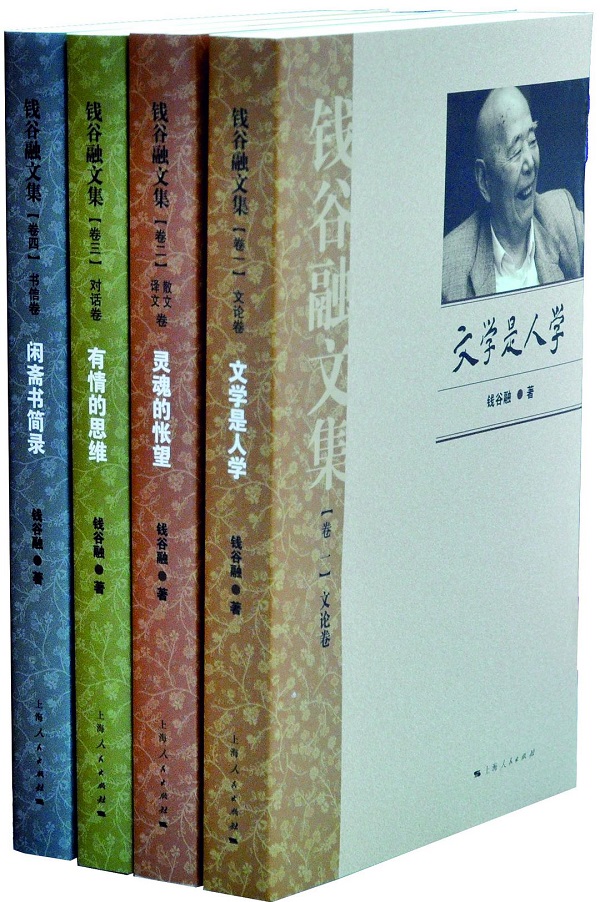
Collected Works of Qian Gurong

Qian Gurong’s initial answer was Gorky. The full text of On Literature as Human Studies is more than 30,000 words, and Gorky’s name is mentioned 33 times. The gesture of "I note the Six Classics" is self-evident. However, after reading this article, you will find that the actual effect is "six classics note me". Interestingly, as far as the view of humanitarian literature expressed by Qian Gurong is concerned, Gorky’s literary theory, which is the "Six Classics" that he quoted, that is, the "proletarian artistic authority" (Leninist), is not solid and powerful in supporting the thesis. Gorky’s theory is not completely compatible with Qian Gurong’s point of view in some specific discussion links, such as the task of literature, the motivation of literary creation, the abstraction or concreteness of people in literature, and especially the typical creative mode of literature. On the contrary, in the same article, Chernyshevski, another Russian writer cited by Qian Gurong, is in the same breath as the author.

As a matter of fact, searching for the whole paper on "Literature is a study of humanity" does not show the words "Literature is a study of humanity" or the sentences such as "Literature is a study of humanity" in the form of Gorky’s direct quotation. Looking up Gorky’s related writings and speeches, I found no such expression.

In this case, why did Qian Gurong associate "literature is human studies" with Gorky? Obviously, he equated Gorky’s suggestion that "literature is called’ humanism’" with "literature is humanism". And where does "calling literature’ human studies’" come from? Qian Gurong said: "It comes from Timofeev’s Principles of Literature." In 1953, the Principles of Literature, published by Pingming Publishing House, was mentioned in many places, and Gorky called literature a "human study". However, in this edition of Principles of Literature, Timofeyev did not annotate the origin of Gorky. It was not until 1959, that is, two years after "On Literature as Human Studies" was written, that Timofeyev indicated in the revised edition of "Principles of Literature" that Gorky’s statement came from the article "On Skills". In 1979, People’s Literature Publishing House published this article. According to this version, Gorky’s original words are not "calling literature" human studies ",but" literature is the best literature of "people’s studies" or "human studies".

It is necessary to point out that, from Gorky’s original words to Qian Gurong’s quotations, the semantics have changed a long time ago after being reported by many texts and translated in different languages. But one thing is certain, Gorky is not the original creator of "literature is human studies".

Because of this, since the publication of "On Literature as Humanism", the controversy about the real origin of "Literature as Humanism" has never stopped. As a party to the debate, Qian Gurong’s attitude has also gone through the process from "defense-persistence" to "doubt-correction" and even self-denial. Finally, he admitted that "Gorky may not have said that literature is a human study".

Of course, denying Gorky, Qian Gurong didn’t give up solving the mystery he created. He found a new answer: Dana.

How did Qian Gurong find Dana? There are related descriptions in his correspondence and interviews in his later years:

In July 2003, Qian Gurong said in a letter to literary critic Li Ling: "I remember that one day in the 1990s, I happened to read the English version of A History of English Literature written by Tanner. In the preface of the book, Tanner said in plain language:’ literature, it is the study of man’. Turner was born in 1828, 40 years earlier than Gorky. The invention right of the phrase’ literature is human studies’ should not belong to Gorky, but to Turner. "

In March, 2005, Li Shitao, a classmate from Qian Gurong, mentioned this matter again, and the expression was basically the same, adding that Dana’s History of English Literature was kept in his family.

In June 2014, Qian Gurong repeated the above words in an exclusive interview with Ma Xinfang, a reporter from Shenzhen Special Zone Daily, only emphasizing that "the book History of English Literature has always been in my family, but I didn’t read it".

Qian Gurong’s book-flipping in the 1990s was a rock-breaking event. The three key clues he came across while turning pages —— Dana, the preface of English History of English literature, and "literature, it is the study of man" —— refreshed people’s understanding of the origin of "literature is the study of man".

Danner, a famous French philosopher, historian and literary theorist, had a far-reaching influence on literary research in the 19th century. In China, Dana’s most famous literary theory work is Philosophy of Art, which was translated by Fu Lei.

The History of English Literature, written by Dana from 1864 to 1869, has no complete translation in China, and some chapters are scattered in books compiled by others. For example, the second volume of Selected Western Literary Theories edited by Wu Yifu contains the second chapter of the preface to the History of English Literature; The Interpretation of Shakespeare’s Plays compiled by Zhang Ke and Wang Yuanhua contains the "Shakespeare Theory" in the History of English Literature.

"literature, it is the study of man", according to Qian Gurong, comes from the preface of the English version of The History of English Literature. Literally, it can indeed correspond to the Chinese saying that "literature is human studies".

If we deduce from these three evidences, the invention right of "literature is human studies" will undoubtedly belong to Dana. Never thought, a new round of questioning appeared soon, and it was rigorous and powerful. In the first issue of China Social Sciences in 2010, Liu Weiqin, a professor at South-Central University for Nationalities, published a paper "Reflections on the Proposition that Literature is a Human Study", which revealed a surprising fact-the original version of Dana’s History of English Literature was in French, while Qian Gurong read the English version. The popular English version of The History of English Literature was translated by Henri Van Laun. However, Liu repeatedly read the preface of this translation, but failed to find the words "literature, it is the study of man". Liu then consulted the preface of the original French version of The History of English Literature, and failed to find a French sentence corresponding to "literature is human studies". Even the sentence closest to "literature is human" is far from its precise meaning.

What is the problem? Let’s take a closer look at Dana and his writings.

The English Version of Dana’s History of English Literature

In the history of western literary theory, Danner was deeply influenced by Comte’s positivism and Darwin’s evolution theory, and borrowed natural laws to explain literary phenomena earlier. The representative work of Dana’s literary theory is the preface to the History of English Literature. In this article, Dana systematically expounded his famous theory of "three elements" of literary development, and he advocated that literary creation is determined by three forces: race, environment and times, which constitute the "internal root", "external pressure" and "acquired momentum" of literary development. The History of English Literature takes English literature as an example to prove the theory of "three elements".

It is true that the preface of the History of English Literature can be regarded as an article on literary theory, but it should be classified into the categories of cultural anthropology and historical sociology. Because Dana pays more attention to the general mental state and national temperament that produce literary works, the writer’s psychology and character as an individual are often ignored by him. As Dana’s teacher St. Pevey commented: Mr. Dana’s research method did not touch the unique and specific individuals, and he always stayed outside, letting the so-called talents and talents escape from the mesh.

Furthermore, Dana’s research paradigm of literary theory, which pays attention to the whole nationality, runs counter to the description of "concrete, living people" in literary works advocated by Qian Gurong in On Literature as Human Studies.

Therefore, it is understandable that Qian Gurong’s new answer-Dana, which was sought by the original creator of "literature is human studies", was questioned.

A good guess, perhaps, Qian Gurong turned to another English version of the History of English Literature in the 1990s; Perhaps, in that version, the English translator has drawn up a title and added a new note for the preface of the book, and "literature, it is the study of man" is part of the title or note …

Perhaps, it’s just that Qian Gurong’s memory is biased. However, with the death of the old gentleman, these have become unsolved mysteries.

Perhaps, we should make a bolder guess: before the publication of On Literature as Human Studies, no one explicitly said that literature is human studies. As one of the most important propositions in modern and contemporary China literature, "Literature is the study of human beings" was invented by the discoverer Qian Gurong himself. Truth is largely a matter of courage. Qian Gurong found a key to understand literary problems with great theoretical courage, but his humility made him devote his time and energy to a fruitless task-to find the person who made the key.

Parents are embarrassed early after school in primary schools: how to solve the "3: 30 problem"?

  BEIJING, Beijing, September 14 (Reporter Zhang Ni) In recent years, with the promotion of burden reduction in primary and secondary schools, the school hours of primary schools in many areas have advanced to around 3: 30. However, children leave school early and parents leave work late, which makes many parents feel embarrassed — — It is unrealistic to ask for leave, and there are many concerns about the custodian. How should we solve the "3: 30 problem"?

  Parents are worried about picking up their baby after school at 3: 30.

  "When I get to school, I have a headache. My wife and I both go to work. The off-duty time is five or six o’clock, but children usually leave school at three or four o’clock, and picking up children has become a problem." Mr. Wang, a citizen who lives in Haidian District, Beijing, said that every time he started school, he began to worry about picking up the baby.

  Mr. Wang’s son is in the fourth grade. Before that, Mr. Wang’s mother helped to pick him up, but in the past two years, because his mother was in poor health, he had to pick him up with his wife.

  "Now the school has after-school activities three days a week, and the school time is relatively late. I will rotate with my wife for the remaining two days. Whoever is not busy will pick up the children in advance." Mr. Wang said that because the school is close to home, he and his wife planned to let the children go to school by themselves after they entered the fifth and sixth grades, but he was still a little worried.

  Mr. Wang’s experience is also a portrayal of the real life of many young parents. In order to solve the problem, many elderly people took the initiative to take over the heavy responsibility of receiving the baby. Ms. Shen, 66, is one of them.

  Ms. Shen lives in Haidian District. Her grandson is in the first grade of primary school this year. Because both her son and daughter-in-law have to work, the job of picking up and dropping off the children is given to her.

  "I have to go back and forth between home and school several times a day, and I have to walk on the road for nearly an hour a day." Ms. Shen said that because she is in good health, she can accept it, but I am afraid that the elderly who are in poor health will be a little overwhelmed.

  "Last year, my son asked for a second child, and I hired a nanny to take the second child at home. I can still be busy when I send the boss. When the second child starts to go to kindergarten, I have to pick up two. Without a nanny, I will definitely be too busy." Ms. Shen said.

  Market demand gives birth to trusteeship fever

  The problem of parents picking up their children has also left business opportunities for off-campus hosting institutions, and the fees of such institutions are expensive.

  A few days ago, the reporter consulted a primary school care institution in Zhongguancun, Beijing, and learned that the cost of hosting a primary school student in this institution is 1,480 yuan per month, while the student’s meal fee is calculated separately, which is the charging standard for each meal in 20 yuan. In this way, if a primary school student has dinner once a day in a custody institution, the monthly expenses add up to nearly 2,000 yuan, which is not a small expense for many parents.

  Even so, because of the large demand, the number of custody places of custody institutions is also very popular.

  "The number of students we can accept is limited, so we usually start to register in mid-August, and there will be very few places left when the school starts." A staff member of the agency told reporters.

  For such a custodian, parents also have their own concerns.

  "One depends on whether the price charge is acceptable. In addition, if we really want to send our children to such a custody institution, we must also check the qualifications, safety facilities, the level of teachers, the quality of food, etc. We are all concerned." Mr. Wang expressed his concern.

  The teacher vomited: it is very tiring to organize after-school activities.

  In the first half of this year, the Ministry of Education issued the Guiding Opinions on Doing a Good Job in After-school Services for Primary and Secondary School Students. Among them, it is clear that we should give full play to the role of the main channel of after-school service in primary and secondary schools. The majority of primary and secondary schools should make full use of their advantages in management, personnel, venues and resources, and take the initiative to assume the responsibility of students’ after-school service.

  The reporter learned that after-school expansion activities have been carried out in primary schools in many areas, including Beijing. However, in the process of school implementation, there are also many practical problems.

  Lin Lin (pseudonym), who works as an English teacher in a primary school in Chaoyang District, Beijing, said in an interview that her primary school will hold community activities three days a week, but because of the limited resources of teachers in the school, some interest activities need to be outsourced to hire teachers.

  "Schools should also increase their funding, not only paying the class fees of external teachers, but also paying some remuneration to the class teachers." Lin Lin said.

  "Community activities usually disrupt classes, and it is difficult for teachers to manage classroom discipline. Therefore, each class should be equipped with a class supervisor. Once the class is over, children like to have classes in disorder, so the class supervisor must always be nervous to prevent danger." Lin Lin told reporters that he will arrive at school at seven o’clock every day, and his usual workload is already very heavy. Coupled with the arrangement of extracurricular activities, he is very tired at the end of the day.

  After school at 3: 30, did the students reduce their burden?

  On the one hand, the school leaves school early, on the other hand, the students’ schoolwork burden has not really been alleviated. Many primary school students hurried to the off-campus cram school after leaving the school gate. Xiaoding, who is in the sixth grade this year, is one of them.

  "I don’t have cram schools now except Monday and Sunday, and I have extracurricular classes the rest of the time." Xiaoding told reporters.

  Xiaoding’s school is a key primary school in Beijing. It will finish school before three o’clock every Tuesday and Friday, but he still has cram schools to attend. Usually, Xiaoding goes to cram school by bike every time he comes home from school to pack his things, and many students in the class have similar situations.

  "We are under great pressure as parents. Some of our children’s classmates were recruited by key middle schools in the fourth and fifth grades. If they can’t be recruited, they can only participate in computer allocation, which is quite anxious." Mr. Zhu, who lives in Haidian District, expressed emotion in an interview.

  Mr. Zhu also has a daughter who has just entered the sixth grade. Because he is worried that his child will be sent to a bad middle school, he began to take his child to take some key middle school exams very early.

  "In fact, children have very little homework in school and can finish it soon, but we also reported three or four extracurricular classes to our children, so it is not easy." Mr. Zhu said that as long as the child’s junior high school is not solved one day, his heart will always be hanging.

  How to solve the problem?

  On the one hand, the state advocates reducing the burden and letting students leave school early. On the other hand, schools and parents are faced with various implementation problems. How to solve the contradictions?

  In fact, in recent years, many local governments have introduced relevant policies to solve the problem.

  For example, Beijing, Chengdu and other places have established a financial guarantee mechanism. Public primary schools in Shanghai generally provide free after-school care services to students who have difficulties in family care. Qingdao and other places "take the school family Committee as the leading factor and the school participates in cooperation" and rely on the school’s premises and equipment to carry out after-school service.

  "Solve ‘ 3: 30 problem ’ It is still necessary to let the school play an active role and carry out more extracurricular activities, but this requires a policy tilt, focusing on giving teachers subsidies and improving teachers’ enthusiasm. " Gu Mingyuan, honorary president of China Education Association, stressed in an interview with Zhongxin. com.

  Gu Mingyuan analyzed that while the government gives financial support to schools, it should also give them autonomy in running schools. "Education should also be shared, so that schools can fully tap and utilize all social resources, even including inviting parents with special skills to participate in after-school activities. Children should not be pushed to training institutions because of school."

  Chu Zhaohui, a researcher at the China Academy of Educational Sciences, believes that students should also be given some time for independent activities, rather than just "going to school — — Going home is a two-point and one-line life, and the part that is in contact with society is missing.

  "In the process of children’s growth, it is not only the school that has an educational role, but also the society. Education should return to a normal state, so that children can participate in social activities independently and find their own interests." Chu Zhaohui said.

  In addition, Chu Zhaohui emphasized that if the disguised junior high school entrance examination still exists, then the children are still tied to the examination and academic performance, so it is difficult to really reduce the burden. (End)

How many movies do you know that have a full dialogue but no slots?

1905 movie network news At present, many movies at home and abroad rely on grand scenes, exquisite special effects, thrilling blasting and so on to win the audience’s attention, but few movies really rely on actors’ acting skills and stories themselves to win both box office and word of mouth. Today, Xiaobian will recommend several movies that you can never get tired of watching.

First, the game of wise men who decide life and death:

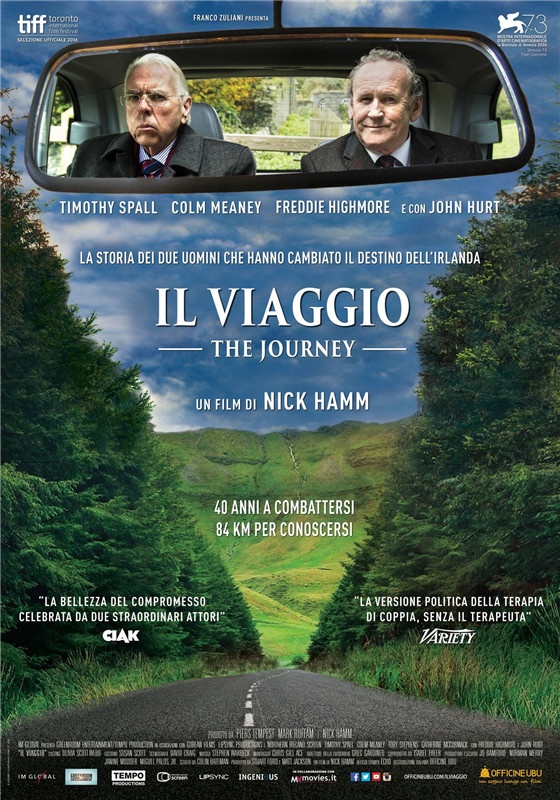
This is a film adapted from real historical events in Britain. The story tells the most famous conversation in British history. The two sides of the conversation were ian Paisley, the leader of democratic unionist party in Northern Ireland, and martin mcguinness, a politician of the New Finland Movement. The conversation took place in Britain during the turbulent period, when the British people were under the threat of death every day, and the meeting between the two politicians decided whether thousands of people could spend a peaceful period safely.

This one-and-a-half-hour-long film, from the very beginning, explains the reasons for the meeting between the two men, to how the political team behind it arranged the space for them to be alone behind the scenes, and finally, how the two men reached an agreement in mutual sarcasm and disputes, without delay.

One of the highlights of the film is that the scene of their conversation is placed in the back seat of a commercial vehicle. During the short hour of escorting ian Paisley to the airport, the political team needs to race against time to create opportunities for peace talks between the two, including arranging special drivers and setting up roadblocks to extend the time, because it is related to the lives of tens of millions of people and the future of Britain.

The second wonderful thing is the dialogue between the two people, which sounds like sarcasm, but in fact they are playing games with each other. Both of them stick to their political opinions and have no intention of giving in. But in the end, the two sides finally compromise for peace, but this compromise is not a concession of political opinions. Just as at the end of the film, Ian made Martin apologize for the explosion in Britain as a condition for peace, but Martin refused, and this refusal touched Ian and made him realize that their insistence on politics was actually the same.

The lines of the whole movie are particularly logical, and it is difficult for people to imagine how the real scene developed at that time, but it is precisely because of the images that this historic moment can be highly restored, which is the unique charm of the movie.


Second, the intrigue for the truth:


This suspense masterpiece from Spain was released in China this year, and it was once a double harvest at the box office. The story is about a mother who dressed as a lawyer to investigate her son’s death, and finally the truth came out.

In the film, the hero and heroine are in a closed room, trying to find each other’s loopholes with language. The hostess and mother use superb conversation skills to win the trust of the man first, and then slowly let the man tell the truth himself, while the suspect of the other man fabricates one story after another to try to cover up the facts, but in the end, she can’t resist the psychological defense line and is broken by the woman. After he tells the truth, the woman leaves the room. He didn’t realize that the lawyer who just walked into the room was not a real lawyer. In the last shot, he looked out of the window and looked at a pair of middle-aged men and women who were watching him in the opposite window. The woman took off her costume and the man’s face gradually emerged with a look of surprise.

This masterpiece, which scored 8.7 on Douban, is different from other suspense films. It takes conversation as the main line, and the two people perform different versions of the story in the intrigue between words. But in the end, the audience can only distinguish the truth by virtue of their dialogue, which can be described as an extraordinary brain-burning film.


Three, spying on the secret tit for tat:


This is a realistic work that reflects the fragile emotional relationship between people at present. The story mainly tells a series of unexpected stories about seven good friends at a dinner because of a game.

The setting of seven people in the film is two couples, a pair of lovers and a man who is afraid to bring his partner to meet his friends. At the dinner table, the hostess, who is a psychologist, suggested that everyone play a game. The rule of the game is that everyone should put their mobile phones on the dinner table and share any phone calls or text messages all night. Imagine that in this information-oriented era, mobile phones have almost become the most special private space for everyone. As the movie said, it is like a Pandora’s box. Once opened, I don’t know what will happen. It is in this game that everyone’s unknown secrets begin to surface. There is no loyalty between husband and wife, no trust between friends, and everyone tries to defend with pale and powerless language, but all broken relationships are like broken mirrors, which can not be healed by just a few words.

This high-scoring movie, which also scored 8.6 on Douban, is almost a dialogue. Everyone connects lies with the truth in series. Only by watching this movie seriously can the audience sort out this complicated relationship between people. At the end of the movie, they will inevitably sigh that in the current information age, although the relationship between people has been expanded, it is so fragile, and everyone needs a Pandora’s Box of their own to load things that they don’t want to be known.


Fourth, the strange story of staggered space:


This is a complete brain-burning film. There are nearly ten protagonists in the same room, and the relationship between them depends on the dialogue between the characters. In the first half of the film, it will bring people a sense of seeing things in a fog, but it will make people feel more and more jittery later, especially when everyone talks about the strange phenomenon when the comet comes. The ensuing power outage causes everyone to leave the house and meet the same themselves in the street for help. This series.

It is reported that when the film was filmed, the director only provided information about the relationship between the actors and characters, and what the lines should say and what they need to do all depended on the improvisation of the actors, which shows how amazing the performance of this group of old actors is in front of the camera. Compared with the previous two films, this part adds sci-fi elements to it, and leads the audience into a world with wide brain holes through similar stories of the same characters in different timelines and different spaces.

Global easing is expected to heat up, and China’s monetary policy space is further opened.

  Recently, the COVID-19 epidemic has spread in many countries around the world, causing market concerns about corporate performance and economic growth. The Federal Reserve announced that it would cut the federal funds rate by 50 basis points to 1% & mdash; 1.25% range, this is the first time the Fed has cut interest rates this year. China’s central bank did not follow suit and suspended the open market operation. Experts believe that China has guided the interest rate reduction in advance, and there is still room for monetary policy.

  At 23: 00 Beijing time on March 3, the Federal Reserve suddenly lowered its benchmark interest rate by 50 basis points to 1.00%— 1.25%, while reducing the excess reserve ratio (IOER) by 50 basis points to 1.1%. 

  Although the Fed cut interest rates three times last year, the relevant decisions were made by the interest rate meeting. The sudden announcement of interest rate cuts exceeded market expectations. Subsequently, the UAE and Saudi Arabia announced a 50 basis point interest rate cut; On the morning of March 4th, Beijing time, the HKMA in Hong Kong and Macau also announced a 50 basis point interest rate cut.

  On March 4th, the People’s Bank of China suspended its open market operation. Experts in the industry believe that in response to the COVID-19 epidemic, China has guided the interest rate reduction ahead of schedule, and there is still room for monetary policy.

  Multinational central banks start to cut interest rates.

  The United States is not the first country to start cutting interest rates.

  Before the Fed cut interest rates, central banks in Australia, Malaysia and other countries announced interest rate cuts. 

  Earlier, the Fed’s interest rate cut expectations have already appeared, but the market expects the Fed to announce this decision at the interest rate meeting in March. The sudden announcement of interest rate cuts outside the interest rate meeting exceeded market expectations. 

  It is not uncommon for the Federal Reserve to cut interest rates since last year. Although this is the first interest rate cut by the Federal Reserve in 2020, it is also the fourth interest rate cut operation since last year. The previous three interest rate cuts occurred in July, September and October of 2019.

  Judging from the operation in the history of the Federal Reserve, it is rare to cut interest rates urgently. Ming Ming, chief researcher of fixed income of CITIC Securities, said that the Fed chose to cut interest rates urgently, usually when it encountered a major risk event. Since 1994, there have been nine emergency interest rate cuts in the history of the Federal Reserve. The latest emergency interest rate cut by the Federal Reserve dates back to October 8, 2008, because the collapse of Lehman Brothers triggered concerns about economic recession. In the 11 years since then, the Fed has not taken similar actions. Therefore, it is clearly believed that the announcement of the emergency interest rate cut by the Federal Reserve this time may mean that the assessment of the current risk state within the Federal Reserve has reached a certain level.

   The Fed’s interest rate cut quickly triggered a wave of "following" interest rate cuts. The United Arab Emirates and Saudi Arabia immediately announced a 50 basis point interest rate cut. China’s Hong Kong and Macao Special Administrative Regions adopted the linked exchange rate system, so they also announced interest rate cuts soon. On March 4th, the Hong Kong Monetary Authority announced that it would cut its benchmark interest rate by 50 basis points to 1.50%, and said that it would continue to pay attention to market conditions, maintain the orderly operation of Hong Kong’s currency and foreign exchange markets, and ensure the stability of Hong Kong’s currency according to the linked exchange rate system. The Macao Monetary Authority also announced on March 4th that it would lower the basic interest rate of the discount window by 50 basis points to 1.50%. The Macao Monetary Authority said that since the Macao pataca is linked to the Hong Kong dollar, in order to maintain the effective operation of the linked exchange rate system between Hong Kong and Macao, the policy interest rate changes of the two places must be basically the same. Therefore, the Macao Monetary Authority followed the Hong Kong Monetary Authority to adjust its basic interest rate synchronously.

  Loose expectations have been warming up around the world. Recently, the Bank of Japan purchased a record 101.4 billion yen ETF on March 2, and said that it would provide sufficient liquidity to the market through appropriate market operations and asset acquisition to ensure the stability of the financial market; The European Central Bank also expressed its readiness to take appropriate and targeted measures and take corresponding actions against potential risks if necessary.

  Monetary policy is based on me.

  After the Federal Reserve cut interest rates, China’s central bank did not follow suit and suspended open market operations. 

  On March 4th, the central bank announced that the total amount of liquidity in the banking system is at a reasonable and sufficient level, and no reverse repurchase operation will be carried out today.

  Color, chief economist of Founder Securities, believes that the COVID-19 epidemic appeared earlier in China, and the China government has taken effective measures to prevent and control the epidemic, such as medium-term lending facility (MLF) "interest rate reduction", reverse repurchase operation, refinancing rediscount, special refinancing, etc., to maintain a reasonable and sufficient liquidity. The interest rate cut by the Federal Reserve and other central banks is a lagging policy after the epidemic. China’s central bank is already a pioneer and does not have to follow.

  As early as February 1, the central bank made it clear that it would set up a special refinancing loan of 300 billion yuan to provide financial institutions with low-cost funds and support financial institutions to provide credit support at preferential interest rates for enterprises. Before the financial market opened on February 3, the central bank predicted the timing and scale of liquidity in advance. Subsequently, on February 3 and 4, the central bank put sufficient supply liquidity into the market, and the accumulated liquidity in the two days reached 1.7 trillion yuan, which exceeded market expectations.

  At the same time, China took the lead in "cutting interest rates", but different from the Fed’s interest rate cut, China guided the open market operating interest rate, MLF interest rate and LPR quotation to be lowered in a "relay" manner. On February 3rd, while carrying out a record 1.2 trillion yuan reverse repurchase operation, the interest rates of the current 7-day and 14-day reverse repurchase operations both dropped by 10 basis points, which exceeded market expectations. On February 17th, the winning bid rate of the 200 billion MLF operation carried out by the People’s Bank of China was lowered by 10 basis points; On February 20th, the one-year LPR decreased by 10 basis points to 4.05%, and the one-year LPR decreased by 5 basis points to 4.75%.

"In the short term, China’s central bank may not follow up simultaneously for the time being." Wen Bin, chief researcher of Minsheng Bank, believes that in the past two or three years, China’s monetary policy has been relatively independent, and decisions will be made according to its own economic situation, inflation level, employment situation and other factors. No matter whether the Fed raises interest rates or cuts interest rates, China has not made simultaneous adjustments for the first time.

  For example, at the end of July last year, when the Federal Reserve announced a rate cut, China did not follow suit, and also suspended the open market operation on the same day.

  There is room for countercyclical regulation

  "The global restart of loose operation also provides space for the adjustment of China’s monetary policy in the next stage." Wen Bin said.
 
  Obviously, the further easing of global monetary policy has opened up space for domestic monetary policy. Compared with Europe and America, the Bank of China has more room for conventional monetary policy easing.

  Recently, Liu Guoqiang, deputy governor of the People’s Bank of China, said in an interview with the media that as one of the few countries in the major economies to implement normalized monetary policy, China still has sufficient monetary policy space and sufficient reserves in the toolbox, so it is confident and capable of hedging the impact of the epidemic.

  Under this premise, the expectation of lowering the benchmark deposit interest rate has also increased, but the market is still controversial.

  Liu Guoqiang said that the benchmark deposit interest rate is the "ballast stone" of China’s interest rate system, and it will be kept for a long time. In the future, it will be adjusted in a timely and appropriate manner according to the deployment of the State Council, taking into account the fundamental conditions such as economic growth and price level.

  However, it has been pointed out recently that lowering MLF and other methods should be used to drive down the financing cost of the real economy. At this time, lowering the benchmark deposit interest rate is a "turning back" in the interest rate marketization process. Many economists also believe that the effect of lowering the benchmark deposit interest rate may be limited.

  In this regard, Wen Bin believes that it is residents and corporate deposits that really affect bank costs, accounting for more than 60% of bank liabilities. The change of MLF interest rate is more to convey the intention of monetary policy, which has limited effect on reducing the overall debt cost of banks, not to mention the frequent change of MLF interest rate. The high capital cost of banks also restricts the downward trend of LPR. Therefore, it is very necessary and urgent to lower the deposit interest rate, and we can’t think that lowering the deposit interest rate is the retrogression of interest rate marketization. On the contrary, the central bank’s "anchoring" of the deposit benchmark interest rate is still the core element and proper meaning of monetary policy. 

  Liu Guoqiang said that next, targeted cuts to required reserve ratios will be selected for the banks that meet the service standards in inclusive finance in 2019 to release long-term liquidity. Recently, the COVID-19 epidemic has spread in many countries around the world, causing market concerns about corporate performance and economic growth. The Federal Reserve announced that it would cut the federal funds rate by 50 basis points to 1% & mdash; 1.25% range, this is the first time the Fed has cut interest rates this year. China’s central bank did not follow suit and suspended the open market operation. Experts believe that China has guided the interest rate reduction in advance, and there is still room for monetary policy.

  At 23: 00 Beijing time on March 3, the Federal Reserve suddenly lowered its benchmark interest rate by 50 basis points to 1.00%— 1.25%, while reducing the excess reserve ratio (IOER) by 50 basis points to 1.1%.

  Although the Fed cut interest rates three times last year, the relevant decisions were made by the interest rate meeting. The sudden announcement of interest rate cuts exceeded market expectations. Subsequently, the UAE and Saudi Arabia announced a 50 basis point interest rate cut; On the morning of March 4th, Beijing time, the HKMA in Hong Kong and Macau also announced a 50 basis point interest rate cut.

  On March 4th, the People’s Bank of China suspended its open market operation. Experts in the industry believe that in response to the COVID-19 epidemic, China has guided the interest rate reduction ahead of schedule, and there is still room for monetary policy.

   Multinational central banks start to cut interest rates.

  The United States is not the first country to start cutting interest rates.

  Before the Fed cut interest rates, central banks in Australia, Malaysia and other countries announced interest rate cuts.

  Earlier, the Fed’s interest rate cut expectations have already appeared, but the market expects the Fed to announce this decision at the interest rate meeting in March. The sudden announcement of interest rate cuts outside the interest rate meeting exceeded market expectations.

  It is not uncommon for the Federal Reserve to cut interest rates since last year. Although this is the first interest rate cut by the Federal Reserve in 2020, it is also the fourth interest rate cut operation since last year. The previous three interest rate cuts occurred in July, September and October of 2019.

  Judging from the operation in the history of the Federal Reserve, it is rare to cut interest rates urgently. Ming Ming, chief researcher of fixed income of CITIC Securities, said that the Fed chose to cut interest rates urgently, usually when it encountered a major risk event. Since 1994, there have been nine emergency interest rate cuts in the history of the Federal Reserve. The latest emergency interest rate cut by the Federal Reserve dates back to October 8, 2008, because the collapse of Lehman Brothers triggered concerns about economic recession. In the 11 years since then, the Fed has not taken similar actions. Therefore, it is clearly believed that the announcement of the emergency interest rate cut by the Federal Reserve this time may mean that the assessment of the current risk state within the Federal Reserve has reached a certain level.

  The Fed’s interest rate cut quickly triggered a wave of "following" interest rate cuts. The United Arab Emirates and Saudi Arabia immediately announced a 50 basis point interest rate cut. China’s Hong Kong and Macao Special Administrative Regions adopted the linked exchange rate system, so they also announced interest rate cuts soon. On March 4th, the Hong Kong Monetary Authority announced that it would cut its benchmark interest rate by 50 basis points to 1.50%, and said that it would continue to pay attention to market conditions, maintain the orderly operation of Hong Kong’s currency and foreign exchange markets, and ensure the stability of Hong Kong’s currency according to the linked exchange rate system. The Macao Monetary Authority also announced on March 4th that it would lower the basic interest rate of the discount window by 50 basis points to 1.50%. The Macao Monetary Authority said that since the Macao pataca is linked to the Hong Kong dollar, in order to maintain the effective operation of the linked exchange rate system between Hong Kong and Macao, the policy interest rate changes of the two places must be basically the same. Therefore, the Macao Monetary Authority followed the Hong Kong Monetary Authority to adjust its basic interest rate synchronously.

  Loose expectations have been warming up around the world. Recently, the Bank of Japan purchased a record 101.4 billion yen ETF on March 2, and said that it would provide sufficient liquidity to the market through appropriate market operations and asset acquisition to ensure the stability of the financial market; The European Central Bank also expressed its readiness to take appropriate and targeted measures and take corresponding actions against potential risks if necessary.

  Monetary policy is based on me.

  After the Federal Reserve cut interest rates, China’s central bank did not follow suit and suspended open market operations.

  On March 4th, the central bank announced that the total amount of liquidity in the banking system is at a reasonable and sufficient level, and no reverse repurchase operation will be carried out today. 

  Color, chief economist of Founder Securities, believes that the COVID-19 epidemic appeared earlier in China, and the China government has taken effective measures to prevent and control the epidemic, such as medium-term lending facility (MLF) "interest rate reduction", reverse repurchase operation, refinancing rediscount, special refinancing, etc., to maintain a reasonable and sufficient liquidity. The interest rate cut by the Federal Reserve and other central banks is a lagging policy after the epidemic. China’s central bank is already a pioneer and does not have to follow.

  As early as February 1, the central bank made it clear that it would set up a special refinancing loan of 300 billion yuan to provide financial institutions with low-cost funds and support financial institutions to provide credit support at preferential interest rates for enterprises. Before the financial market opened on February 3, the central bank predicted the timing and scale of liquidity in advance. Subsequently, on February 3 and 4, the central bank put sufficient supply liquidity into the market, and the accumulated liquidity in the two days reached 1.7 trillion yuan, which exceeded market expectations.

  At the same time, China took the lead in "cutting interest rates", but different from the Fed’s interest rate cut, China guided the open market operating interest rate, MLF interest rate and LPR quotation to be lowered in a "relay" manner. On February 3rd, while carrying out a record 1.2 trillion yuan reverse repurchase operation, the interest rates of the current 7-day and 14-day reverse repurchase operations both dropped by 10 basis points, which exceeded market expectations. On February 17th, the winning bid rate of the 200 billion MLF operation carried out by the People’s Bank of China was lowered by 10 basis points; On February 20th, the one-year LPR decreased by 10 basis points to 4.05%, and the one-year LPR decreased by 5 basis points to 4.75%. 

"In the short term, China’s central bank may not follow up simultaneously for the time being." Wen Bin, chief researcher of Minsheng Bank, believes that in the past two or three years, China’s monetary policy has been relatively independent, and decisions will be made according to its own economic situation, inflation level, employment situation and other factors. No matter whether the Fed raises interest rates or cuts interest rates, China has not made simultaneous adjustments for the first time.

  For example, at the end of July last year, when the Federal Reserve announced a rate cut, China did not follow suit, and also suspended the open market operation on the same day.

  There is room for countercyclical regulation

  "The global restart of loose operation also provides space for the adjustment of China’s monetary policy in the next stage." Wen Bin said.

  Obviously, the further easing of global monetary policy has opened up space for domestic monetary policy. Compared with Europe and America, the Bank of China has more room for conventional monetary policy easing. 

  Recently, Liu Guoqiang, deputy governor of the People’s Bank of China, said in an interview with the media that as one of the few countries in the major economies to implement normalized monetary policy, China still has sufficient monetary policy space and sufficient reserves in the toolbox, so it is confident and capable of hedging the impact of the epidemic. 

  Under this premise, the expectation of lowering the benchmark deposit interest rate has also increased, but the market is still controversial.

  Liu Guoqiang said that the benchmark deposit interest rate is the "ballast stone" of China’s interest rate system, and it will be kept for a long time. In the future, it will be adjusted in a timely and appropriate manner according to the deployment of the State Council, taking into account the fundamental conditions such as economic growth and price level. 

  However, it has been pointed out recently that lowering MLF and other methods should be used to drive down the financing cost of the real economy. At this time, lowering the benchmark deposit interest rate is a "turning back" in the interest rate marketization process. Many economists also believe that the effect of lowering the benchmark deposit interest rate may be limited.

  In this regard, Wen Bin believes that it is residents and corporate deposits that really affect bank costs, accounting for more than 60% of bank liabilities. The change of MLF interest rate is more to convey the intention of monetary policy, which has limited effect on reducing the overall debt cost of banks, not to mention the frequent change of MLF interest rate. The high capital cost of banks also restricts the downward trend of LPR. Therefore, it is very necessary and urgent to lower the deposit interest rate, and we can’t think that lowering the deposit interest rate is the retrogression of interest rate marketization. On the contrary, the central bank’s "anchoring" of the deposit benchmark interest rate is still the core element and proper meaning of monetary policy. 

  Liu Guoqiang said that next, targeted cuts to required reserve ratios will be selected for the banks that meet the service standards in inclusive finance in 2019 to release long-term liquidity.
An exclusive class visit to "Terminator": an exclusive interview with "Dragon Mom" Amelia and Courtney

    1905 movie network news Emilia Clarke, the "Dragon Mother", is the most popular one among a bunch of British actors, because her new film will be released soon. The actress, who was worried about a monthly rent of 1,000 pounds a few years ago, just celebrated her 28th birthday happily this year. See, even if I hurt my legs, the Luns still smile from ear to ear.

On June 19th, Amelia attended the publicity activity of Terminator: Genesis on crutches.

    In July last year, Xiao Bian was lucky enough to be invited by Paramount Pictures to visit the filming location of Terminator: Genesis in New Orleans, USA. In this new trilogy, Sarah Connor and kyle reese are played by Emilia Clarke and jai courtney respectively. Before Xiaobian takes you into the two interviews, let’s sort out the story and prevent possible time and space confusion and fine points.

From 1984 to 2015, which version of Sarah Connor do you like best?

    In 1984, James Cameron, his father, used linda hamilton, a blonde, to play Sarah Connor, a weak female college student. As we all know, Sarah is the mother of human leader kate connor. In 2029, in order to prevent the villain T-800 from going back to the past and killing his mother, John sent a soldier kyle reese to save Sarah in 1984. As a result, they fell in love and gave birth to John’s sequel "Terminator: Judgment Day" in 1991. Sarah has become a well-trained full-muscle, zero-fat modern female warrior image, and T-800, Recently, Internet language likes to use three words to summarize incisive sentences, so if three words are used to explain the central plot of Terminator series, that is "killing Nima".

Sarah’s lover, kyle reese, has also been updated, and the most robust one is the new version of jai courtney.


    In 2011, Paramount Pictures announced that it would restart Terminator, and it would make three films with brand-new cass and visual technology. The storyline would have nothing to do with Cameron’s version, and it would be three independent chapters. The first part will be released in the world on July 1st this year, and the date of China’s introduction has not been fixed. The whole story revolves around Terminator, kate connor, Sarah Connor, kyle reese and T-1000. In 2029, after the "Judgment Day", the decisive battle between human beings and machines began. kyle reese volunteered and was sent back to Sarah Connor, the biological mother who protected herself in 1984, by kate connor, the leader of the human resistance. Back in the past, kyle reese encountered the liquid metal terminator T-1000, and was rescued by heavily armed Sarah Connor driving a truck. Sarah told Kyle that 1984 no longer existed, and the T-800 that tried to kill Sarah that year had been killed by the terminator of the old version. This old version of Terminator is also a T-800 series, or played by Schwarzenegger of the old version of Terminator. It is called "Guardian" in the new film and is a key figure in training Sarah and raising John. Kyle, who fought alongside Sarah, needs to defeat the T-1000, correct the time channel and return to the future world. But,On the way, the three men met a more powerful robot T-3000, and his human face completely imitated kate connor, which made Sarah completely unable to do it. After reading this, I believe that the audience who have been constantly improving the concept of time and space through the drama "Palace" series and "The Vampire Diaries" can easily control this small case plot.

Kyle reese found himself in the wrong era, and the old song "We can’t go back, can we?"


On the day of the interview, Emilia Clarke and jai courtney appeared in front of us in costumes. Amelia wore a ponytail and a suit of black bullet-proof clothing, and she smiled lovely, just like a "neighbor" female soldier.

Amelia is 157 and weighs 114 Jin. Jin Jin is a treasure.


Movie network:Compared with Game of Thrones, what is the action intensity of Terminator?

Amelia: Not the same level. I want to be trained in martial arts, firearms and close combat. In Game of Thrones, all I have to do is talk to the air. Dragons are added later. Here, we are all serious and exciting.


Movie network:The first time you played against Schwarzenegger, how did you meet for the first time?

Amelia: He is a legend, so when I first met him, I was very nervous. However, I didn’t expect him to be so approachable and make me laugh from time to time, which immediately made me look forward to working with him.

The golden monkey population in Shennongjia, Hubei Province likes to add "new ding"

       Cctv newsRecently, the staff of Dalongtan Golden Monkey Field Research Base in Shennongjia, Hubei Province tracked and monitored the monkeys and found that a female monkey in the golden monkey population, a national first-class protected animal, successfully gave birth to the first golden monkey baby in the base this year.

one

       According to the relevant person in charge of the Dalongtan Golden Monkey Field Research Base, golden monkeys give birth from the beginning of March to the end of May every year, and females are generally pregnant from August to October in the first year, and the pregnancy period is nearly 200 days. Every female monkey usually gives birth once every two years, and it takes a year for the female monkey to feed the little golden silk monkey. In order to ensure that the mother monkey recovers as soon as possible and secretes enough milk to feed the baby monkey, the base adjusts the food supply type for the mother monkey, and sends special personnel to observe and monitor the mother monkey and the baby monkey around the clock.

       According to the statistics of the base, the population of golden monkey in Shennongjia has increased from 8 in 2005 to 10, and the number has increased from more than 1,280 to more than 1,470, and the habitat area has increased from 210 square kilometers to 354 square kilometers.