When the tariff expires, it refuses to cancel. The United States insists on fighting trade wars because of two major anxieties.
guide reading
The United States began to impose tariffs on China during the Trump era, but the United States is not active in canceling tariffs. The trade war with China is essentially the product of two kinds of anxiety in the United States: one is the crisis of the middle class, and the other is the relative decline of national strength. The former leads to the rise of right-wing populist forces, while the latter strengthens the hostility of American hawkish politicians towards China. On the one hand, the American government is unable to solve the domestic people’s livelihood problems, and can only transfer contradictions. On the other hand, it sticks to the cold war mentality, undermines global cooperation, and ultimately intensifies its own economic and political risks.
The tariffs imposed on China during the Trump administration in the United States have recently expired, but the United States is not active in canceling tariffs. Instead, it is brewing a new wave of economic bullying against China. If the United States adheres to the wrong economic policy of "politics first", the negative impact of trade protectionism will continue to be amplified in American society.
Trump accused China of "unfair trade" when he was running for president. After taking office, he launched a "301 investigation" on China in August 2017; On March 22nd of the following year, the Trump administration imposed tariffs on China’s products exported to the United States according to the survey results. The Trump administration subsequently expanded the scope and scale of tariffs imposed on China several times, imposed targeted sanctions on ZTE and other enterprises, and repeatedly broke promises and raised prices in Sino-US economic negotiations, resulting in a gradual warming of the trade war. Biden’s administration basically maintained the Trump-era tariffs, and on this basis, it continued to sanction China’s technology enterprises, which led to the continuation of the Sino-US trade war.
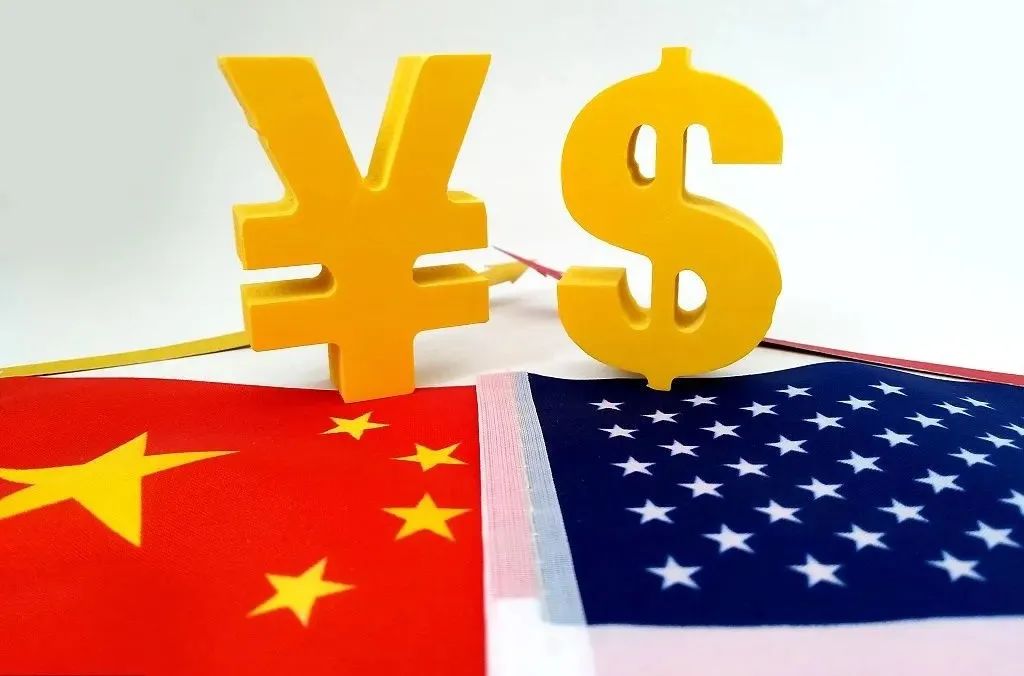
Image source: vision china
"Economic behavior" cannot hide the essence of political tools.
The American trade war with China is essentially the product of two kinds of anxiety in the United States. First, the growing middle class crisis in the United States. Since the Reagan era, the American economy has been "divorced from reality", the living conditions of American manufacturing workers and small enterprises have gradually deteriorated, the polarization between the rich and the poor in the whole society has intensified, and the anti-globalization right-wing populist movement has risen. Populist politicians such as Trump blame the plight of the middle class on "unfair" global trade and advocate safeguarding the interests of domestic workers through trade protectionism.
The second is the strategic anxiety caused by the relative decline of national strength. Some strategic hawks regard the rise of China as a threat, question the policy of "engagement with China" since Nixon, and think that it is a "strategic mistake" for the United States to "allow" China to participate in globalization. They regard the economic interdependence between China and the United States as an obstacle for the United States to resist China and contain China, and advocate that the United States should "decouple" its economy from China. Hawkish politicians and right-wing voters hit it off on trade policy, so the trade war with China has intensified and it is difficult to end.
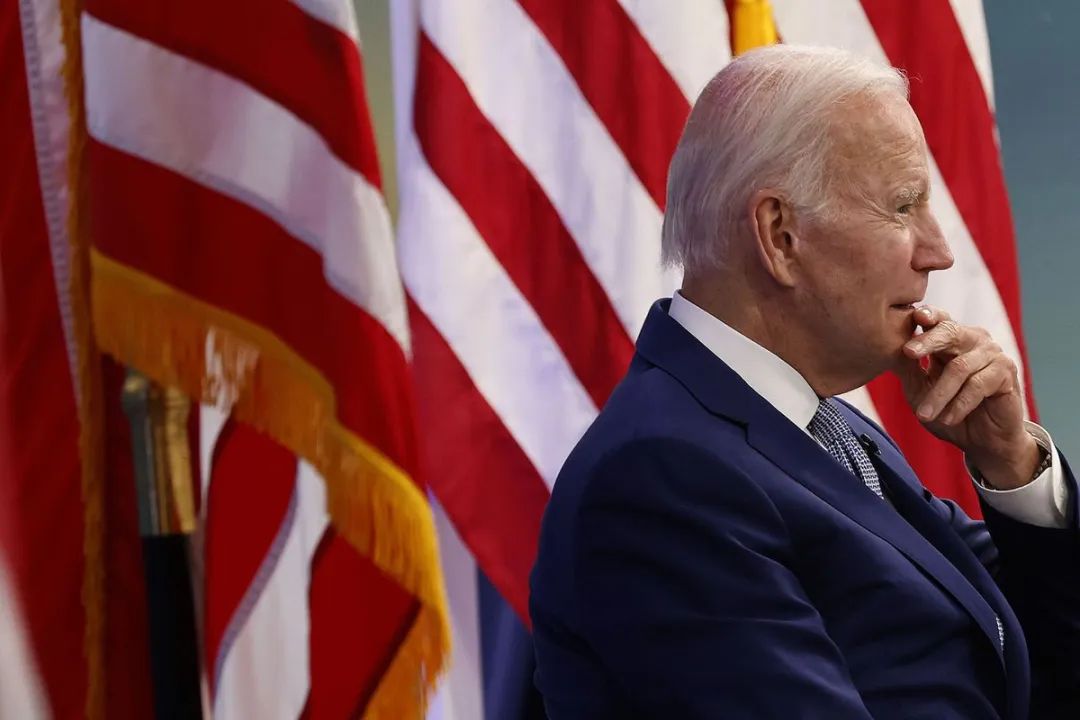
Image source: China Daily
From an economic point of view, trade protectionism does more harm than good to the United States. In 2018 alone, the trade war caused the real income of the United States to decrease by $1.4 billion per month, and rising prices caused consumers to spend $3.2 billion more per month. The trade war affects American local enterprises and workers in the transnational industrial chain, and in fact negatively affects American manufacturing. For example, the Federal Reserve pointed out in early 2019 that the US steel industry lost more than 70,000 jobs in the previous year. As of March 2019, the overall trade deficit of the United States has reached the highest value of $621 billion since 2008, an increase of $119 billion compared with when Trump took office. As the enterprises evacuated from China turned to a third country, the United States not only failed to achieve the goal of "manufacturing return" and reducing the trade deficit, but also lost part of its tariff revenue to China because of the reduction of Sino-US trade scale. Recent studies have found that the remaining Trump tariffs still bring $51 billion in additional expenses to American enterprises and consumers every year.
Therefore, the trade war with China is not so much an economic act as a political tool for anti-China politicians to fight against China. Since the 2017 National Security Strategy Report, the United States has regarded China as the primary threat, and its trade policy has also revolved around the competition with China, including establishing a "safe supply chain" to exclude Chinese enterprises, cracking down on China’s scientific and technological enterprises through sanctions and blockades, discrediting China’s overseas economic cooperation, and pulling a "small circle" to re-establish international trade rules.
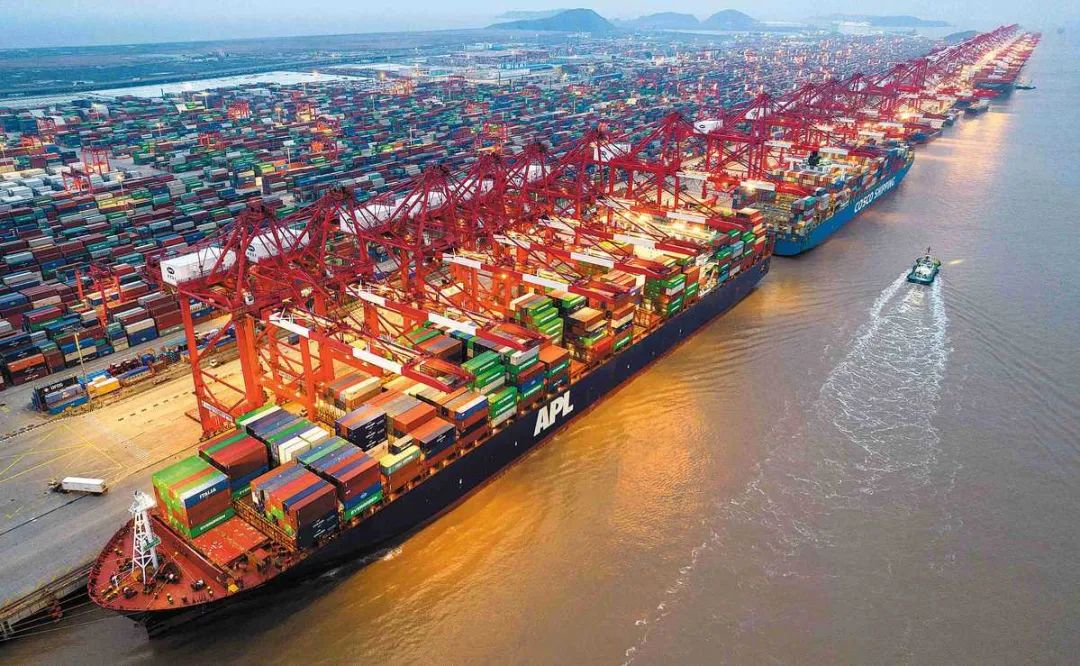
Image source: China Daily
"External treatment of internal diseases" intensifies political and economic risks
Looking back over the past five years, the trade war has indeed brought severe challenges to some industries in China, especially to science and technology enterprises, but it has not "crushed" China as the American hawks hoped. China actively builds a "double cycle" at home and abroad. On the one hand, it deepens opening up and expands international cooperation; on the other hand, it develops the potential of the domestic market and strengthens its independent innovation and self-sufficiency in science and technology.
Faced with the attempts of a few countries to establish other international rules, China actively strives for the right to speak in the international economic and trade field and strengthens South-South economic cooperation. Fundamentally speaking, as long as China keeps its economic vitality and opening to the outside world, it will be difficult for the United States to build a global economic order that excludes China’s influence and is monopolized by the United States and the West through trade wars and other means.
The Biden administration certainly knows that the trade war is not worth the candle. The article "Making us foreign policy work better for the middle class", which is usually regarded as Biden’s election platform in 2020, points out that most Americans rely on transnational trade in their work and life, and economic protectionism is not a panacea to alleviate the anxiety of the middle class. The article also criticized some American politicians for being keen on grand issues such as the "new cold war" and ignoring the interests of American voters, which has aroused voters’ resentment.
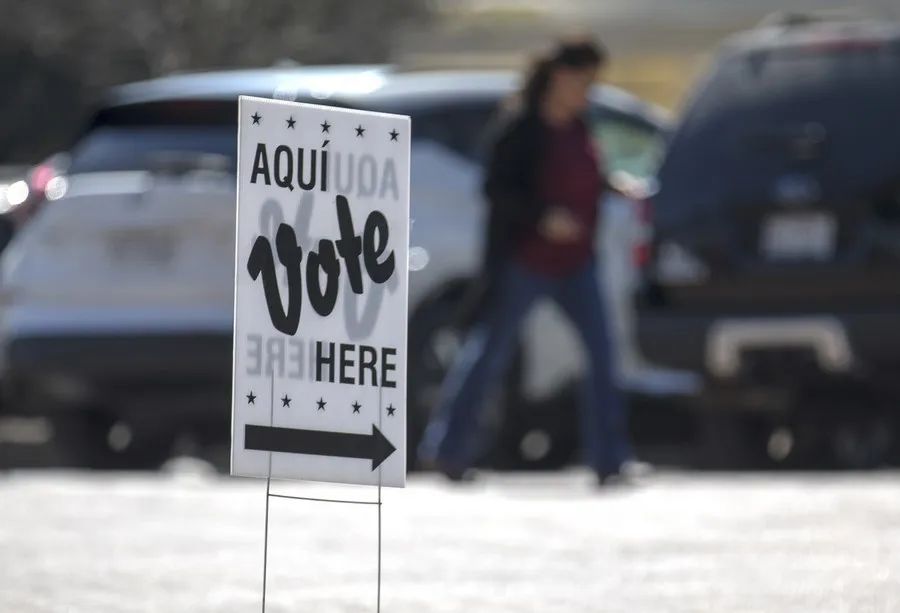
Image source: Xinhua News Agency
However, after Biden took office, the new US administration basically continued the trade protectionism policy of Trump era, and intensified sanctions against China’s technology enterprises, promoted the construction of a "technology alliance" and a "security supply chain alliance" that excluded China, and was keen to unite voters and opposition parties by speculating "China threat". This shows that some American politicians can’t solve the livelihood problems of the middle class internally, and they can only transfer contradictions by accusing the so-called "unfair trade behavior of China"; Holding a Cold War-style "zero sum" thinking abroad and insisting on undermining globalization and global development cooperation will in the end aggravate the economic and political risks facing the United States.
In order to cater to anti-China politicians and populist groups, no matter which president takes office, it is difficult for the US government to soften its position in the economic field. However, the trade war cannot solve the livelihood problems of the American middle class. The current economic difficulties in the United States are examples, and the American rulers who blindly shift contradictions outward will eventually be abandoned by voters.
By 2022, in the face of inflation and election pressure, US Treasury Secretary Yellen and other officials began to release reconciliation signals in the field of tariffs on China. However, some strategic hawks are still trying their best to obstruct tariff reduction and exemption, at the expense of the welfare of American voters for anti-China. In order to truly solve the livelihood dilemma of the American middle class, the United States should not only stop its trade war with China, but also correct its strategic hostility to China behind the trade war, abandon the Cold War mentality, and jointly explore ways of peaceful coexistence with China.
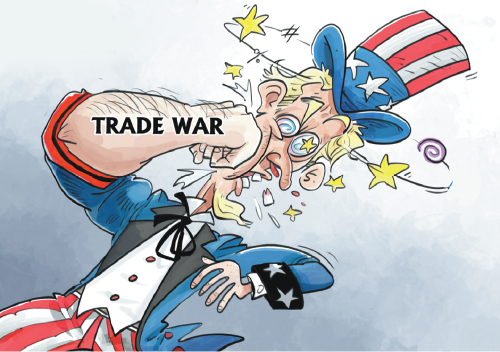
Image source: China Daily
* This article is an exclusive contribution of China Daily China Watch Think Tank, with the English version titled "Income Not Remedy".