Search engine Baidu is dead! Baidu’s hot search evaporated 26 billion overnight, and the official response came!

  China Fund News reporter Wang Ying

  Overnight, Baidu went on hot search again.

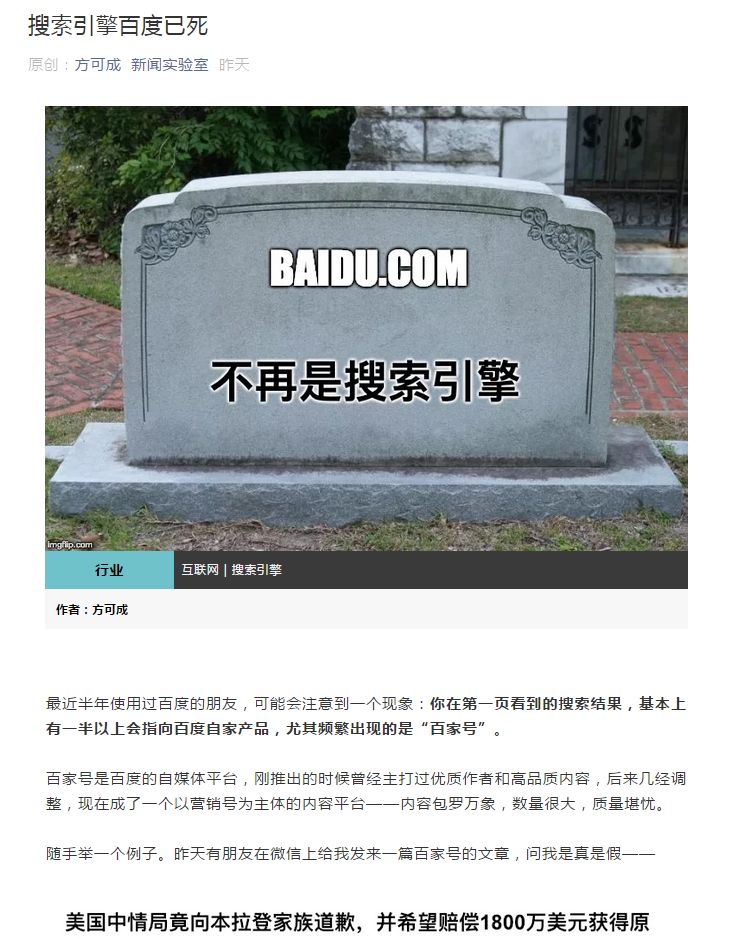
  Last night, an article "Search Engine Baidu is Dead" published by the media "News Lab" was screened. The article accuses Baidu that more than half of the search results will point to Baidu’s own products, especially Baijiahao. And Baijiahao is full of a lot of marketing and poor quality content, which leads to a sharp decline in the content quality of Baidu search results.

Earlier on January 22nd, Citigroup lowered Baidu's target share price to $205 and put it on the negative watch list.

  Earlier on January 22nd, Citigroup lowered Baidu’s target share price to $205 and put it on the negative watch list.

  U.S. stocks opened overnight, influenced by multiple factors such as the third downward adjustment of global economic growth rate by the International Monetary Fund (IMF), which caused investors’ concerns. In recent days, U.S. stocks ended their gains and even fell, and China Stock Exchange also fell.

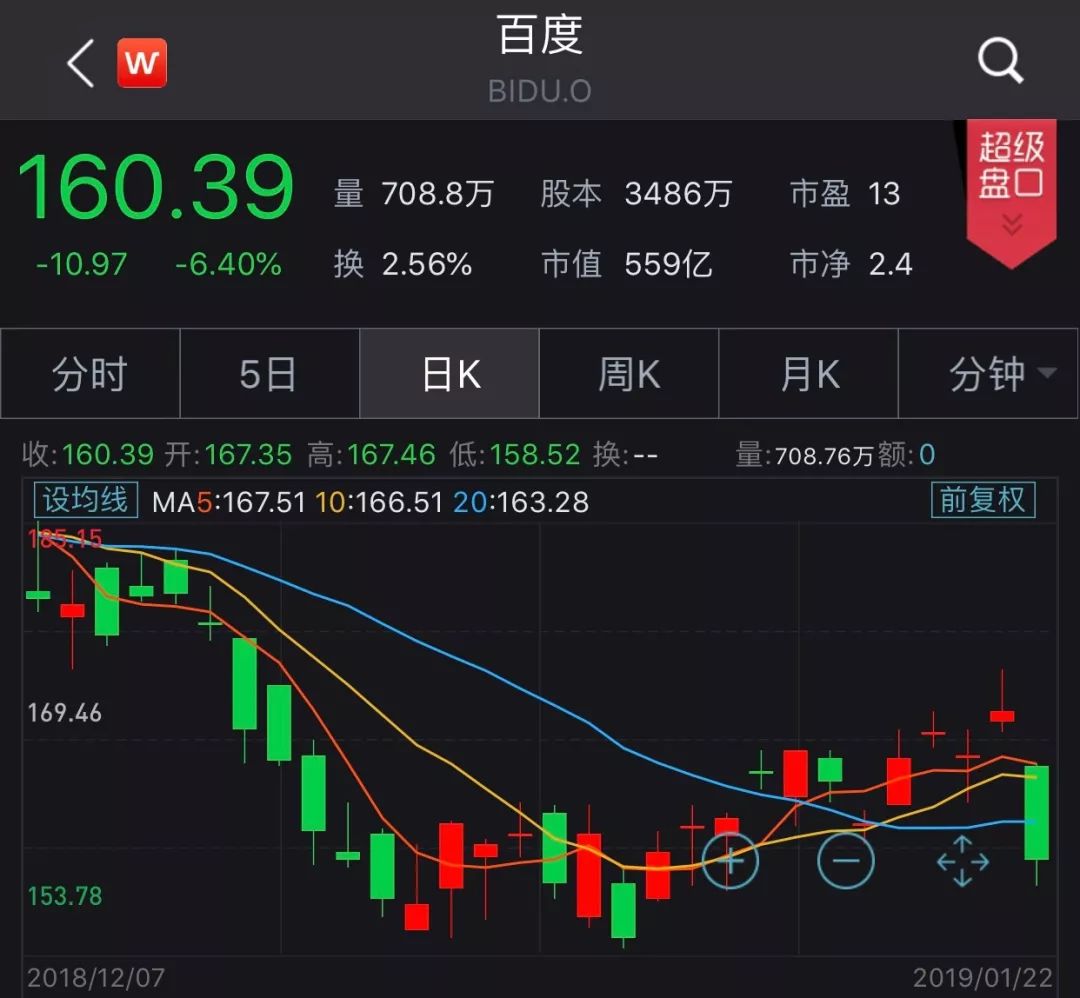
  Under the downward trend, Baidu fell 6.4% last night.

Earlier on January 22nd, Citigroup lowered Baidu's target share price to $205 and put it on the negative watch list.

  At present, Baidu closed at $160.39, and its market value evaporated by about $3.8 billion overnight, or about RMB 26 billion, leaving only about $56 billion.

  Baidu responded at noon.

  Fang Chengcheng thinks that "the proportion of the whole station is of little significance"

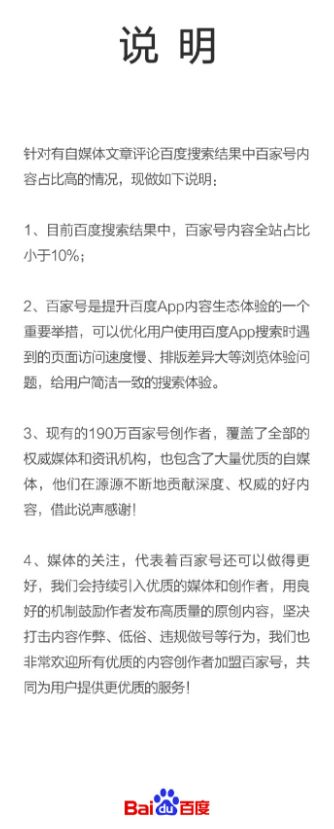
  In response to the criticism of the above article, Baidu issued a response at noon on January 23, saying that in the current Baidu search results, the content of Baijiahao accounts for less than 10% of the whole site.

In response, Baijiahao is an important measure to improve the ecological experience of Baidu App content, which can optimize the browsing experience problems such as slow page access and large typography differences encountered by users when using Baidu App search, and give users a concise and consistent search experience.

  In response, Baijiahao is an important measure to improve the ecological experience of Baidu App content, which can optimize the browsing experience problems such as slow page access and large typography differences encountered by users when using Baidu App search, and give users a concise and consistent search experience.

  Baidu said that the existing 1.9 million creators cover all authoritative media and information institutions, and also contain a large number of high-quality self-media, constantly contributing deep and authoritative good content.

  Baidu also said that it will continue to introduce high-quality media and creators, use good mechanisms to encourage authors to publish high-quality original content, and resolutely crack down on content cheating, vulgarity, and illegal numbering.

  For Baidu’s response, Funjun contacted the author of the article "Search Engine Baidu is Dead". He responded: "The proportion of the whole station doesn’t make much sense. Everyone generally only looks at the first two pages. It will be more convincing if you can give the results of the first page. "

  "Search engine Baidu is dead" screen.

  Quickly boarded the Weibo hot search list

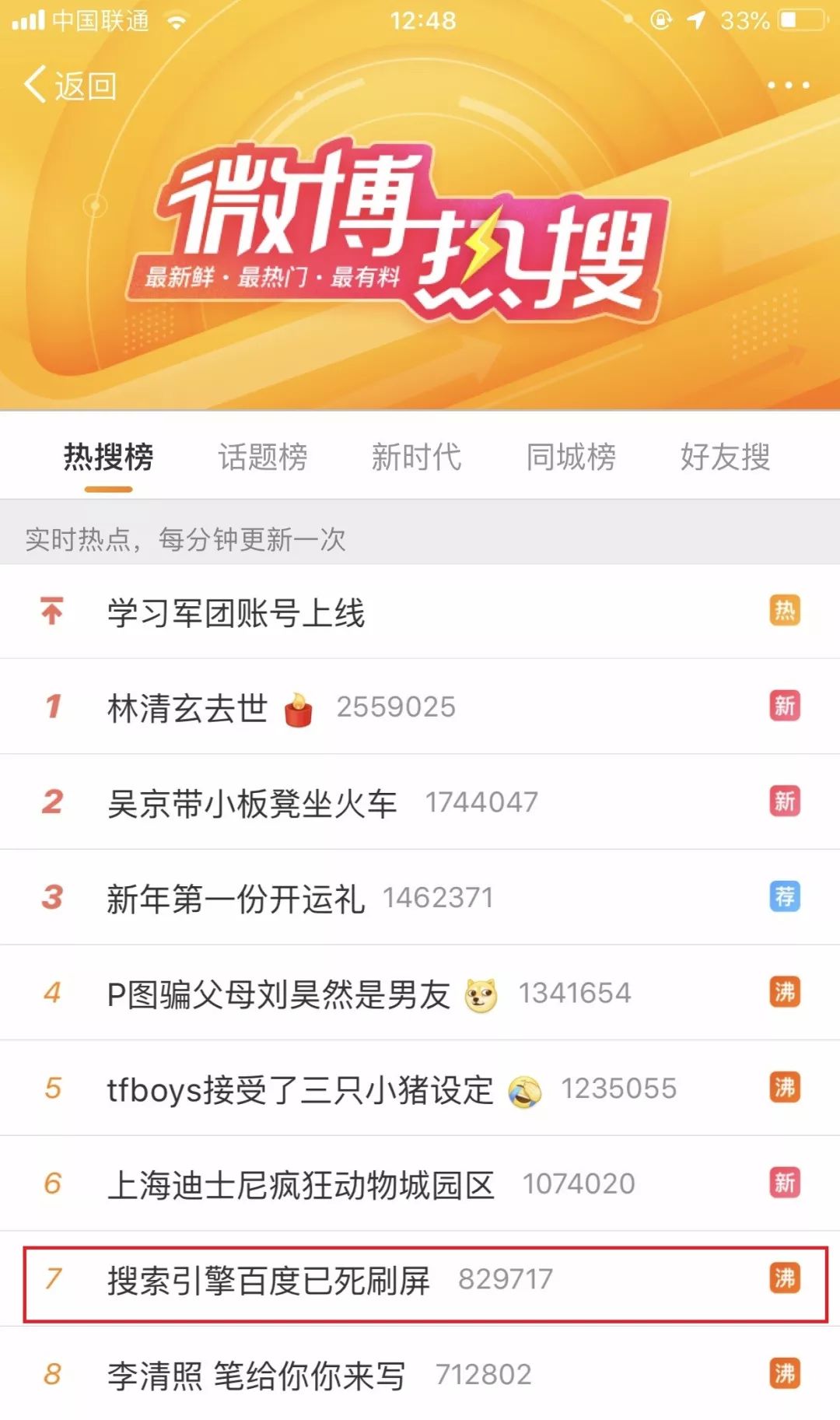
  The article "Baidu, the search engine, is dead" was released last night, which quickly triggered a heated discussion. At present, it ranks seventh on Sina Weibo’s hot search list.

Earlier on January 22nd, Citigroup lowered Baidu's target share price to $205 and put it on the negative watch list.

  The article points out that there is a phenomenon in Baidu search in the last six months. Basically, more than half of the search results seen on the first page will point to Baidu’s own products, especially the "Baijiahao".

  "Baijiahao is Baidu’s self-media platform. When it was first launched, it used to focus on high-quality authors and high-quality content. Later, after several adjustments, it has now become a content platform with marketing numbers as the main body-the content is all-encompassing, the quantity is large, and the quality is worrying."

  This paper illustrates two problems through some screen capture examples of search: 1. Baidu frequently searches for the top 100 numbers with complicated content information and worrying quality; 2. Baidu guides its own products through the search box, and Baidu, as a search engine, is "dead".

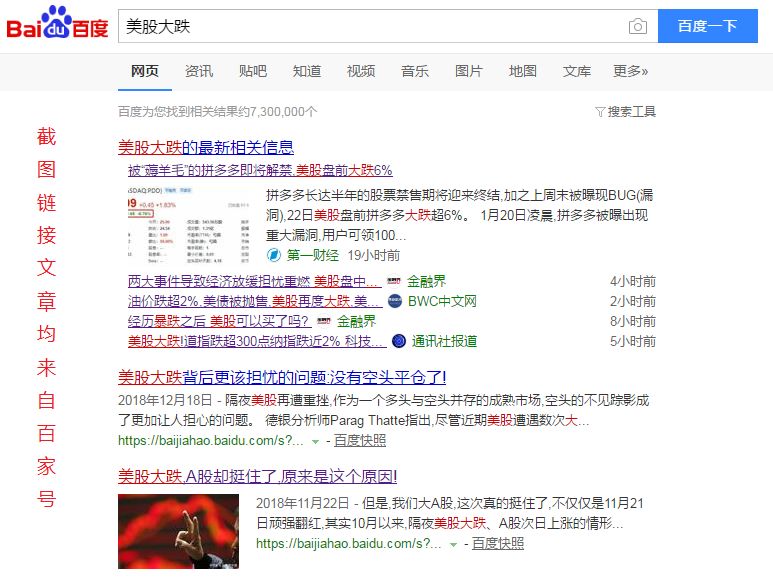
  For the questions raised in the article, Fund Jun switched to multiple terms in Baidu search and found similar problems. For example, search for "US stock market crash" in the top 5 of the latest relevant information:

Earlier on January 22nd, Citigroup lowered Baidu's target share price to $205 and put it on the negative watch list.

  Although they come from different media, they are all the media’s hundreds of numbers after clicking, not the media’s own website. For example, the first article of Yicai:

Earlier on January 22nd, Citigroup lowered Baidu's target share price to $205 and put it on the negative watch list.

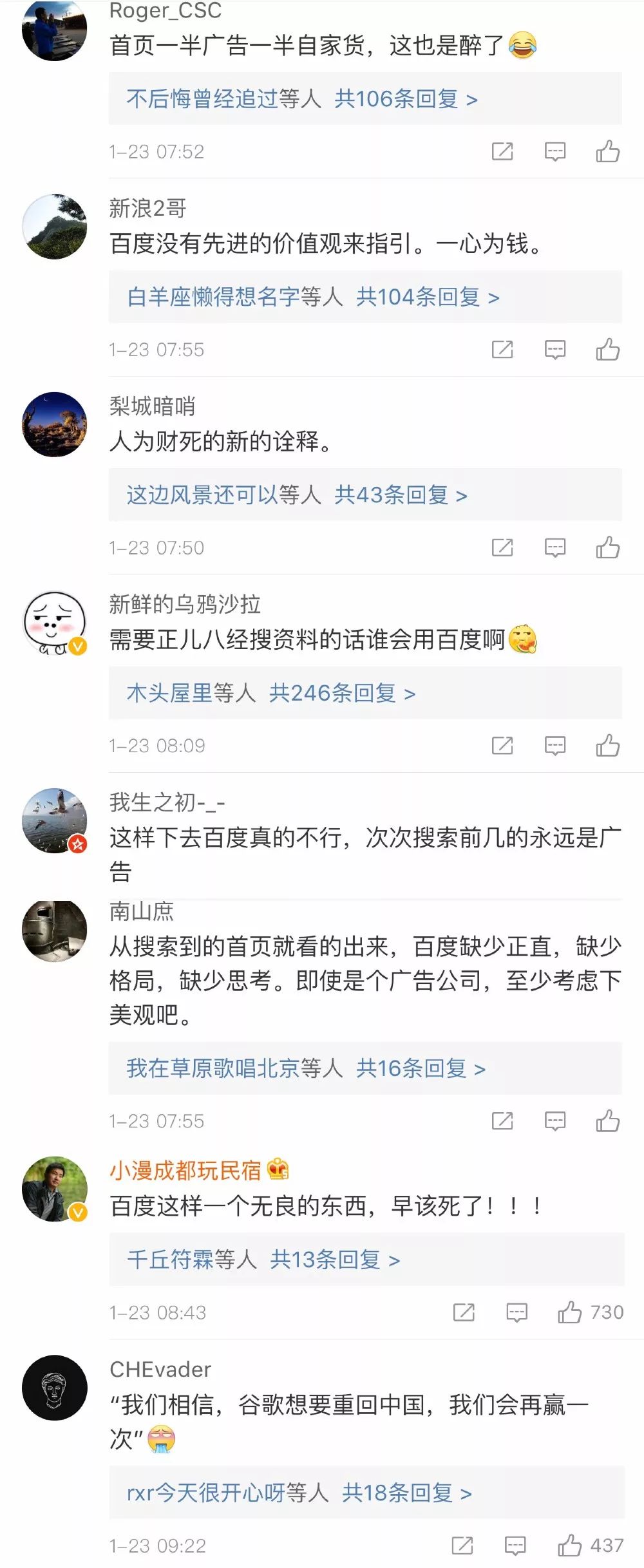
In this regard, Weibo netizens feel the same way, and they have started to spit on Baidu.
Earlier on January 22nd, Citigroup lowered Baidu's target share price to $205 and put it on the negative watch list.

  Fang can be called not his article.

  Causing Baidu’s share price to fall.

  After the publication of this article, it quickly fermented and read more than 100,000 in one hour, which triggered the trend of brushing the screen. It happened that Baidu fell more than 4% at the opening of the US stock market last night, and many media and public opinion claimed that the negative mentioned in the article caused Baidu’s share price to fall.

  In this regard, the author of this article can make a statement in the circle of friends and Weibo on the morning of January 23rd.

Earlier on January 22nd, Citigroup lowered Baidu's target share price to $205 and put it on the negative watch list.

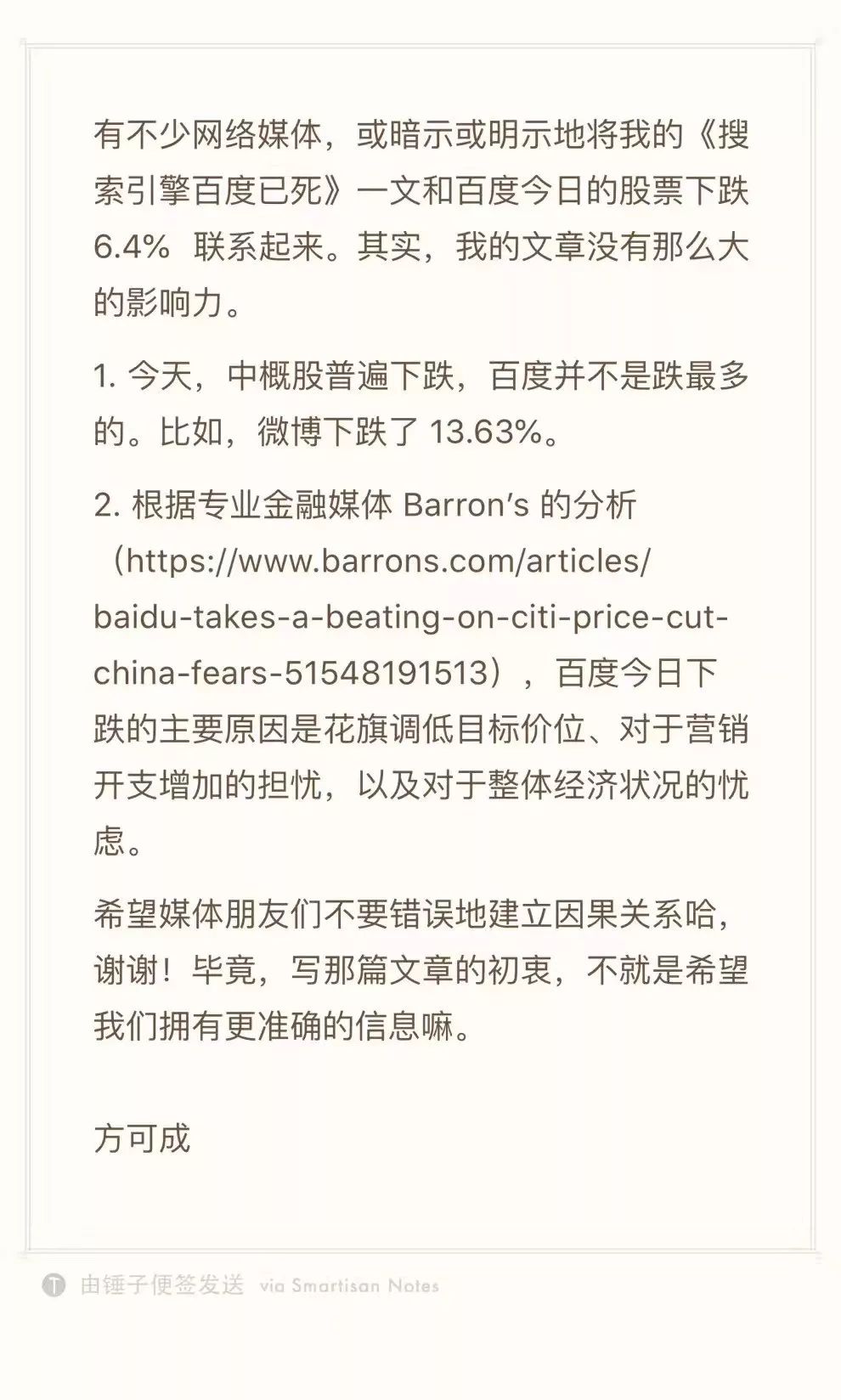
  According to the statement, many online media either implicitly or explicitly linked the article "Baidu, the search engine, is dead" with the 6.4% decline in Baidu’s stock today. Actually, my article is not that influential.

  1. Today, Chinese stocks generally fell, and Baidu did not fall the most. For example, Weibo fell by 13.63%.

  2. According to the analysis of Barron’s (https://www.barrons.com/articles/Baidu-takes-a-beating-on-Citi-price-cut-China-Fears-51548191513), the main reason for Baidu’s decline today is that Citigroup lowered its target price and worried about the increase of marketing expenses.

  Fang Chengcheng expressed the hope that media friends would not mistakenly establish causality. After all, the original intention of writing that article was to have more accurate information.

  According to public information, Fang Chengcheng graduated from the School of Journalism and Communication of Peking University, and is now a doctoral candidate at Annenberg School of Communication of the University of Pennsylvania, USA, and a former reporter of Southern Weekend.

(Editor: He Yihua HN110)

Resume: Liu Xiaokai

  Liu Xiaokai

Liu Xiaokai

      Liu Xiaokai, male, Miao nationality, born in March 1962, is a native of Taijiang, Guizhou Province. He joined the work in September 1983 and joined the Communist Party of China (CPC) in April 1985. He holds a postgraduate degree from the Central Party School and is an engineer.

  1978.10 Studying welding in department of mechanical engineering, Tsinghua University.

  In September, 1983, he successively served as the technician of design room, deputy director of steam drum workshop, deputy director of factory office, deputy director of total quality management office and secretary of the Communist Youth League Committee of Guizhou Boiler Factory.

  1987.06 Deputy Director, Technical Innovation Section, Qiandongnan Economic Commission, Guizhou Province

  1989.01 Chief, Enterprise Management Section, Qiandongnan Economic Commission, Guizhou Province, and deputy stationmaster of Guizhou New Technology Extension Station.

  1991.08 Deputy Director of the Economic Commission of Qiandongnan Prefecture, Guizhou Province (during the period: from July 1992 to December 1992, he was appointed as Deputy Secretary of Leishan County Committee of Guizhou Province)

  1992.12 Secretary of Jianhe County Committee, Guizhou Province (during this period: studied in the youth class of the Central Party School from September 1994 to July 1995)

  1996.01 Deputy Secretary of Guizhou Provincial Committee of the Communist Youth League, member of the Party Group

  (1994.09-1997.01, majoring in the history of the Communist Party of China in the on-the-job postgraduate class of the Central Party School)

  1997.06 Deputy Secretary of Guizhou Qiandongnan State Committee

  1998.03 Deputy Secretary, Deputy Governor and Acting Governor of Qiandongnan Prefecture Committee of Guizhou Province

  1998.04 Deputy Secretary and Governor of Qiandongnan Prefecture Committee of Guizhou Province

  2005.02 Deputy Secretary, Deputy Governor and Acting Governor of Qiannan Prefecture Committee of Guizhou Province

  2005.03 Deputy Secretary and Governor of Qiannan Prefecture Committee of Guizhou Province

  2006.11 Secretary of Bijie Prefecture Committee of Guizhou Province, First Secretary of Party Committee of Bijie Military Division

  2008.01 Vice Governor of Guizhou Province, Member of the Party Group of the Provincial Government, Secretary of Bijie Prefecture Committee, First Secretary of the Party Committee of Bijie Military Division

  2008.05 Vice Governor of Guizhou Province and Member of the Party Group of the Provincial Government

  2012.04 Member of the Standing Committee of Guizhou Provincial Party Committee, Vice Governor and Party Group of the Provincial Government

  2012.07 Member of the Standing Committee of Guizhou Provincial Party Committee and Minister of United Front Work Department

  2018.01 Chairman of Guizhou Provincial Political Consultative Conference, Standing Committee of Provincial Party Committee and Minister of United Front Work Department

  Alternate member of the 17th Central Committee, alternate member of the 18th Central Committee, alternate member of the 19th Central Committee at the Fifth Plenary Session of the 18th Central Committee. Member of the 12th Chinese People’s Political Consultative Conference, member of the 9th, 10th, 11th and 12th Guizhou Provincial Committee.

  (People’s Network information as of January 2018)

Reading: Introduction to the Function and Operation of Sogou Pinyin Input Method

      There are many users who use Sogou Pinyin Input Method, and some new users don’t understand some functions and operations of Sogou Pinyin Input Method. Today, Xiaobian brings you an introduction to the function and operation of Sogou Pinyin input method, hoping to help you.

      Introduction to the Function and Operation of Sogou Pinyin Input Method

      1. After entering the names of festivals and solar terms, a warm reminder will appear in the upper right corner of the input box, such as telling you when the Spring Festival is this year.

      2. Long sentence association function, which can display the whole sentence content immediately after you enter a few Chinese characters, and is suitable for ancient poems and idioms.

      3. Support traditional input function. Press "ctrl+shift+F" or directly switch between traditional and simplified characters on the status bar to input traditional Chinese characters.

      4. The Chinese-English mixed input function is more fashionable, and English words can be directly input when inputting Chinese without switching between Chinese and English.

      5. You can quickly insert a date, and you can insert today’s date only by entering "Date" or "rq".

      6. The mispronounced prompt function can correct you when you enter the wrong pinyin, and it will also display the correct vocabulary, as follows

      7. Enter the emoji, click Properties-Advanced-Custom Phrase-Add New Definition, and then you can set it.

      8. The split input function is very practical, and you can easily input words you don’t know, as follows.

      9, convenient weather, constellation query, as long as you enter "weather" or "tq", you can see the local weather on the day in the input box.

      10. The common symbol input function will display "& radical;" when "Pair" is input. Symbol, if you enter "triangle", the "△" symbol will appear, and if you enter "lying gun", the funny "_ (:з"∠ )_”

      11. The basic method of sogou input method is to right-click the input method status bar and select "Change Skin".

      After reading the detailed function introduction of Sogou Pinyin input method mentioned above, do you all understand it?

Press conference on "Measures for Implementing the Land Management Law of the People’s Republic of China in Henan Province"

Press conference video

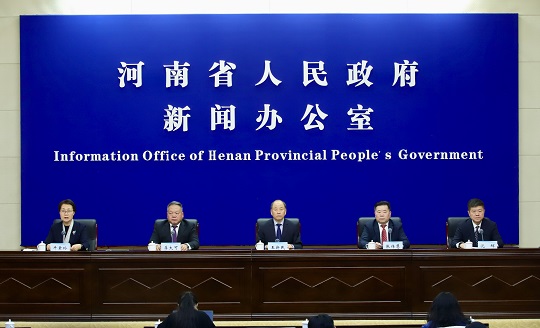
  At 15: 00 on December 29, 2023, the Information Office of the Provincial Government held a press conference on the Measures for Implementing the Land Administration Law of the People’s Republic of China in Henan Province.

  Release content:Introduction and interpretation of the "Implementation in Henan Province"the land administration law of the people’s republic of chinaMeasures ",and answer questions from reporters.

  Published by:

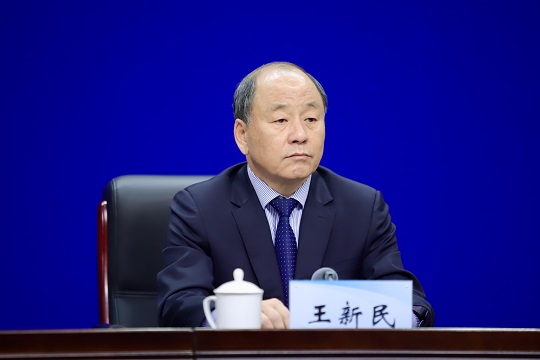
  Wang Xinmin Provincial People’s Congress Legal Committee Vice Chairman

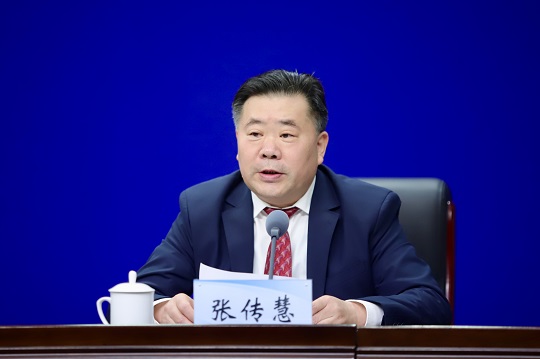
  Zhang Chuanhui, Chief Planner, Provincial Department of Natural Resources

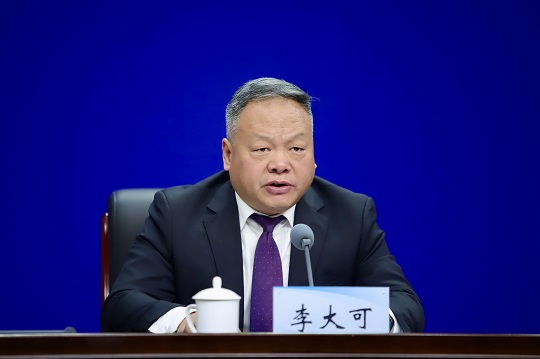
  Director, Economic and Ecological Legislation Division, Justice Department of Li Dake Province

  Director, Regulations Division, Department of Natural Resources, Shenhui Province

? ? ? .jpg

  Niu Suling, Second Inspector of Propaganda Department of Provincial Party Committee

  Ladies and gentlemen, friends from the press,

  Hello everyone! Welcome to the press conference held by the Information Office of Henan Provincial People’s Government.

  In order to strengthen land management and promote high-quality economic and social development, the Measures for the Implementation of the Land Management Law of the People’s Republic of China in Henan Province, which was deliberated and adopted at the sixth meeting of the 14th Provincial People’s Congress Standing Committee, will be officially implemented on January 1, 2024. In order to do a good job in the publicity and interpretation of the Implementation Measures and respond to social concerns in a timely manner, we are here today to hold a press conference to introduce the relevant situation of the revision of the Implementation Measures and answer media concerns.

  First of all, let me introduce the publisher who attended today’s press conference:

  Mr. Wang Xinmin, Vice Chairman of the Legal Committee of the Provincial People’s Congress;

  Mr. Zhang Chuanhui, Chief Planner of Provincial Department of Natural Resources;

  Mr. Li Dake, Director of Economic and Ecological Legislation Division of Provincial Justice Department;

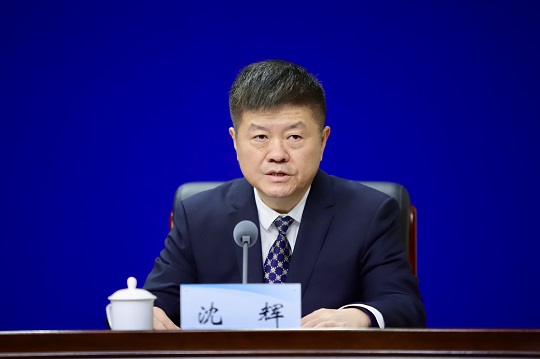
  Mr. Shen Hui, Director of Regulations Department of Provincial Department of Natural Resources.

  Now, please let Director Wang Xinmin make the announcement.

? .jpg

  Wang Xinmin, Deputy Director of the Legal Committee of the Provincial People’s Congress

  Ladies and gentlemen, friends from the media,

  On November 30, 2023, the Sixth Session of the Standing Committee of the 14th Provincial People’s Congress deliberated and adopted the Measures for the Implementation of the Land Administration Law of the People’s Republic of China in Henan Province (hereinafter referred to as the "Implementation Measures"), which will take effect on January 1, 2024. Today, we hold a press conference here to better promote the whole society to seriously study and implement the Implementation Measures. Let me briefly introduce to you the significance, legislative process, guiding ideology and main contents of the revision of the Implementation Measures.

  I. Significance of the revision of the Implementation Measures

  General Secretary of the Supreme Leader pointed out that the land system is the basic system of the country. The CPC Central Committee, the State Council, the provincial party committee and the provincial government have always attached great importance to land management, and made a series of major reforms and arrangements for deepening rural land reform and strengthening land management. The Land Administration Law of the People’s Republic of China, revised in 2019 and 2021 respectively, and its implementing regulations have been greatly adjusted in terms of land space planning, farmland protection, land expropriation and land use approval. The "Implementation Measures" implemented in our province in 1999 has not adapted to the needs of reform, nor does it conform to the development reality of our province, and it can not effectively link up the superior law. Therefore, in order to implement the spirit of the land reform of the Central Committee and the Provincial Party Committee, and to implement the provisions of the detailed superior law, it is necessary to fix the mature practices in land management in our province in recent years in the form of legislation and comprehensively revise the original "Implementation Measures".

  Second, the legislative process

  At the beginning of 2023, the Standing Committee of the Provincial People’s Congress included the revision of the Implementation Measures in the deliberation items of the legislative plan. According to the legislative plan, the Provincial Department of Natural Resources is responsible for drafting the "Implementation Measures (Revised Draft)" and conducting system integrity assessment and social stability risk assessment. Afterwards, according to the legislative procedure, the Provincial Department of Justice reviewed and revised the "Implementation Measures (Draft)", solicited the opinions of relevant units and the public, visited Fujian and Jiangxi successively, and investigated in Luoyang and Sanmenxia, and invited relevant experts from the Provincial High Court and Zhengzhou University to participate in the discussion, fully listening to the opinions and suggestions of relevant parties. On May 22, 2023, the seventh executive meeting of the provincial government discussed and adopted the Implementation Measures (Revised Draft), and then submitted it to the Standing Committee of the Provincial People’s Congress, and the Environmental Protection Committee of the Provincial People’s Congress undertook the preliminary examination. In June, Liu Nanchang, deputy director of the Standing Committee of the Provincial People’s Congress, led a team and went to Anyang, Pingdingshan and other cities to conduct field research and solicit opinions. In late July, the fourth meeting of the Standing Committee of the 14th Provincial People’s Congress deliberated the Implementation Measures (Revised Draft) for the first time.

  After the first trial, the Legal Affairs Committee organized the Provincial Department of Natural Resources and relevant legislative experts to conduct legislative research in Xuchang City, and studied and revised the Implementation Measures (Revised Draft) one by one according to the deliberation opinions of the members of the Standing Committee; At the same time, comrades familiar with land management business from local natural resources bureau and township grass-roots units are invited to participate in the whole process of research and discussion. After that, the revised "Implementation Measures (Revised Draft)" was sent to relevant provincial units, municipal people’s congress standing committees, grassroots legislative contact points, legislative bases, etc. At the same time, it went to Zhoukou, Hebi, Xinxiang and other places to carry out legislative research, and organized relevant government departments, deputies to the National People’s Congress and grassroots cadres in townships (towns) to hold symposiums to listen to opinions from all sides. In early October, I went to Hebei Province to study and inspect the experience of land legislation. In early November, the Legal Affairs Committee, together with the relevant responsible comrades and legislative experts of the Provincial Department of Justice and the Department of Natural Resources, studied and revised the Implementation Measures (Revised Draft) according to the feedback from all sides.

  On November 15th, the Legal Affairs Committee held a plenary meeting to review the Implementation Measures (Revised Draft) one by one, and formed the Implementation Measures (Revised Draft) (reviewed and revised draft); Relevant responsible comrades of the Environmental Protection Committee of the Provincial People’s Congress, the Provincial Department of Justice and the Provincial Department of Natural Resources attended the meeting as nonvoting delegates. On November 20th, the Legal Affairs Committee reported the revision of the Implementation Measures (Revised Draft) to the directors’ meeting, and revised it according to the opinions of the directors’ meeting. The directors’ meeting decided to submit it to the Sixth Standing Committee of the 14th Provincial People’s Congress for deliberation. On November 30th, the Standing Committee deliberated and adopted the Measures for Implementing the Land Management Law of the People’s Republic of China in Henan Province.

  Third, the guiding ideology of legislation

  In the process of legislation, we have determined the following guiding ideology: First, adhere to the problem orientation, focus on the problems existing in land management in our province, such as irregular land acquisition procedures and unclear responsibilities of homestead management, and link up with the superior law through specific and detailed provisions to enhance the pertinence, applicability and operability of legislation. The second is to serve the national strategy, keep in mind that food security is the "big country", implement the hard measures of farmland protection from the legislative level, strengthen the special protection of permanent basic farmland, and resolutely shoulder the political responsibility of food security. Third, earnestly safeguard farmers’ rights and interests, further refine the procedures of land expropriation, smooth the channels of public participation in land expropriation, safeguard the legitimate rights and interests of landless farmers, meet the reasonable needs of farmers’ homesteads, and realize legislation for the people. The fourth is to implement the strictest system of saving and intensive land use, promote the improvement of land use and management methods through legislation, and move from extensive land use to saving and intensive land use, so as to solve the current problem of prominent contradiction between land supply and demand.

  IV. Main contents of the Measures for Implementation

  The Implementation Measures consists of eight chapters and seventy-four articles, which are divided into general principles, land spatial planning, farmland protection, agricultural land conversion and expropriation, construction land management, supervision and inspection, legal responsibilities and supplementary provisions. Below, I will briefly introduce the main contents of the "Implementation Measures".

  (a) on the land space planning. Focusing on the urgent needs of land management, the "Implementation Measures" set up a chapter on land spatial planning according to the spirit of relevant documents of the Central Committee and the Provincial Party Committee. Article 9 stipulates that people’s governments at all levels shall prepare land spatial planning according to law, and clarifies the legal status and effectiveness of land spatial planning. Articles 10 to 13 make detailed provisions on the principles, subjects, procedures and approval authority of the overall planning, detailed planning and special planning of land and space, highlighting the leading role and rigid constraint role of land and space planning.

  (2) On the protection of cultivated land. Our province is a big agricultural province, and it is a major political task to strictly protect the red line of cultivated land and permanent basic farmland and ensure national food security. The "Implementation Measures" thoroughly implemented the spirit of the important instructions of the important speech of the Supreme Leader General Secretary on strengthening farmland protection, adhered to the strictest farmland protection system, strictly adhered to the red line of farmland protection and the bottom line of food security, and provided a strong legal guarantee for farmland protection in our province. First, the balance system of cultivated land occupation and compensation has been clarified, and it is stipulated that people’s governments at all levels should unify all kinds of occupation of cultivated land into the balance management of occupation and compensation, adhere to the principle of making up the occupation, accounting for one, making up for one, and making up for the superior, and improve the quality acceptance system of supplementary cultivated land. Second, the special protection system for permanent basic farmland is stipulated. According to the land management law and the relevant prohibition regulations of the central government, five acts prohibiting the occupation of permanent basic farmland are clarified in Article 20, which further strengthens the strict protection of permanent basic farmland. Third, from the perspective of optimizing and revitalizing land resources, encourage rural land ownership, contracting rights and management rights to be separated and parallel, and promote moderate scale operation of agriculture. In addition, it also stipulates the incentive mechanism for comprehensive land improvement, land reclamation and cultivated land protection.

  (3) About land expropriation. The "Implementation Measures" focus on safeguarding the legitimate rights and interests of land-expropriated farmers and compact the responsibilities of the people’s governments at the city and county levels who apply for land acquisition. First, the procedures of land expropriation have been refined, and the procedures such as pre-announcement of land expropriation, investigation of land status, risk assessment of social stability, preparation of land expropriation compensation and resettlement plan, and signing of land expropriation compensation and resettlement agreement have been further clarified. The second is to protect the legitimate rights and interests of rural villagers whose houses are expropriated. It is clear that the rural villagers’ wishes should be respected in accordance with the principle of compensation before relocation and improvement of living conditions, and fair and reasonable compensation should be given by rearranging housing sites, providing resettlement houses or monetary compensation, and the compensation standards and relocation and temporary resettlement fees should be clarified to minimize disputes and disputes in land expropriation and protect the legitimate rights and interests of the people.

  (four) on the management of construction land. The "Implementation Measures" adhere to the principle of economical and intensive land use, implement the spirit of "streamline administration, delegate power, strengthen regulation and improve services" reform, and further improve the quality of construction land management and the efficiency of examination and approval. First, the direction of land conservation and intensive use is clarified, and it is stipulated that if construction projects need to use land, priority should be given to the use of existing construction land, new technologies and models for land conservation and intensive use should be encouraged to improve the efficiency of construction land use, and at the same time, local land control standards should be formulated in light of actual conditions. Second, it is clear that the examination and approval of construction projects should be based on the reform requirements of the examination and approval system, and information sharing and parallel examination and approval should be adopted to improve the efficiency of land use examination and approval. The third is to stipulate that the people’s government at the county level should guarantee the demand for land for rural industries and public welfare undertakings according to law, and make it clear that the construction land index should be tilted towards rural development, coordinate urban and rural development, and help rural revitalization. The fourth is to improve the application and approval procedures for rural homesteads and encourage the active use of idle homesteads.

  The promulgation of the "Implementation Measures" has solved the problem of having laws to follow, but the vitality and authority of the law lies in implementation. We still have a lot of work to do to put the "Implementation Measures" into practice comprehensively and accurately and really play its role. Land management involves a wide range and has high social concern, which requires the active cooperation and concerted efforts of all levels and departments in the province to form the greatest synergy. It is hoped that all relevant departments involved in the "Implementation Measures" will strictly follow the law and carefully sort out their legal responsibilities, especially to formulate and improve policies and measures that are compatible with the "Implementation Measures", such as the management measures for protected agricultural land, rural production road land, and the minimum compensation standards for ground attachments and young crops. The National People’s Congress will also pay close attention to the effect of the implementation of the Implementation Measures, organize and carry out supervision work such as law enforcement inspection, special inquiry and special investigation in a targeted manner, and follow up the new situations and new problems arising in the implementation of the Implementation Measures. It is hoped that we can innovate publicity methods, broaden publicity channels, expand the awareness and influence of the Implementation Measures, create a good atmosphere for the whole society to care for and support the implementation of the Implementation Measures, and jointly promote the implementation of the Implementation Measures to achieve better results! Thank you!

  Niu Suling, Second Inspector of Propaganda Department of Provincial Party Committee

  Thank you, Director Wang, for your comprehensive and detailed release! Next, please ask reporters and friends to ask questions about the content of this conference. Please inform your news organization before asking questions.

  Top journalist

  Land resources are related to the high-quality development of economy and society and the long-term interests of the country. At present, our province has anchored the "two guarantees" and implemented the "ten strategies", and the demand for construction land in various industries continues to be strong, but the contradiction between land supply and demand is still outstanding. Excuse me, how is the work of saving and intensive land use arranged in our province? What are the specific requirements? Thank you.

? .jpg

  Zhang Chuanhui, Chief Planner of Provincial Department of Natural Resources

  Thank you for your question. Since the 18th National Congress of the Communist Party of China, the CPC Central Committee with the Supreme Leader as the core has attached great importance to land management, and the General Secretary of the Supreme Leader has repeatedly given important instructions on saving and intensive land use. Our province is a big economic province, a big population province and a big agricultural province, and there is a serious shortage of cultivated land reserve resources. However, the average GDP per mu of construction land in our province is lower than the national average, and the gap with advanced provinces such as Jiangsu and Zhejiang is even greater. In order to achieve the goal of "two guarantees", promote the practice of Chinese modernization in Henan Province, and make good use of every inch of land economically and intensively is the only way out. The provincial people’s congress, the provincial party committee and the provincial government attach great importance to the implementation of cherishing and rationally utilizing land, implementing the strictest system of economical and intensive land use, and effectively solving the problems of extensive land use and waste. In the Implementation Measures, the level of economical and intensive land use in our province is further improved, and detailed provisions are made in various chapters.

  First, the principles are clearly defined in the general rules. Combined with the present situation of land use in our province, in the Implementation Measures, it is clear that people’s governments at all levels should implement the strictest system of economical and intensive land use, insist on framing the total amount, limiting the capacity, revitalizing the stock, improving the quality, carrying out economical and intensive land use activities, strictly implementing the national land use control standards, formulating local land use control standards according to law, and carrying out economical and intensive land use evaluation to improve land use efficiency.

  Second, clearly optimize the land spatial pattern. In Article 10, it is clear that the land spatial planning should include the land spatial development and protection pattern and the planning land layout, structure, use control requirements, etc., clear the requirements such as the amount of cultivated land, the scale of construction land, the scope of land reclamation prohibition and the upper limit of water resources utilization, coordinate the land layout of production and living facilities, infrastructure and public facilities, comprehensively utilize the above-ground and underground space, reasonably determine and strictly control the scale of new construction land, improve the level of land conservation and intensive utilization, and ensure the sustainable use of land.

  Third, it is stipulated to carry out comprehensive land improvement, which is a platform for exercising all the duties of land use control and ecological protection and restoration, and implementing land spatial planning. In order to give full play to the positive role of comprehensive land improvement, Article 26 of the Implementation Measures stipulates that the county (city, district) and township people’s governments should organize comprehensive land improvement such as agricultural land consolidation, construction land consolidation, unused land development, industrial and mining wasteland left over from history and land reclamation damaged by natural disasters according to the national spatial planning, so as to improve the quality of cultivated land, increase the effective cultivated land area and promote the economical and intensive use of land; And encourage social subjects to participate in comprehensive land improvement according to law.

  Fourth, it is important to improve the efficiency of construction land. Article 48 stipulates that if a construction project needs to use land, it should conform to the requirements of national spatial planning, annual land use plan and use control, as well as resource conservation and ecological environment protection, give priority to the use of existing construction land, and encourage the adoption of new technologies and models for economical and intensive land use. By adding the clause of "encouraging the formulation of local land use control standards", the relevant principles of "the design, construction and approval of construction land for construction projects" are made, and measures such as the requirements for conducting a general survey of construction land use are put forward to strengthen the work of saving and intensive land use.

  Fifth, it is stipulated that the demand for homestead should be reasonably guaranteed, and the people’s governments at or above the county level should arrange construction land indicators in accordance with state regulations to reasonably guarantee the demand for rural villagers’ homestead. County (city, district), township land space planning and village planning should consider the production and living needs of rural villagers, highlighting the direction of saving and intensive land use. thank you

  People’s Daily People’s Daily reporter

  It is a major political task to strictly protect the red line of cultivated land and permanent basic farmland and ensure national food security. Please tell us about the measures for the protection of cultivated land and permanent basic farmland in the Implementation Measures. Thank you.

  Zhang Chuanhui, Chief Planner of Provincial Department of Natural Resources

  Thank you for your question. General Secretary of the Supreme Leader has repeatedly stressed the importance and urgency of farmland protection, and pointed out that it is necessary to hold on to the lifeblood of farmland and resolutely rectify illegal acts of occupying and destroying farmland. In order to thoroughly implement the important instructions of the important speech of the Supreme Leader General Secretary on strengthening farmland protection, the Implementation Measures adhere to the strictest farmland protection system, strictly abide by the red line of farmland protection and the bottom line of food security, and provide a strong legal guarantee for farmland protection in our province.

  First, implement the responsibility system for cultivated land protection. In Article 16, people’s governments at all levels are stipulated to take overall responsibility for the protection of cultivated land within their respective administrative areas, implement the tasks of protecting cultivated land and permanent basic farmland clearly defined in the national spatial plan, strengthen the control of cultivated land planting purposes, control the conversion of cultivated land into non-cultivated land, and keep the red line of cultivated land protection and the bottom line of food security to ensure that the total amount of cultivated land and permanent basic farmland within their respective administrative areas will not decrease and the quality will be improved; It also requires the people’s governments at or above the county level to assess the implementation of the target of farmland protection responsibility of the people’s government at the next lower level every year.

  The second is to implement the balance system of cultivated land occupation and compensation. According to the actual situation in our province, Article 17 stipulates that the compensation system for occupied cultivated land shall be implemented according to law. People’s governments at all levels shall implement the system of balance between occupation and compensation of cultivated land, unify all kinds of occupation of cultivated land into the management of balance between occupation and compensation, adhere to the principle of making up the occupation, accounting for one supplement, and taking advantage of the advantages and advantages, improve the quality acceptance system of supplementary cultivated land, and implement the compensation system for occupation of cultivated land according to law; If the balance of occupation and compensation cannot be achieved within the county-level administrative area, the cultivated land index can be supplemented by market-oriented cross-regional adjustment.

  The third is to clarify the target of cultivated land, further strengthen the control of "non-agricultural" and "non-grain" of cultivated land, and adhere to "equal emphasis on quantity and quality". In Article 18, it is stipulated that people’s governments at all levels should strictly control the conversion of cultivated land into other agricultural land such as woodland, grassland and garden according to the target of cultivated land quantity determined by the people’s government at the next higher level. Where cultivated land is converted into other agricultural land such as forest land, grassland and garden land, we should pay equal attention to quantity and quality, and make up the cultivated land with the same quantity, quality and productivity that can be used stably for a long time in accordance with the regulations.

  Fourth, strengthen the special protection of permanent basic farmland. The Implementation Measures implement a special protection system for permanent basic farmland in strict accordance with the superior law and the spirit of the central government. Article 19 stipulates that people’s governments at or above the county level shall organize the demarcation of permanent basic farmland on stable cultivated land according to the protection area index of permanent basic farmland issued by the people’s government at the next higher level, according to the land survey results published according to law and the land statistics published regularly. It is required that permanent basic farmland be implemented in plots and be included in the national permanent basic farmland database for strict management. And in Article 20, it is stipulated that specific behaviors prohibited in permanent basic farmland should be consolidated, the control line of permanent basic farmland should be kept, and the special protection system of permanent basic farmland should be fully implemented. thank you

  Henan Legal News reporter

  In recent years, the CPC Central Committee and the State Council have made a number of major reforms and arrangements in the field of land management, such as establishing a land spatial planning system and promoting the reform of the separation of rural land ownership, contracting rights and management rights. What specific arrangements have we made to implement the reform and arrangements and strengthen the legal protection of land spatial planning and the separation of powers in rural areas? Thank you.

? .jpg

  Li Dake, Director of Economic and Ecological Legislation Division of Provincial Justice Department

  Thank you for your question. In this legislation, we have carefully studied and understood the reform decisions and arrangements of the CPC Central Committee, the State Council and the provincial party committee in the field of land management. In accordance with the spirit of the Central Committee of the Communist Party of China and the State Council’s Opinions on Establishing a Land Spatial Planning System and Supervising its Implementation, the General Office of the Central Committee of the CPC and the State Council’s General Offices’ Opinions on Improving the Separation of Rural Land Ownership, Contracting Rights and Management Rights, and Henan Provincial Committee of the Communist Party of China and Henan Provincial People’s Government’s Implementation Opinions on Establishing a Land Spatial Planning System and Supervising its Implementation, we should adhere to the connection between legislation and reform decision-making, actively adapt legislation to the needs of reform and development, and combine the reality of our province to strengthen land spatial planning and rural land separation of powers.

  The first is to promote the implementation of "multi-regulation". In the past, there were many types of spatial planning, and there was not enough coordination among them, and cross-conflict occurred from time to time. The reform of the national land spatial planning system integrates the main functional area planning, land use planning and urban and rural planning into a national land spatial planning, and promotes the reform of "multi-regulation integration". The revised "Implementation Measures" has a chapter on "Land Spatial Planning". Article 9 clearly stipulates that land spatial planning approved according to law is the basic basis for all kinds of protection, development and construction activities, and no other spatial planning will be established outside the land spatial planning system. Therefore, in the future, the main functional area planning, land use planning and urban and rural planning will no longer be compiled separately, forming a "one map" of the whole province, truly realizing "multi-regulation integration", making the planning more scientific and implementing stricter supervision, which reflects the uniqueness of the national spatial planning.

  The second is to clarify the planning requirements. The "Implementation Measures" insist on providing strong spatial planning support for high-quality development with high-level planning. Article 10 stipulates that the preparation of national land spatial planning should adhere to ecological priority, green and sustainable development, implement the requirements for the development and protection of national land space put forward in the national economic and social development plan, scientifically and orderly arrange functional spaces such as agriculture, ecology and towns, and delimit and implement cultivated land and permanent basic farmland, ecological protection red line and urban development boundary. Eleventh combined with the actual situation in our province, further defined the main body, deliberation organ and approval organ of the overall planning of provincial, city and county land space and township land space planning. Article 12 Arrangements are made for the preparation and approval of detailed planning and special planning. At the same time, in order to strengthen coordination and unity, it is also stipulated that special planning shall be organized and prepared by the corresponding competent department, and submitted for approval according to the procedures after the compliance review of the overall land and space planning by the competent department of natural resources at the same level.

  The third is to use land in strict accordance with the national land space planning. In order to strengthen the planning authority and ensure the implementation of the plan, Article 13 of the Implementation Measures stipulates that the approved land and space plan shall be strictly implemented and shall not be modified without authorization. At the same time, it is clear that if the land and space plan really needs to be modified, it shall be modified in accordance with legal procedures with the consent of the original examination and approval authority. In addition, the "Implementation Measures" also highlights the implementation and supervision of the land spatial planning. Article 48 stipulates that the use of land for construction projects shall conform to the land spatial planning, and Article 13 requires that the competent natural resources department of the people’s government at or above the county level shall, in conjunction with relevant departments, organize supervision and inspection of the implementation of various control requirements such as control boundaries and binding indicators for the lower-level land spatial planning.

  The fourth is to deepen the reform of rural land system. In order to promote the rational use of land resources, optimize the allocation of land resources, improve the land output rate, labor productivity and resource utilization rate, promote the development of modern agriculture, and realize rural revitalization, the Implementation Measures strictly implement the spirit of the central reform and provide a cohesive provision for deepening the rural land system reform according to law. Article 29 makes it clear that the people’s governments at or above the county level and their relevant departments should deepen the reform of rural land system according to law, optimize the allocation of land resources, promote the separation and parallelism of rural land ownership, contracting rights and management rights in accordance with state regulations, implement collective ownership, stabilize farmers’ contracting rights, liberalize land management rights, improve relevant systems to guide and standardize the transfer of land management rights, cultivate new business entities, promote moderate scale operation of agriculture, promote agricultural and rural modernization and promote rural revitalization. thank you

  Henan radio and TV reporter

  The "Implementation Measures" will be implemented on January 1, 2024. What specific measures will the natural resources department of our province take to implement the "Implementation Measures" in the next step? Thank you.

? .jpg

  Shen Hui, Director of Regulations Department of Provincial Department of Natural Resources

  Thank you for your question. In two days, the "Implementation Measures" will be implemented. Next, our office will implement the "Implementation Measures" from the following aspects.

  First, continuously enhance the effectiveness of publicity. Taking publicity activities as an important starting point for deepening the study and implementation of the supreme leader’s thoughts on the rule of law and ecological civilization, and strengthening the creation of a good public opinion atmosphere, we should proceed from reality, strengthen problem orientation, comprehensively consider the specific conditions of regions and audiences, determine the publicity theme and content in a targeted manner, continuously improve the pertinence and appeal of publicity, promote good governance with good laws, and provide strong support for land management.

  The second is to continue to promote system construction. In accordance with the provisions of the Implementation Measures, combined with the actual land management work in our province, we will improve the system construction, improve the working mechanism, strictly implement the provisions of the Measures on the expropriation of rural villagers’ houses and the way for the owners and users of land-expropriated land to express their reasonable demands and exercise their legitimate rights, minimize disputes and disputes in land expropriation, and earnestly safeguard the legitimate rights and interests of land-expropriated farmers.

  The third is to improve the supporting legal system. In order to solve the growing demand for protected agricultural land, the Implementation Measures clearly stipulates that the site selection of protected agricultural land should not only meet the requirements of cultivated land protection and economical and intensive land use, but also take into account the needs of the people engaged in agricultural production. Measures for the administration of agricultural land for facilities and land for rural production roads shall be formulated by the provincial people’s government. In order to ensure the effective implementation of the Implementation Measures, we will, in accordance with the provisions of the Implementation Measures, jointly with relevant departments, formulate and promulgate in a timely manner the measures for the management of protected agricultural land, land for rural production roads, the measures for the implementation of supplementary cultivated land indicators, the minimum compensation standards for attachments and young crops on collectively owned land, and the specific measures for rural villagers to build houses economically and intensively.

  The fourth is to actively implement strict law enforcement. It is necessary to implement the strictest cultivated land protection system, protect cultivated land with hard measures of "long teeth", further strengthen the management of natural resources, standardize administrative law enforcement procedures, strictly implement the administrative law enforcement responsibility system, improve the administrative law enforcement supervision mechanism, implement the responsibilities of various departments, form a joint force, and ensure the correct implementation of the Implementation Measures, so that there are laws to follow, law enforcement must be strict, and offenders will be prosecuted. thank you

  Niu Suling, Second Inspector of Propaganda Department of Provincial Party Committee

  Thank you for your introduction! That’s all for today’s on-site questions. If you have other concerns, you can contact the publishing unit for an interview after the press conference.

  Media friends, the "Implementation Measures" is an important measure for our province to thoroughly implement the spirit of the important instructions of the General Secretary of the Supreme Leader on strengthening the protection of cultivated land and saving intensive land use, and comprehensively promote the high-quality development of natural resources and the construction of the rule of law. Here, I hope that all news media can do a good job in publicity and reporting, deeply interpret the significance and key contents of the Measures for Implementation, effectively enhance the awareness and influence of the Measures for Implementation, vigorously create a good atmosphere for the whole society to care for and support the implementation of the Measures, and jointly promote the implementation of the Measures to achieve better results!

  That’s all for this press conference. Thank you! Thank you, journalists and friends! Later, we will also hold a press conference on "Measures for the Administration of Waterway Transportation in Henan Province" here, so please continue to pay attention.

Cen: Banana King after 80s.

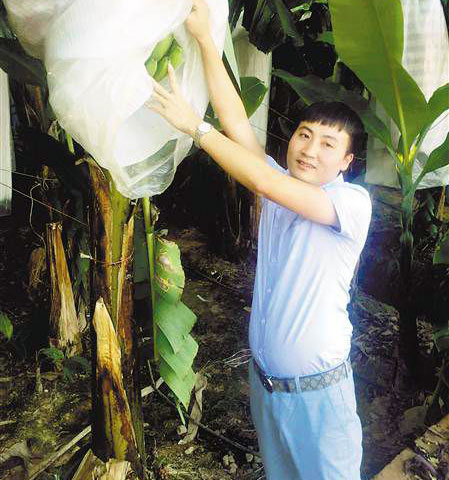
In the beautiful Xishuangbanna Prefecture of Yunnan, there is a young Chongqing native who manages a large banana plantation with an area of more than 3,000 mu alone. He is Cen, the general manager of Dongting Agricultural Development Co., Ltd. in Xishuangbanna, Yunnan Province, and the famous "banana king" born in 1980s.

Carrying 500 yuan into the world

"The world is so big, don’t walk around and see more, how do you know what career is best for you?" Cen was born in Hechuan rural area. After finishing high school there in 2006, he went to Foshan, Guangdong, alone with the only cash from 500 yuan, and started a dream-seeking journey.

In a small electrical appliance factory in Foshan, he found a job in product quality control, with a monthly salary less than that of 1000 yuan. Because of his hard work, Cen was promoted to department head one year later, and his monthly salary rose to 3,000 yuan. Working part-time is not easy, and overtime is a common occurrence, especially in the peak sales season, when Cen works more than 15 hours a day. With the passage of time, the idea of "starting your own business" became stronger and stronger in his heart. At the end of 2007, Cen resigned and returned to Chongqing.

2008 is a turning point for Cen. This year, he came to Xishuangbanna, Yunnan with his family to develop banana planting. "The land here is relatively wide, and bananas are suitable for planting here." Cen said that his relatives also planted bananas in Xishuangbanna at that time.

The barren hills turned into banana forests.

When he first arrived in Xishuangbanna, Cen did all kinds of odd jobs in his own 200-acre banana garden, weeding and fertilizing himself, and sunburn and sprained feet never happened less. A year later, watching the original barren hillside turn into a banana forest, and calculating that every input from 1 yuan will turn into the output from 2.5 yuan, Cen felt that all the previous efforts were worthwhile.

Cen attaches great importance to adopting the latest planting techniques, and at the same time, she is particularly hard-working, and she has to drill into the banana forest for inspection almost every day. It takes at least half a day to patrol the 200-acre banana garden. Slowly, Cen developed a pair of "critical eyes" and could see all kinds of pests and diseases at a glance. "Like heartworms, thistles, filariasis, etc., once they appear, they must be dealt with in time." Cen said.

At the beginning of 2010, Guangxi, Hainan and other major banana producing areas had bumper harvests, which made Yunnan bananas, which had not been sold in previous years, encounter the dilemma of "nobody cares". Looking at the bananas that had already hung in the ground, Cen was puzzled. "At that time, my head was big. Later, I remembered that a friend at home wholesaled bananas in Panxi Market in Chongqing, so I called him."

"You can take bananas to Panxi and sell them yourself." Cen was moved by a friend’s suggestion. He immediately rented a truck and personally transported more than 20 tons of bananas to Chongqing Panxi Fruit Wholesale Market, which was sold out in less than one day. Through this sale, Cen has also established contact with many merchants, and the products have opened up a market.

Get rich and never forget your hometown

Young Cen also has a strong interest in e-commerce platform. He is trying to make good use of the Internet, a brand-new sales channel, to be a "banana e-commerce" in the new era, and at the same time to build his own official website to fully promote his banana garden.

Cen said that when he was in a foreign land, he often missed home and all kinds of delicious food in his hometown: "Peach slices, meat slices and spicy hot pot in Hechuan always make his mouth water. Every time my family comes to Yunnan, I always want them to bring as many Chongqing specialties as possible … "

Today, enterprises in Cen are among the best in Xishuangbanna, with a planting area of more than 3,000 mu and an annual income of more than 30 million yuan. In April this year, Cen built a restaurant in the center of Hechuan District, his hometown, which can accommodate 180 guests at the same time. This restaurant has nearly 100 employees, more than 90% of whom are Hechuan locals. "I have been homesick for so many years, which is also a little contribution to Hechuan." Cen said.

National Health Commission: The average life expectancy of residents will increase to 78.2 years in 2021.

  CCTV News:In 2021, the national health and wellness system will conscientiously implement the decision-making arrangements of the CPC Central Committee and the State Council, coordinate epidemic prevention and control, health and wellness, and continuously promote the high-quality development of health and wellness. The average life expectancy of residents will increase from 77.93 years in 2020 to 78.2 years in 2021, the maternal mortality rate will drop from 16.9/100,000 to 16.1/100,000, and the infant mortality rate will drop from 5.4‰ Down to 5.0‰ .

  I. Health resources

  (1) The total number of medical and health institutions. By the end of 2021, there were 1,030,935 medical and health institutions nationwide, an increase of 8,013 over the previous year. Among them, there are 36,570 hospitals, 977,790 primary medical and health institutions and 13,276 professional public health institutions. Compared with the previous year, there were 1,176 hospitals and 7,754 primary medical and health institutions. There are 10 categories of national medical centers and national regional medical centers for children in China.

  Among hospitals, there are 11,804 public hospitals and 24,766 private hospitals. Hospitals are classified into 3,275 tertiary hospitals (including 1,651 tertiary hospitals), 10,848 secondary hospitals, 12,649 primary hospitals and 9,798 unrated hospitals.

  According to the number of beds, there are 21,909 hospitals with less than 100 beds, 5,412 hospitals with 100-199 beds, 5,017 hospitals with 200-499 beds, 2,068 hospitals with 500-799 beds and 2,164 hospitals with 800 beds or more.

  Among the primary medical and health institutions, there are 36,160 community health service centers (stations) (including 10,122 community health service centers and 26,038 community health service stations), 34,943 township hospitals, 271,056 clinics and clinics, and 599,292 village clinics.

  Among professional public health institutions, there are 3,376 centers for disease prevention and control, including 31 at the provincial level, 410 at the prefecture (city) level and 2,755 at the county (district, county-level city) level. There are 3010 health supervision institutions, including 25 at the provincial level, 315 at the prefecture (city) level and 2487 at the county (district, county-level city) level. There are 3032 maternal and child health care institutions, including 26 at the provincial level, 377 at the prefecture (city) level and 2554 at the county (district, county-level city) level.

  (2) Number of beds. By the end of 2021, there were 9.448 million beds in medical and health institutions nationwide, including 7.413 million beds in hospitals (accounting for 78.5%), 1.712 million beds in primary medical and health institutions (accounting for 18.1%) and 302,000 beds in professional public health institutions (accounting for 3.2%). In hospitals, public hospital beds account for 70.2% and private hospital beds account for 29.8%. Compared with the previous year, the number of beds increased by 348,000, including 281,000 in hospitals (116,000 in public hospitals and 166,000 in private hospitals), 63,000 in primary medical and health institutions and 6,000 in professional public health institutions. The number of beds in medical and health institutions per thousand population will increase from 6.46 in 2020 to 6.70 in 2021.

  (3) Total number of health personnel. By the end of 2021, the total number of health workers in China was 13.983 million, an increase of 508,000 (3.8%) over the previous year.

  At the end of 2021, among the total number of health workers, there were 11.242 million health technicians. Among the health technicians, there are 4.287 million licensed (assistant) doctors and 5.018 million registered nurses. Compared with the previous year, the number of health technicians increased by 564,000 (up by 5.3%).

  By the end of 2021, there were 8.478 million people in hospitals (accounting for 60.6%), 4.432 million people in primary medical and health institutions (accounting for 31.7%) and 958,000 people in professional public health institutions (accounting for 6.9%).

  In 2021, there were 3.04 licensed (assistant) doctors and 3.56 registered nurses per thousand population; The number of general practitioners per 10,000 population is 3.08, and the number of professional public health institutions per 10,000 population is 6.79.

  (4) Total health expenditure. In 2021, the total national health expenditure is estimated to be 7,559.36 billion yuan, of which: government health expenditure is 2,071.85 billion yuan, accounting for 27.4%; Social health expenditure was 3,392.03 billion yuan, accounting for 44.9%; Personal health expenditure was 2,095.48 billion yuan, accounting for 27.7%. The per capita total health expenditure is 5348.1 yuan, and the proportion of total health expenditure to GDP is 6.5%.

  Second, medical services

  (1) Outpatient service and hospitalization. In 2021, the total number of medical and health institutions in China was 8.47 billion, an increase of 730 million (9.4%) over the previous year. In 2021, residents visited medical and health institutions for an average of 6.0 times.

  In 2021, there were 3.88 billion person-times in hospitals (accounting for 45.8%), 4.25 billion person-times in primary medical and health institutions (accounting for 50.2%) and 340 million person-times in other medical and health institutions (accounting for 4.0%). Compared with the previous year, the number of hospital visits increased by 560 million, and the number of primary medical and health institutions increased by 130 million.

  In 2021, there were 3.27 billion medical consultations in public hospitals (accounting for 84.2% of the total medical consultations in hospitals) and 610 million medical consultations in private hospitals (accounting for 15.8% of the total medical consultations in hospitals).

  In 2021, township hospitals and community health service centers (stations) treated 2 billion people, an increase of 150 million people over the previous year. The number of consultations in township hospitals and community health service centers (stations) accounted for 23.6% of the total number of consultations, and the proportion decreased by 0.3 percentage points over the previous year.

  In 2021, there were 247.26 million hospitalizations in medical and health institutions nationwide, an increase of 17.13 million over the previous year (an increase of 7.4%), and the annual hospitalization rate of residents was 17.5%.

  In 2021, there were 201.49 million person-times in hospitals (accounting for 81.5%), 35.92 million person-times in primary medical and health institutions (accounting for 14.5%) and 9.85 million person-times in other institutions (accounting for 4.0%). Compared with the previous year, the number of hospital admissions increased by 17.97 million, the number of primary medical and health institutions decreased by 1.15 million, and the number of other medical institutions increased by 320,000.

  In 2021, there were 164.04 million hospital admissions in public hospitals (accounting for 81.4% of the total hospital admissions) and 37.45 million hospital admissions in private hospitals (accounting for 18.6% of the total hospital admissions).

  (2) The workload of hospital doctors. In 2021, hospital doctors were responsible for 6.5 person-times of diagnosis and treatment and 2.2 bed days of hospitalization, among which, doctors in public hospitals were responsible for 7.0 person-times of diagnosis and treatment and 2.2 bed days of hospitalization.

  (3) use of hospital beds. In 2021, the utilization rate of hospital beds in China was 74.6%, including 80.3% in public hospitals. Compared with the previous year, the utilization rate of hospital beds increased by 2.3 percentage points (including 2.9 percentage points in public hospitals). In 2021, the average length of stay of discharged patients in hospitals was 9.2 days (including 9.0 days in public hospitals), and compared with the previous year, the average length of stay of discharged patients in hospitals decreased by 0.3 days (including 0.3 days in public hospitals).

  (4) improving medical services. By the end of 2021, 54.5% of secondary and above public hospitals had carried out appointment diagnosis and treatment, 91.3% had carried out clinical pathway management, 64.6% had carried out telemedicine services, 87.6% had participated in mutual recognition of examination results at the same level, and 92.0% had carried out quality nursing services.

  (5) blood security. In 2021, the number of unpaid blood donors reached 16.745 million, and the amount of blood collected reached 28.559 million units, up by 7.5% and 8.0% respectively compared with 2020, and the blood donation rate per thousand people was 12.

  Third, primary health services

  (1) Rural health. By the end of 2021, there were 17,294 county-level (including county-level cities) hospitals, 1,868 county-level (including county-level cities) maternal and child health care institutions, 1,999 county-level (including county-level cities) centers for disease prevention and control, and 1,761 county-level (including county-level cities) health supervision institutions, with a total of 3.521 million health personnel in four types of county-level (including county-level cities) medical and health institutions.

  By the end of 2021, there were 35,000 township health centers in 29,600 townships nationwide, with 1.417 million beds and 1.492 million health workers (including 1.285 million health technicians). Compared with the previous year, the number of township hospitals decreased by 819, the number of beds increased by 27,000, and the number of personnel increased by 11,000.

  By the end of 2021, there were 599,000 village clinics in 490,000 administrative villages nationwide. There are 1.363 million people working in village clinics, including 476,000 licensed (assistant) doctors, 193,000 registered nurses, 691,000 rural doctors and health workers. Compared with the previous year, the number of village clinics decreased by 10,000, and the number of practicing (assistant) doctors increased by 11,000.

  In 2021, there were 1.31 billion hospital visits at county level (including county-level cities), an increase of 150 million over the previous year; The number of admissions was 83.718 million, an increase of 3.069 million over the previous year; The utilization rate of hospital beds was 72.3%, an increase of 0.7 percentage points over the previous year.

  In 2021, the number of medical consultations in township hospitals was 1.16 billion, an increase of 60 million over the previous year; The number of hospital admissions was 32.23 million, a decrease of 1.603 million over the previous year. In 2021, doctors were responsible for 8.9 person-times of diagnosis and treatment and 1.2 bed days of hospitalization, and the utilization rate of beds was 48.2%, and the average hospitalization days of discharged patients were 6.6 days. Compared with the previous year, the average daily number of doctors in township hospitals increased by 0.4 person-times, the average daily number of hospital beds decreased by 0.1 bed days, the utilization rate of hospital beds decreased by 2.2 percentage points, and the average hospitalization days remained unchanged.

  In 2021, the number of visits to village clinics was 1.34 billion, a decrease of 90 million compared with the previous year, with an average of 2,239 visits per village clinic.

  (2) Community health. By the end of 2021, there were 36,160 community health service centers (stations) in China, including 10,122 community health service centers and 26,038 community health service stations. Compared with the previous year, there were 296 community health service centers and 499 community health service stations. There are 555,000 people in community health service centers, with an average of 55 people in each center; There are 128,000 people in community health service stations, with an average of 5 people per station. The number of staff in community health service centers (stations) increased by 35,000 over the previous year, with an increase of 5.4%.

  In 2021, there were 700 million medical consultations and 3.193 million hospitalizations in the national community health service centers. On average, each center has an annual treatment volume of 69,000 person-times and an annual admission volume of 315 person-times; Doctors are responsible for 14.6 person-times of diagnosis and treatment and 0.5 bed days of hospitalization. In 2021, there were 140 million consultations in community health service stations nationwide, with an average of 5,379 consultations per station, and 11.0 consultations per doctor per day.

  (3) Basic public health services. The per capita financial subsidy standard for basic public health services will be raised from 74 yuan in 2020 to 79 yuan in 2021. In 2021, the number of elderly people aged 65 and above who received health management in primary health care institutions was 119.412 million, the number of hypertensive patients who received health management was 109.384 million, and the number of type 2 diabetes patients who received health management was 35.713 million.

  Fourth, Chinese medicine services

  (a) institutions of traditional Chinese medicine, beds and personnel. In 2021, there were 77,336 Chinese medical and health institutions nationwide, an increase of 4,981 over the previous year. Among them, there are 5715 Chinese medicine hospitals, 71583 Chinese medicine outpatient departments and clinics, and 38 Chinese medicine research institutions. Compared with the previous year, there were 233 Chinese medicine hospitals and 4,753 Chinese medicine outpatient departments and clinics.

  In 2021, there were 1.505 million beds in Chinese medicine medical and health institutions nationwide, including 1.197 million beds in Chinese medicine hospitals (accounting for 79.5%). Compared with the previous year, the number of beds in medical and health institutions of traditional Chinese medicine increased by 72,000, including 49,000 beds in hospitals of traditional Chinese medicine.

  In 2021, 99.6% of the similar institutions are community health service centers, 93.0% are community health service stations, 99.1% are township hospitals and 79.9% are village clinics.

  In 2021, the total number of Chinese medicine health personnel in China reached 884,000, an increase of 55,000 (an increase of 6.6%) over the previous year. Among them, there are 732,000 practicing (assistant) doctors in Chinese medicine and 136,000 pharmacists (doctors). The two types of personnel have increased compared with the previous year.

  (2) Chinese medicine medical services. In 2021, the total number of medical consultations in Chinese medical and health institutions nationwide was 1.2 billion, an increase of 140 million over the previous year (up 13.7%). Among them, there were 690 million person-times in TCM hospitals (accounting for 57.3%), 200 million person-times in TCM outpatient departments and clinics (accounting for 17.0%), and 310 million person-times in TCM clinical departments of non-TCM medical institutions (accounting for 25.7%).

  In 2021, 38.002 million people were discharged from Chinese medical and health institutions nationwide, an increase of 2.96 million people (8.4%) over the previous year. Among them, there were 31.519 million person-times in hospitals of traditional Chinese medicine (accounting for 82.9%), 0.8 million person-times in outpatient departments of traditional Chinese medicine, and 6.475 million person-times in clinical departments of traditional Chinese medicine in non-traditional Chinese medicine medical and health institutions (accounting for 17.0%).

  V. Medical expenses of patients

  (1) Medical expenses of hospital patients. In 2021, the average outpatient cost of the hospital was 329.2 yuan, which was 1.5% higher than that of the previous year and 0.6% higher than the comparable price. The average hospitalization expense was 11,002.9 yuan, which was 3.6% higher than the previous year and 2.7% higher than the comparable price. The average daily hospitalization expense is 1191.7 yuan.

  In 2021, the average outpatient medical expenses (123.3 yuan) accounted for 37.5% of the average outpatient expenses, down 1.6 percentage points from the previous year (39.1%); The average hospitalization expenses (2759.5 yuan) accounted for 25.1% of the average hospitalization expenses, which was 1.1 percentage points lower than the previous year (26.2%).

  In 2021, among public hospitals at all levels, the average outpatient expenses of tertiary hospitals decreased by 0.9% (the current price, the same below), and the average hospitalization expenses decreased by 1.1%.

  (2) Medical expenses of patients in primary medical and health institutions. In 2021, the average outpatient fee of community health service center was 164.3 yuan, which was 1.0% lower than that of the previous year and 1.8% lower than that of the comparable price. The average hospitalization expense was 3,649.9 yuan, which was 2.5% higher than that of the previous year and 1.6% higher than the comparable price.

  In 2021, the average outpatient drug expenses in community health service centers (118.9 yuan) accounted for 72.4% of the average outpatient expenses, down 2.9 percentage points from the previous year (75.3%); The average hospitalization expenses (1088.8 yuan) accounted for 29.8% of the average hospitalization expenses, which was 1.8 percentage points lower than the previous year (31.6%).

  In 2021, the average outpatient fee of township hospitals was 87.5 yuan, which was 3.3% higher than that of the previous year and 2.4% higher than the comparable price. The average hospitalization expense was 2166.5 yuan, which was 4.0% higher than that of the previous year and 3.1% higher than the comparable price. The average daily hospitalization expense is 329.3 yuan.

  In 2021, the average outpatient medical expenses of township hospitals (51.5 yuan) accounted for 58.9% of the average outpatient expenses, down 2.3 percentage points from the previous year (61.2%); The average hospitalization expenses (719.4 yuan) accounted for 33.2% of the average hospitalization expenses, which was 1.9 percentage points lower than the previous year (35.1%).

  VI. Disease Control and Public Health

  (1) Prevention and control of epidemic situation in COVID-19. In 2021, 31 provinces (autonomous regions and municipalities directly under the Central Government) and Xinjiang Production and Construction Corps reported 15,243 confirmed cases in COVID-19, including 6,866 imported cases and 8,377 local cases; There were 6265 asymptomatic infected people, including 5047 imported cases and 1218 local cases. In the whole year, 12,725 discharged cases were reported, including 6,331 imported cases and 6,394 local cases. There were 2 deaths.

  Further improve the epidemic prevention and control policy system, unswervingly adhere to the general strategy of "external defense input, internal defense rebound" and the general policy of "dynamic zero clearing", adhere to the common prevention of people, things and environment, revise and issue 85 kinds of protection guides related to epidemic prevention and control in key places, key units and key populations, and revise the novel coronavirus Prevention and Control Plan (Eighth Edition) and the novel coronavirus Diagnosis and Treatment Plan (Trial Eighth Edition? Revised edition) and other programs.

  As of December 31, 2021, a total of 2,835,332,000 doses of Covid-19 vaccination have been completed, and the number of people who have completed the whole vaccination is 1,210,685,000; A total of 11,937 medical and health institutions in China provide Covid-19 nucleic acid detection services, with a total detection capacity of 41.68 million copies/day, and the nucleic acid detection capacity has been significantly improved; There are more than 800 designated hospitals in COVID-19.

  (2) reported incidence and death of infectious diseases. In 2021, there were 2.727 million reported cases of Class A and B infectious diseases and 22,000 reported deaths. The top five reported cases are viral hepatitis, tuberculosis, syphilis, gonorrhea and brucellosis, accounting for 93.3% of the total reported cases of Class A and B infectious diseases. The top five reported deaths are AIDS, tuberculosis, viral hepatitis, rabies and epidemic hemorrhagic fever, accounting for 99.7% of the total reported deaths of Class A and B infectious diseases.

  In 2021, the reported incidence rate of Class A and B infectious diseases in China was 1.9346/100,000, and the mortality rate was 1.5733/100,000.

  In 2021, a total of 3.506 million cases of 11 Class C infectious diseases were reported and 19 people died. The top five reported cases were hand, foot and mouth disease, other infectious diarrhea, influenza, mumps and acute hemorrhagic conjunctivitis, accounting for 99.9% of the total reported cases of Class C infectious diseases. The diseases that reported more deaths were hand, foot and mouth disease, other infectious diarrhea and influenza in turn, accounting for 94.7% of the total reported deaths of Class C infectious diseases.

  In 2021, the reported incidence rate of Class C infectious diseases in China was 248.71/100,000, and the mortality rate was 0.0013/100,000.

  (3) Prevention and control of schistosomiasis. By the end of 2021, there were 451 endemic counties (cities, districts) in China; The number of counties (cities, districts) that have achieved elimination, transmission blocking and transmission control is 339, 100 and 12 respectively; In 2021, there were 29,037 patients with advanced schistosomiasis in China, 480 fewer than the previous year.

  (4) prevention and control of endemic diseases. By the end of 2021, there were 330 counties (cities, districts) with Keshan disease in China, and 330 had been eliminated, with 4000 patients. There are 379 counties (cities, districts) with Kaschin-Beck disease, and 379 have been eliminated, with 172,000 patients. The number of counties (cities, districts) with iodine deficiency disorders was 2,799, and 2,799 were eliminated. There are 1,041 endemic fluorosis (drinking water type) counties (cities, districts), 953 under control, 73,902 endemic villages (neighborhood committees), 298,000 dental fluorosis patients aged 8-12 years and 66,000 skeletal fluorosis patients. There are 171 endemic fluorosis (coal-burning pollution) counties (cities, districts), with 171 under control, including 55,000 patients with dental fluorosis and 154,000 patients with skeletal fluorosis.

  (5) Comprehensive prevention and treatment of chronic diseases. Implement strategies and measures for comprehensive prevention and treatment of chronic diseases, and innovate the mode of prevention and treatment of chronic diseases. By the end of 2021, 488 national-level demonstration zones for comprehensive prevention and control of chronic diseases have been built, and 2,855 counties (cities, districts) across the country have launched a nationwide healthy lifestyle campaign, and 605 death cause monitoring points and 2,085 tumor registration points have been established nationwide. In 2021, in 31 provinces (autonomous regions and municipalities directly under the Central Government) and Xinjiang Production and Construction Corps, 3.116 million high-risk groups were given early diagnosis and treatment of key cancers such as esophageal cancer, gastric cancer and liver cancer, 1.559 million people were screened in the cardiovascular and cerebrovascular disease screening intervention project, and 4.844 million people were given free oral examinations in the comprehensive intervention project for children’s oral diseases.

  (6) Management services for severe mental disorders. Health departments at all levels shall, jointly with public security, civil affairs, disabled persons’ federations and other departments, improve the management service network for severe mental disorders. By the end of 2021, a service network for the management and treatment of severe mental disorders had been established in 31 provinces (autonomous regions and municipalities directly under the Central Government) and Xinjiang Production and Construction Corps. Under the guidance of mental health professional institutions, grassroots medical staff regularly followed up 6.331 million patients with severe mental disorders and provided rehabilitation guidance.

  (seven) control of major diseases and health hazards. In 2021, monitoring of urban and rural drinking water quality will be carried out in all counties and districts of the country, with a total of 135,000 monitoring points and 270,000 water samples collected for water quality testing; Set up 167 monitoring points in 87 cities to monitor the impact of air pollution (smog) on people’s health; Monitoring points in public places were set up in 132 cities, and health hazard factors were monitored in 7240 public places.

  In 2021, 8,710 schools in 1,606 counties (cities, districts) carried out monitoring of common diseases among students, with a total of 2.736 million people monitored; Myopia monitoring of children and adolescents was carried out in 2,307 kindergartens and 6,286 primary and secondary schools in 1,683 counties (cities, districts), with a total of 3.739 million people being monitored.

  (8) Prevention and control of occupational diseases. By the end of 2021, there were 1022 occupational health technical service institutions, 605 radiological health technical service institutions, 23 chemical toxicity identification centers, 5067 occupational health inspection institutions and 588 occupational disease diagnosis institutions. The central government transferred local funds to build 671 pneumoconiosis rehabilitation stations (points), covering nearly 170,000 pneumoconiosis patients within its jurisdiction, and patients’ satisfaction with rehabilitation services reached 96%. In 2021, a total of 15,407 new cases of various occupational diseases were reported in China, including 11,877 cases of occupational pneumoconiosis and other respiratory diseases (including 11,809 cases of occupational pneumoconiosis), 2,123 cases of occupational otorhinolaryngology and oral diseases, 339 cases of occupational infectious diseases, 567 cases of occupational chemical poisoning, 283 cases of occupational diseases caused by physical factors, 83 cases of occupational skin diseases, 79 cases of occupational tumors and 43 cases of occupational eye diseases (including 5 cases of radiation cataract).

  Seven, maternal and child health and healthy aging

  (1) Maternal and child health care. In 2021, the prenatal check-up rate of pregnant women was 97.6%, and the postpartum visit rate was 96.0%. Compared with the previous year, the rate of prenatal examination and postpartum visit have improved. In 2021, the hospital delivery rate was 99.9% (100.0% in the city and 99.9% in the county), and all hospital deliveries were basically realized.

  In 2021, the systematic management rate of children under 3 years old reached 92.8%, which was basically the same as that of the previous year; The systematic management rate of pregnant and lying-in women reached 92.9%, slightly higher than the previous year.

  (2) Mortality rate of children under 5 years old. According to the national maternal and child health monitoring, in 2021, the mortality rate of children under 5 years old was 7.1‰ , in which: City 4.1‰ Rural 8.5‰ ; Infant mortality rate is 5.0‰ , in which: City 3.2‰ Rural 5.8‰ . Compared with the previous year, the mortality rate of children under 5 and infant mortality rate in China have decreased to varying degrees.

  (3) Maternal mortality rate. According to the national maternal and child health monitoring, in 2021, the national maternal mortality rate was 16.1/100,000, including 15.4/100,000 in cities and 16.5/100,000 in rural areas. Compared with the previous year, the national maternal mortality rate has decreased.

  (4) National free pre-pregnancy eugenics examination program. All counties (cities, districts) in China generally carry out free pre-pregnancy eugenics health check-ups, and provide free pre-pregnancy eugenics services such as health education, health check-ups, risk assessment, consultation and guidance for rural planned pregnant couples. In 2021, a total of 8.23 million planned pregnant couples were provided with free check-ups, and the average coverage rate of the target population reached 93.5%. All the screened risk groups received targeted counseling and treatment referral services, and pre-pregnancy preventive measures were implemented, effectively reducing the risk of birth defects.

  (5) Promoting the combination of health services and medical care for the elderly. By the end of 2021, there were 6 national clinical medical research centers for geriatric diseases; There are 4,685 secondary and above general hospitals with geriatric departments, 5,290 general hospitals with geriatric friendly medical institutions, 15,431 primary medical and health institutions, and 1,027 medical and health institutions with hospice care (hospice care) departments. There are 78,000 pairs of medical and health institutions and old-age service institutions across the country that have signed cooperative relations; There are 6,492 medical and nursing institutions with complete two certificates (referring to the practice license or filing of medical institutions and filing of old-age care institutions). Jointly with the Ministry of Industry and Information Technology and the Ministry of Civil Affairs, the pilot demonstration of the application of smart and healthy old-age care in 2021 was carried out, and 35 demonstration enterprises, 2 demonstration parks, 45 demonstration streets (towns) and 17 demonstration bases were identified.

  Eight, food safety and health supervision

  (1) Food safety risk monitoring. According to the reports of provinces (autonomous regions and municipalities directly under the Central Government) and Xinjiang Production and Construction Corps, by the end of 2021, there were 2,778 food safety risk monitoring points nationwide, and 113,000 samples in 26 categories were monitored for pollutants and harmful factors; Food-borne diseases were monitored in 70,478 medical and health institutions, and 5,493 outbreaks of food-borne diseases were reported nationwide, with 32,334 cases and 117 deaths.

  (2) Health supervision in public places. In 2021, there were 1.596 million public health supervision units and 8.061 million employees. 1.842 million times of supervision and inspection were conducted in public places, and 106,000 cases were investigated and dealt with according to law.

  (3) Sanitary supervision of drinking water. In 2021, there were 104,000 supervised units for drinking water sanitation (water supply) in China, and 744,000 people were directly engaged in water supply and management. Supervise and inspect the sanitation (water supply) of drinking water for 130,000 times. There are 6,346 supervised units involving drinking water hygiene and safety products nationwide, with 125,000 employees. 7214 households were supervised and inspected for products related to drinking water hygiene and safety. 4,079 cases of drinking water and drinking water safety products were investigated and dealt with according to law.

  (four) disinfection products and tableware centralized disinfection hygiene supervision. In 2021, there were 10,817 supervised units in disinfection products, with 212,000 employees. There were 31,000 supervision and inspections in disinfection products, and 12,673 samples were sampled, with a qualified rate of 96.8%. 2,529 cases were investigated and dealt with according to law. In 2021, there were 4,018 centralized disinfection service units for tableware and drinking utensils nationwide, with 44,000 employees. 8,797 households were supervised and inspected, and 1,475 cases were investigated and dealt with according to law.

  (5) School health supervision. In 2021, there were 194,000 supervised schools nationwide, with 233,000 times of supervision and inspection and 7,329 cases investigated.

  (6) Occupational health and radiation health supervision. By the end of 2021, the technical institutions of occupational health examination, occupational disease diagnosis and radiation health had been regularly supervised for 6,725 households, with a supervision coverage rate of 75.2%. 598 cases were investigated and dealt with according to law. There are 77,000 supervised units for radiation diagnosis and treatment, with a supervision coverage rate of 77.6%, and 86,000 times of regular supervision, and 7,705 radiation health cases are investigated and dealt with according to law.

  (seven) health supervision of medical and health care, blood safety and prevention and treatment of infectious diseases. In 2021, 42,000 health administrative penalties were imposed on medical institutions or medical personnel according to law. Administrative punishment for practicing medicine without a license is 12,000. 57 administrative penalties were imposed on blood collection and supply institutions according to law. 79,000 cases of prevention and treatment of infectious diseases were investigated and dealt with according to law, including 79,000 cases of health administrative punishment.

  (eight) maternal and child health supervision. In 2021, there were 20,000 supervised units for maternal and child health throughout the country, and 29,000 supervised and inspected units for maternal and child health, and 816 cases were investigated and dealt with according to law.

  (nine) the employer’s occupational health and technical service institutions supervise law enforcement. In 2021, 200,000 employers were supervised and inspected nationwide, and 17,308 cases were investigated. In 2021, 1,042 occupational health technical service institutions were supervised and inspected nationwide, and 59 cases were investigated.

  IX. Population and family development

  The population born in 2021 was 10.62 million. The proportion of two children is 41.4%, the proportion of three children and above is 14.5%, and the sex ratio of the birth population is 110.9. In 2021, the reward and assistance system for some family planning families in rural areas benefited 16.314 million people; The special assistance system for family planning benefited 1.713 million people. A total of 24.08 billion yuan was invested in the "three systems" of family planning incentives and assistance, an increase of 1.68 billion yuan over the previous year; The central government invested 13.24 billion yuan, 750 million yuan more than the previous year.

Li Keqiang’s visit to this hospital is a great signal!

  "Cancer is related to thousands of people in Qian Qian, and it is a major pain point for people’s livelihood. I’m here to find out on the spot what ‘ Get stuck in the neck ’ Factors? What policy support does the government need to overcome cancer? " On December 12th, Premier Li Keqiang had a "standing talk" with more than 20 oncologists in wuhan union hospital.

  At an executive meeting in the State Council two months ago, the Prime Minister made a clear request to concentrate superior scientific research forces to carry out special key research on the treatment of difficult and high-incidence cancer. On the morning of December 12th, Li Keqiang came to wuhan union hospital to visit children with leukemia, and had in-depth exchanges with oncologists to overcome cancer and other issues.

  Nothing can be short of "treatment", and nothing can be short of "life-saving medicine"

  "Can domestic medicine be bought now? How much is each bottle? " Walking into the ward of the Children’s Hematological Diagnosis and Treatment Center, Li Keqiang asked the families of children with leukemia.

  Earlier, the Prime Minister gave instructions in response to media reports that "children with leukemia suffered from a shortage of cheap domestic drugs and a bottle of imported drugs exceeded 1,000 yuan", and asked relevant departments to "take care of each other and handle special matters, effectively increase the production and supply of domestic cheap drugs, and effectively solve the problem of ‘ The pain of medication ’ " . During this visit to children with leukemia, he especially learned about this situation from their parents.

  "Medicine can be bought, and the price is no problem!" The father of a child told the Prime Minister.

  "Nothing can be short ‘ Treatment ’ You can’t lack anything ‘ Life-saving medicine ’ !” The Prime Minister said, "Please rest assured that these drugs will be fully guaranteed by the state, not only for short-term emergency, but also for long-term supply. We must never stop taking drugs!"

  Li Keqiang also inquired about the shortage of other "orphan drugs" from medical staff in detail, and told the heads of health departments to "make a list", improve policies and mechanisms, and effectively ensure the long-term and stable supply of urgent needs such as "orphan drugs".

  In the "Pediatric Hematology Ward Love School", the Prime Minister specially brought a gift to each of several children with leukemia who were drawing: a magnetic jigsaw puzzle of the world map. "I hope you will treat it well and measure the world with your feet when you grow up." The Prime Minister said.

  "That’s great! My wish is to be a gourmet and travel all over the world! " A child took the gift and said happily.

  Another 7-year-old boy offered to take a photo with the Prime Minister’s grandfather. After the Prime Minister readily agreed, the little boy added, "Can I have two photos?"

  "Must give, one person two! If you can’t get it, write to grandpa. " The Prime Minister immediately promised, "I want to ask, why do you want two?"

  "I can’t tell you, it’s a secret!" The little boy’s answer made everyone present laugh.

  What policies the health sector needs, the state must fully support it.

  After leaving this loving school, Li Keqiang went to the doctor’s office and inquired about the latest research and clinical progress in overcoming cancer. The two experts introduced their respective methods of vesicular therapy and CAR-T cell therapy for tumors. Li Keqiang said, "I feel very happy and gratified! Some developed countries proposed to overcome the pathogenesis of cancer decades ago, and now our country’s research and treatment technology to overcome cancer has also reached a new level. "

  "What else is there to conquer cancer ‘ Get stuck in the neck ’ Factors that need national key support? " Li Keqiang asked. An expert said that the current problems are: first, insufficient clinical funds; second, imperfect quality control standards for cell therapy; third, slow drug approval and long transformation time.

  "The issue of drug approval should be accelerated, but it is necessary to ensure the absolute safety of drugs!" The Prime Minister said.

  He asked the person in charge of the accompanying health department to fully listen to the opinions of doctors and patients and come up with a targeted report as soon as possible: "Let’s work together to strive for an important step in the pathological research and treatment of cancer at an early date and save more lives. What policies the health department needs, the state must fully support it! "

  "You said before that we have been in ‘ Heaven ’ 、‘ Going to sea ’ We have made good progress in major scientific research projects, and we will strive to overcome medical life problems that affect people’s health in the future. This is very encouraging! " An oncologist said to the Prime Minister.

  "Cancer is a major pain in people’s livelihood." Li Keqiang said, "Life science, including cancer, is as important as cosmic science and marine science. You are studying and exploring at the forefront of life medicine, which is related to the health of thousands of people in Qian Qian and has a great responsibility! "

  Before leaving, Li Keqiang once again asked the experts what policy suggestions they had. A leukemia expert asked whether the current leukemia medical insurance policy for poor children in rural areas can benefit all leukemia children in view of the good treatment effect of childhood leukemia.

  The Prime Minister immediately asked the person in charge of the health department to "pay close attention to research". He said that at present, China has achieved full coverage of major illness insurance, so that more patients can reduce their burdens. Cancer is an important part of major diseases. It is necessary to gather superior scientific research forces to focus on tackling cancer difficulties and let more patients and their families get out of the shadow of the disease as soon as possible!

Just look at the domestic ones! The most beautiful 7 2.1 speakers in history

    Bubble net Audio Channel on June 6th. From the birth of the first innovative 2.1 speaker PCWorks 2.1 to now, the multimedia speaker industry in China has developed for more than ten years. It can be said that while people are demanding more and more sound, they are also very picky about the appearance of products. Wood veneer, piano paint, wire drawing and other technologies are integrated into the products, resulting in a variety of design styles.


    Note: The "domestic" mentioned by the author in the title refers to the domestic multimedia speaker market, not domestic brands, and does not include high-end audio.


Innovating the first 2.1 speaker PCWorks 2.1


◎ Tips


    PCWorks was originally a subsidiary of Creative in the United States, a sub-brand of multimedia speakers of CambrIDE SoundWorks, a famous Hi-Fi factory. PCWorks speakers were designed by the Emmy Award winner, a world audio authority, and entered the China market in 1997. At that time, PCWorks 2.1 was the first to introduce the concept of X.1 speakers, and the application of independent subwoofers greatly improved the sound quality of speakers.


    In these years, how many products have left a deep impression on us with novel designs? If you want to know the answer, let’s take a look at the most beautiful speakers selected by the author in the domestic multimedia speaker market.


● Generation V6cs


    Appearance innovation: ★★★★
    Word of mouth evaluation: ★★★★★
    Comprehensive evaluation: ★★★★☆.


    Generation V6cs, this speaker impacted the domestic multimedia speaker market at the price of around 500 yuan in 2005, which brought unprecedented pressure to 2.1 speakers. Its unique styling design and excellent sound quality performance have so far made many users forget it.


Generation V6cs


Generation V6cs


    The subwoofer of this era V6cs speaker is the highlight of this speaker. The front panel of the subwoofer is designed with a butterfly-shaped metal baffle and is convex. Inside the subwoofer is a 6-inch long-stroke bass unit, and there is an orange power lamp below, which can emit faint light through the front baffle to make the finishing touch.


    In terms of satellite box, this speaker uses a 3-inch full-frequency antimagnetic unit, which was a model that was used more in the generation of speakers at that time. There is also a passive unit behind the satellite box, which lays the foundation for improving the overall sound quality.


● Grand Pole A6


    Appearance innovation: ★★★★★
    Word of mouth evaluation: ★★★★★
    Comprehensive evaluation: ★★★★★


    In the early years, Taiji Dian was also a leader in the multimedia speaker market in China. Later, with the development, they gradually moved closer to the professional field and separated from the ordinary consumer groups. However, we have to admit the success of the A6 2.1 multimedia speaker of Dajidian.


Dajidian A6


    The A6 speaker of this grand classic adopts the design of vacuum tube preamplifier, which satisfies the users who have high requirements on dynamics and sound quality. From the modeling point of view, it is even better than the previous generation V6cs, with a unique metal panel and a black piano paint box on both sides, all of which make the Grand Pole A6 not lose to any 2.1 multimedia speaker sold at that time.


    In addition to the characteristics of half the multimedia speakers, we can see a unique feature in this grand classic A6, that is, there is a control called "phase switch" on the back of the speaker, which can only be seen on high-end audio. However, for the first time, Taiji Dian introduced this concept into multimedia speakers, which inadvertently became the focus at that time.


● hivi T120


    Appearance innovation: ★★★★★
    Word of mouth evaluation: ★★★★★☆.
    Comprehensive evaluation: ★★★★★☆.


    Hivi can be said to enjoy a high evaluation in the domestic multimedia speaker industry, and is also sought after by HiFi people. In hivi 2.1 speaker products, it must be T120 to talk about "looks". At that time, it seemed that the triangular section panel design was the focus of attention unconsciously.


Hivi T120


    Hivi T120 speaker was priced at more than 900 yuan when it was listed at that time, and the overall workmanship and sound quality of the speaker were unquestionable, which was well received by consumers. The innovative triangular panel design with a piano paint box makes people have to admire hivi’s strength in speaker design and production. In the follow-up products, we can still see similar designs, such as hivi’s T200 series.


    It is understood that the total output power of hivi T120 speakers can reach 120W, which is very rare in the current 2.1 speakers. Its materials are unambiguous, and four LM 1875 integrated power amplifiers guarantee its excellent sound quality. In terms of units, hivi T120 adopts F6BN bass unit and M3N full-frequency unit, and the overall performance is absolutely shocking. It can be said that the launch of this T120 speaker occupied an absolute dominant position at that time, and many people are still using it.


● hivi M20W


    Appearance innovation: ★★★★☆.
    Word of mouth evaluation: ★★★★★
    Comprehensive evaluation: ★★★★★


    We have to admire hivi’s strength in product design. At that time, this M20W conquered many users with the shape of "small waist drum". Its successor, M20W(08) version, was modified in the line control and bass unit, and was immediately welcomed by many users after its launch, becoming one of the best-selling 2.1 multimedia speakers at that time.


Hivi M20W


Hivi M20W(08)


    The appearance of the M-20W is still the classical and luxurious style that hivi insists on. It is made of bordeaux logs with elegant black piano paint on the top and a black front panel with hivi LOGO. The unique shape of the box makes it look like three semicircular chocolate cakes, which is very attractive. M-20W’s two satellite speakers use hivi’s 3-inch full-band antimagnetic speaker unit, which has quite good sound effect, clean and clear high frequency, and soft voice without losing density. The subwoofer is a professional 6-inch long-stroke high-power speaker unit in hivi, and its low-frequency performance is strong and thick.


● Rambler M3


    Appearance innovation: ★★★★★☆.
    Word of mouth evaluation: ★★★ ☆.
    Comprehensive evaluation: ★★★★★


    Just finished the "small waist drum" in front of hivi, let’s take a look at the M3 of Rambler. It can be said that it is a breakthrough and innovative design with the "barrel" type, and it is known as the "small steel gun". It quickly became popular with its novel and unique reality, but the most controversial thing at that time was its sound quality performance.


Rambler M3


Rambler M3 Plus


    Rambler M3 adopts aluminum metal tube subwoofer and is equipped with high-power aluminum voice coil, which can effectively prevent resonance. It has built-in OLC power amplifier, which can produce strong bass effect. The high-pitched unit of the satellite box adopts a special aluminum diaphragm and a 1.5-inch paper basin, and all units are made of high-performance NdFeB magnetic steel, which can effectively reduce distortion. This rambler M3 is still selling well, and its follow-up product M3 Plus also landed in Zhongguancun not long ago, and the recruits and veterans fought together on the battlefield.


● Mai Bo A-6351


    Appearance innovation: ★★★★★☆.
    Word of mouth evaluation: ★★★ ☆.
    Comprehensive evaluation: ★★★★★


    Mai Bo’s A-6351 speaker can be said to have stood the test since it went on the market. It has persisted under the pressure of people’s evaluation such as "imitation" and "cloning", which proves its success. At present, we can still buy this speaker at a price less than that of 500 yuan, which can really be called "being old and strong".


Mai Bo A-6351


    This speaker adopts 2.1+1 structure, all of which are transparent except the independent power amplifier, and the viewing degree is extremely high. The subwoofer uses a 5.25-inch subwoofer. The transparent shell is like a cover, with an upward inverter tube in the middle and four transparent legs at the bottom. The bass unit is designed to boost the ground, and the saturation and intensity of low frequency are not bad, and the performance is vigorous and strong. The satellite box uses a 2.5-inch medium-high frequency speaker unit, and the overall output power of the speaker is 44W.


● Innovative I-Trigger-3600


    Appearance innovation: ★★★★★☆.
    Word of mouth evaluation: ★★★ ☆.
    Comprehensive evaluation: ★★★★★


    Speaking of the innovative I-Trigger-3600 speaker, we have to mention its satellite box design. Although the three units of the satellite box are not so novel today, it really left a deep impression on consumers at that time.


Innovation I-trigger-3600


Innovation I-trigger-5600


    Then innovation seized this selling point and launched a 5.1-channel speaker with 16 units-I-Trigger-5600. The innovative I-Trigue series speakers use titanium alloy units different from traditional speakers. This unit is small in size, and the sound quality is unambiguous. In addition, the unique design of its box structure makes the small speakers also emit quite a sense of bass.


    Good sound quality and outstanding modeling at that time laid the foundation for the innovation of I-Trigger-3600. Even now, it can still compete with the 2.1 multimedia speakers on the market.


Write at the end.


    Well, the above are the seven 2.1 speakers with the most beautiful designs selected by the author in the domestic multimedia speaker market. Here, we can find that most speaker manufacturers have launched follow-up products due to the success of their products. Although some have withdrawn from the historical stage, some can still be seen in the market today. Anyway, their glory is worth remembering forever. <

Is the "flow code" coconut water in the beverage industry really unsafe?

  With the coming of summer, drinks to cool down and relieve summer heat have once again become people’s first choice. Natural coconut water is the "flow code" in the beverage industry in recent years. Not only do it often sell out of stock, but coffee, milk tea and other drinks made with coconut water often occupy the list of young people’s must-order. However, recently, some netizens discussed it hotly, because they bought coconuts that were opened in advance and drank coconut water inside, which caused discomfort. As a result, topics such as "Can you drink coconut water" and "Who is not suitable for drinking coconut water" have boarded the hot search.

  Today, let’s take a look at the safety of coconut water, how to drink it is the healthiest, and who is the most suitable?

  Drinking coconut water leads to vomiting, diarrhea and high fever?

  The so-called coconut water is the clear liquid poured out from the coconut after it is cut open, which has a very light sweet taste and a unique natural flavor. Coconut water contains no fat, and the fat is all in the white coconut meat.

  The reason why coconut water was on the hot search this time was because it brought some trouble. Netizens said that they bought a coconut with a pre-opened mouth and drank a few mouthfuls of coconut water, only to find that the coconut water was a little turbid. Then he felt dizzy and dizzy, and then he felt sick and vomited. After getting better, I didn’t go to the hospital for treatment, but I had a high fever the next day.

  In fact, this high probability is caused by pathogenic bacteria or bacterial toxins in coconut water.

  Originally, the coconut shell was tightly sealed to protect the coconut meat and coconut water inside and avoid the entry of external microorganisms. However, after opening, the coconut loses its sealability and will come into contact with the bacteria in the air and the bacteria on the opening tool.

  Why is coconut after opening suitable for rapid propagation of microorganisms and bacteria?

  Coconut water contains sugar, vitamins and minerals, which is suitable for rapid propagation of microorganisms. At the same time, coconut water, a "small fresh" fruit juice, has low acidity, and sugar and nutrients are directly dissolved in water instead of hidden in fruit cells, so its resistance to bacterial proliferation is too weak. It is weaker than orange juice, apple juice, tomato juice and other juices with certain acidity and polyphenols, so it is especially necessary to be careful.

  If coconuts are stored at room temperature for a long time after opening, bacteria will multiply in large numbers, which may lead to bacterial food poisoning. Netizens found that the coconut water, which should have been clear, was a little turbid, which was the visual result caused by bacterial reproduction. This is exactly the same reason that egg soup, rice soup and noodle soup will go bad at room temperature.

  Bacterial food poisoning may cause nausea and vomiting, abdominal pain and diarrhea, physical weakness, dizziness and headache, and even chills and fever.

  Because the body is weak after food poisoning, other harmful microorganisms may take advantage of it, and there may be inflammation of the gastrointestinal tract and gums, or, as netizens have said, tonsils are in trouble again.

  Deteriorated coconut water will produce mycotoxins?

  Some people on the Internet say that the spoiled coconut water may produce Pseudomonas cocoanum, which will produce highly toxic mycotoxins. Because this case did not do microbial culture of coconut water samples, it is impossible to judge what kind of pathogenic bacteria or bacterial toxins caused the poisoning only by the symptoms.

  It can only be said that coconut water contains carbohydrates. In an unsafe temperature environment, it can breed a variety of pathogenic bacteria and may also produce a variety of toxins, which cannot be prevented.

  In a word, coconuts opened in advance have food safety risks. Consumers had better buy the whole coconut directly, and it is safer to ask the clerk or stall owner to open it at that time after buying it. It should be refrigerated immediately after opening, even if it is refrigerated, it is best to eat it on the same day. Eating coconut meat is the same.

  Why can packaged coconut water be stored at room temperature?

  100% coconut aquatic products on the market are sterilized and packaged. The bacteria inside have been killed, and the packaging outside is sealed, so microorganisms can’t get in, so it can be safely stored at room temperature for a long time before it is opened.

  However, once opened, bacteria can enter, which is no longer safe and must be drunk as soon as possible.

  What should I do if I don’t finish the coconut water in a big package at one time?

  What if the package of coconut water is too big to drink at one time? Then pour out a part of it and drink it first. The rest of the box should be covered immediately and put back in the refrigerator for refrigeration. Never drink with your mouth to the bottle mouth, which will cause serious bacterial pollution. Even if it is refrigerated, it can’t last long. It is recommended to drink it all within 24 hours.

  Not only coconut water, but also other liquid foods, such as milk, juice and drinks, need to be refrigerated in time after opening. How long it can be stored in the refrigerator depends on the product characteristics and sterilization process.

  Generally speaking, products with particularly high acidity have slow microbial proliferation, such as lemon juice, cola, orange juice, etc., and they may not be spoiled or moldy even if they are refrigerated for 48 hours.

  Those drinks with low acidity should not be refrigerated for more than 24 hours in most cases.

  Who is suitable for drinking coconut water?

  Coconut water is not rich in various vitamins, but it is particularly rich in potassium, and the potassium content per 100 grams can be as high as more than 200 mg, while the sodium content is relatively low, with a small amount of calcium and magnesium. At the same time, the sugar content is still relatively low, only 3% to 6%, which is in line with the standard of low-sugar drinks (the sugar content in 100 ml is less than 5 g).

  Because the osmotic pressure is not high and the sugar content is low, coconut water is a good hydrating drink. For northerners, compared with buying coconuts directly, it is more cost-effective to buy a large box of coconut water at a discount and drink it with the whole family.

  Because of its high potassium content, low sugar content and low calories, coconut water is more suitable for hyperuricemia and hypertension patients than other fruit juices. Coconut water is also a good thing for people who eat too much salt, or too much meat, lack of fruits and vegetables, and imbalance of potassium and sodium.

  If you add a little salt and some water, coconut water can also be used as a sports drink. If you drink it directly, because potassium is high and sodium is low, it is not enough to make up for the loss of sodium after sweating a lot.

  However, people with kidney disease who need to limit potassium can’t drink a lot of coconut water.

  Coconut water does not have the aroma of coconut meat, but the aroma is in fat. Coconut meat is emulsified and mixed with coconut water, or without coconut water, white water is added directly, and some sugar and emulsifier are added, which is the daily coconut milk.

  There is no doubt that all milky drinks contain fat. This is true for milk, soy milk, peanut milk, walnut milk, and coconut milk. Milky white is the optical effect after fat emulsification. Therefore, milk-white coconut milk drinks, or coconut milk products used to mix desserts and drinks, have much higher calories than coconut water, and saturated fat accounts for about half of its fat. The aroma and taste are great, but the nutritional value of protein and vitamins is much lower than that of milk and soybean milk.

  Text/Fan Zhihong (director of China Nutrition Society, chief expert of science communication hired by China Association for Science and Technology)

Implementation Opinions of Yunnan Provincial People’s Government on Promoting Information Consumption

The people’s governments of all prefectures and cities, the Administrative Committee of Central Yunnan Industrial New District, and the provincial committees, offices, departments and bureaus:

In order to implement "Several Opinions of the State Council on Promoting Information Consumption and Expanding Domestic Demand" (Guo Fa [2013] No.32), take accelerating the sustained growth of information consumption as an important starting point for our province to change its mode, adjust its structure and promote new economic growth points, and promote consumption upgrading, industrial transformation and improvement of people’s livelihood, we hereby put forward the following implementation opinions:

I. Significance

(1) Promoting information consumption is conducive to cultivating new economic growth points. With the continuous acceleration of information technology innovation, information consumption has gradually become an important growth force in the domestic consumer market, showing a strong penetration and driving role. Information consumption not only promotes the expansion of total consumption, but also drives the adjustment and upgrading of consumption structure, which provides sustained endogenous power for economic growth, accelerates and promotes the innovation of business models in other industries, and forms new economic growth points, which is conducive to improving the quality of economic development and realizing sustained and rapid economic development.

(2) Promoting information consumption is conducive to promoting industrial optimization and upgrading. Promoting information consumption based on information technology can promote the rapid development of emerging formats including cloud computing, big data, Internet of Things, e-commerce, modern logistics, smart cities, smart transportation and smart tourism, and at the same time drive the rapid transformation of the service industry oriented to production, life, circulation and management, thus providing a new way for the optimization and upgrading of industrial structure.

Second, the main objectives

(3) The scale of information consumption has increased significantly. By the end of 2017, the scale of information consumption in our province exceeded 70 billion yuan, with an average annual growth rate of more than 15%, driving the new output of related industries to exceed 20 billion yuan. Consumption based on information platforms such as e-commerce and cloud computing has grown rapidly, and the transaction volume of e-commerce has exceeded 100 billion yuan.

(4) Information infrastructure has improved significantly. By the end of 2017, the next-generation Internet will be basically built, fully supporting Internet Protocol Version 6(IPv6), with a provincial bandwidth of more than 3.5T, and the average access bandwidth of urban households will basically exceed 20 megabits (Mbps), the average access bandwidth of rural households will exceed 4Mbps, and the broadband ratio of administrative villages will reach 100%. The coverage and quality of the third-generation mobile communication (3G) network have been improved, with the 3G coverage rate reaching 100% in towns and cities and hot spots, and 75% in third-class and above roads. Wireless local area network (WLAN) basically realizes the coverage of data hotspots in public areas. The fourth generation mobile communication (4G) network has achieved full commercial deployment and operation. The next generation broadcast television network (NGB) will be further improved, and the digitalization and two-way transformation of cable TV will be basically completed. Form a pattern of integration, intercommunication and interactive development of broadband communication network, digital TV network and next generation Internet.

(V) The healthy development of the information consumption market. Information products and services oriented to the economy and society are more abundant, and the driving modes of manufacturing and innovation are more diversified. The production, sales and service systems of information consumer products have been basically established, and information products, enterprises and industries have begun to take shape. The cloud platform services intelligent terminal manufacturing, business model innovation and new service model cultivation have achieved results, and the emerging information service industry has basically taken shape. The construction of e-government services, people’s livelihood services, industrial services, commercial services and social services supported by cloud platform services has been basically completed, and breakthroughs have been made in the openness, openness, development and utilization of social information resources. The competition order in the information consumption market is standardized and transparent, the consumption environment is safe and credible, residents’ information consumption choices are more abundant, and their consumption willingness is further enhanced. The application of enterprise informatization has been deepened, the demand for public service information has been effectively expanded, and the demand for various information consumption has been further released.

III. Main tasks

(6) Accelerate the construction of "Broadband Yunnan"

Improve the construction of network infrastructure. Implement the flattening transformation of backbone network and metropolitan area network, and promote the optimization and upgrading of metropolitan area transmission network. Implement the "fttp" project, realize optical fiber to the building and fttp to the village, and expand the rural broadband coverage.

Promote the development of mobile communication as a whole. Promote the coverage of wireless local area networks in hot spots and public places, accelerate the pace of construction and commercialization of 4G networks, and improve emergency communication capabilities and broadband access capabilities in remote areas.

Accelerate the construction of the next generation radio and television network. Accelerate the transformation of the backbone transmission network and IP metropolitan area network of radio and television in the whole province and the construction of centralized broadcast control center of radio and television, complete the digitalization and two-way transformation of radio and television users and realize 50Mbps bandwidth access for urban users and 10Mbps bandwidth access for rural users.

Comprehensively promote the integration of the three networks. Accelerate the two-way access and opening of telecommunications and broadcasting services, promote the establishment of a new model of win-win cooperation, and further improve the ability and level of centralized broadcast control and supervision. The integration of TV, telephone and Internet services was promoted.

(7) Accelerate the cultivation of cloud computing and big data industries.

Rational planning and layout of cloud computing industry. Accelerate the construction of cloud computing industrial parks in areas with abundant hydropower resources and suitable geological and climatic conditions in the province. Create the core area of cloud computing industry in the economic circle of central Yunnan, and build a number of infrastructure supporting the province’s public cloud platform and big data services for regional, industry and field applications to form industrial agglomeration. Focusing on supporting the core area, we will build a number of specialized parks to promote the integrated development of industries such as cloud computing, big data, Internet of Things and mobile Internet.

Promote the development of cloud computing and big data industry. Promote the application platform of big data service based on public cloud, and form large-scale big data storage, analysis, application and processing service capabilities. Promote the government, enterprises, industries, scientific research institutions and social organizations to actively collect and open data, and encourage research institutions and consulting services to develop in the direction of big data application services such as data deep processing, analysis and prediction, and data sharing. Introduce a number of cloud platform operation service enterprises, support a large number of cloud platform content service enterprises, and vigorously cultivate mobile Internet development and application industries.

(8) Improve the supply level of information products.

Accelerate the construction of cultural digital content. Focus on national culture, cultural heritage, folk crafts, national performing arts, cultural relics and tourism culture, and accelerate the development of digital products. Relying on the cultural information resource sharing project, we will speed up the construction of digital cultural platforms such as digital libraries, digital reading rooms and digital farmer’s bookstores. Build a trading platform for online cultural and artistic communication, and support enterprises to produce information content such as animation, online games, digital audio and video, and online artworks. Promote the construction of digital publishing industrial park of Yunnan ethnic culture and accelerate the transformation and upgrading of traditional publishing industry in our province to digital publishing.

Promote the construction of new media platforms and content. Accelerate the integration of newspapers, magazines, online media content and platforms, innovate service models and methods, and promote the construction of regional digital media content databases and cloud service platforms in the province. Support the construction of multilingual and regional Internet audio and video communication platforms, and explore the construction of a new network media communication system in our province.

Accelerate the development of geographic information resources. Construction of regional remote sensing information data ground receiving and processing center, the establishment of a unified remote sensing acquisition, processing and distribution system in the province. Improve the ability of obtaining and processing high-resolution satellite image data covering the whole province, and establish a 1:10000 three-dimensional digital map database, a satellite remote sensing image database and an extra-high resolution image database of key cities and key tourist scenic spots in the whole province. Establish the province’s geographic information public service platform, form a new business model, and improve the comprehensive utilization level of geographic information resources.

Encourage the innovation and development of intelligent terminal products. Actively support enterprises in this province in the research and development, production and manufacturing of smart phones, smart TVs, tablet computers, smart set-top boxes, car navigation, digital home terminals, smart wearable devices and other smart terminals and cloud products. Encourage radio and television, telecom operators and manufacturing enterprises to jointly carry out R&D and production in Yunnan through cooperation and joint ventures.

Accelerate the development and introduction of language translation technology. Support the construction of machine translation technology centers and minority language software technology centers for South and Southeast Asian countries. Accelerate the construction of basic multilingual corpus, call center and translation service cloud platform. Support international cooperation and speed up the research and development and introduction of computer word and voice processing technology. Support the research and development of text input and processing software, machine-aided translation software and voice translation software, and support the exploration of language translation service platform construction and business service model innovation based on the Internet.

(9) Enhance information service capabilities.

Accelerate the action plan of "Caiyun Project". Promote the "cloud+end" service and application model based on the cloud platform, and actively promote cloud computing applications and services in the fields of urban comprehensive management, e-commerce, industrial manufacturing, transportation and logistics, social security, education and technology, cultural media, tourism and leisure, medical care, food and drug safety, etc. Accelerate the application and demonstration of big data in social management, people’s livelihood services, life and entertainment, R&D and design, manufacturing and marketing.

Improve the application level of the Internet of Things. Facing smart cities, smart transportation, smart logistics, smart tourism, smart industry, plateau agriculture, telemedicine and other key areas, market-oriented, enterprise-oriented, actively carry out demonstration of the application of the Internet of Things in professional services and value-added services, technology integration, etc., innovate service models and business models, pay attention to resource integration and information sharing, and effectively promote the development of the animal networking industry.

Strengthen the capacity building of regional information collection centers. Integrate government affairs and public information resources, and improve the information resources development ability of providing socialized collaborative services for South and Southeast Asian countries. Support the fields and departments of commerce and trade, ports, customs, investment promotion, tourism, culture, education, science and technology, transportation, human resources and social security, radio and television, surveying and mapping and other countries in South Asia and Southeast Asia to carry out information exchange, information resources development, and the construction and application of shared service platforms. Accelerate the construction of regional information collection centers and promote the application of information services, networks, platforms and systems in the region.

Accelerate the development of mobile Internet application services. Implement the demonstration and promotion of new technologies, applications and models of mobile Internet. Focus on promoting application innovation and business innovation in the fields of mobile government affairs, mobile education, mobile finance, mobile socialization, mobile games, mobile portals, mobile audio and video, location services and smart homes. Integrate government, industry and social public resources, establish an open and shared mobile Internet public service support system, support the development of mobile Internet applications, collaborative innovation platforms and the construction of mobile Internet application software stores (APP stores), vigorously cultivate a number of innovative and growing mobile Internet SMEs, and encourage operators to promote local applications by means of terminal pre-installation. Support the establishment of Industry-University-Research Capital Alliance Association for Mobile Internet.

Accelerate the construction of Beidou location information service platform. Accelerate the construction of Beidou international and provincial application demonstration projects, and improve the Beidou navigation location service platform, ground-based enhancement network, sky map service platform, Beidou industrial base and other infrastructure. Promote the integrated development of Beidou navigation and mobile communication, geographic information, satellite remote sensing and mobile Internet, support the research and development of location information service products and market expansion, and focus on the application in key areas such as smart city, smart land, smart logistics, geological disaster monitoring and emergency response, large-scale facility monitoring and public information management, so as to promote and improve the research and development, promotion and application of Beidou terminal products. Integrate the existing information infrastructure, and form a typical application demonstration and promotion of Beidou in public security, border defense, transportation, logistics and tourism services around the three major fields. Support Beidou navigation international cooperation and application services.

Improve the level of transportation logistics information service. Accelerate the improvement of intelligent warehousing, logistics and distribution infrastructure planning, build intelligent logistics infrastructure, and develop the fourth-party logistics service model. With the goal of improving public travel efficiency and service level, we will effectively gather and integrate comprehensive traffic information resources, build a smart traffic travel service platform, and provide comprehensive and diversified comprehensive traffic information services to the public.

Accelerate the development of e-commerce. Encourage our province to build an industry e-commerce platform in industries with advantages and characteristics, and focus on developing e-commerce of agricultural products with plateau characteristics and tourism e-commerce. Support large enterprises to develop e-commerce platforms for bulk commodities, and promote the common development of online markets and physical markets. Support the construction of logistics express distribution points in rural areas, communities and schools, expand the application of mobile e-commerce, and actively cultivate e-commerce in urban communities and rural areas. Encourage the construction of trading and customs clearance service platforms in cross-border electronic commerce, and promote the coordinated development of information services, trading services and logistics, payment, credit, financing, insurance, testing, certification and international express delivery services.

Promote the development of producer services based on information technology. Guide and encourage information technology enterprises to break through key technologies and promote the coordinated development of producer services and advanced manufacturing industries. Encourage large enterprises or enterprise groups to build a highly integrated and collaborative industry (enterprise) public service platform with the industrial chain as the core.

Construction of digital cultural media industrial park. Introduce a number of well-known audio and video production enterprises, and establish digital content resource libraries such as movies, music, variety shows and education. Establish an Internet program distribution and service center to provide Internet audio-visual program services to southwest China and countries in South Asia and Southeast Asia, and support digital content processing and services of audio-visual programs to countries in South Asia and Southeast Asia. Cooperate with the national digital publishing base to build a public service platform for digital copyright trading, take digital content industry as the core, digital publishing and digital printing as the guide, and take copyright trading as the means to build a comprehensive digital publishing industry chain.

Accelerate the construction of mobile Internet industrial base. Support all localities to build a number of mobile Internet industrial bases, entrepreneurial bases and training bases relying on existing parks, increase the construction of supporting infrastructure, industrial environment and entrepreneurial conditions in the bases, and introduce corresponding measures to attract Internet enterprises to gather and develop.

Implement the "100 Million Action Plan" for mobile Internet. We will carry out the Internet "100 Growing Enterprises Cultivation Plan", "1,000 Youth Entrepreneurship Support Plan" and "10,000 Mobile Internet Developers Training Plan". Within three years, we will select 100 IT enterprises with a certain foundation in the whole province, and strive to upgrade and cultivate a number of growth-oriented mobile Internet service enterprises with the mode of combining enterprise initiative, government promotion and policy assistance. Help 1,000 young people to start mobile Internet businesses through centralized training, tutor counseling and policy services. Provide basic training of mobile Internet development technology for 10,000 information technology students and software development enthusiasts, stimulate the enthusiasm of young people and students for mobile Internet entrepreneurship, and reserve mobile Internet talents.

(ten) to improve the level of public service information.

Promote the sharing and development and utilization of public information resources. Establish the catalogue of public information resources and government information resources in our province, strengthen the construction of public information resources and government information resources, and implement the plan of opening and guiding the development of government information and public information resources. Guide the establishment of public information resources trading service platform, explore the establishment of information sharing, exchange, purchase service mechanism and business model.

Improve the level of information service in the field of people’s livelihood. Implement the "information benefiting the people" project to improve the level of public information services. Accelerate the construction of educational information infrastructure and public service platform for educational resources, and carry out the construction of online classroom resource database for famous schools and famous teachers. Accelerate the construction of regional health information platforms in provinces, prefectures, cities and some populous counties, and promote the sharing of quality medical resources. Popularize the application of resident health cards, electronic health records and electronic medical records, and promote telemedicine and health management, medical consultation and appointment diagnosis and treatment services. Accelerate the informationization to support the construction of the old-age service system, carry out smart community pilot projects, and promote people’s livelihood collaborative services such as marriage, old-age care, community, social organizations, social assistance, housekeeping, medical care institutions, and funeral. Establish a public employment information service platform and speed up the networking of employment information with the whole country. Accelerate the construction of social security public service system, promote the construction of social security "one card", issue social security cards loaded with financial functions, and improve the construction of payment outlets for benefiting farmers. Relying on "digital villages", we will strengthen the integration of agricultural information resources and improve the rural comprehensive information service system.

Promote the construction of smart cities. Accelerate the construction of smart cities, formulate the top-level planning of smart cities, carry out provincial-level pilot demonstrations of smart cities in qualified cities, promote the construction of cloud service platforms for smart cities, and encourage and guide various market entities to participate in the construction of smart cities.

(eleven) improve the information consumption environment.

Building a safe and credible information consumption environment. Strengthen the protection of personal information and promote online trust services such as identity authentication, website authentication and electronic signature. Carry out the collection of personal and legal person credit information according to law, promote the establishment and improvement of government information resource database, public information resource database, financial credit information base database, and gradually establish a basic social credit database to support the construction of social credit system.

Improve the level of financial services. Supported by the national modern payment system, we will support commercial banks and payment institutions to provide safe, standardized, convenient and efficient payment services such as inter-bank payment, Internet payment and mobile payment, and improve the Internet payment system. Promote the multi-purpose of financial integrated circuit cards (IC cards) in the field of public services, and promote the formation of financial IC cards in the fields of transportation, tourism, social security, cross-border trade and so on. Support the exploration and innovation of new business and new model of Internet finance.

Improve the ability of information security. Support the establishment of a third-party security assessment and monitoring mechanism. Implement information security level protection, strengthen the detection and certification of information products and services, and strengthen network and information security supervision.

Carry out statistical monitoring and pilot demonstration of information consumption. Build a statistical monitoring platform for information consumption, ensure the availability, credibility and timeliness of statistical data, strengthen operational analysis, release relevant information to the society in real time, and reasonably guide consumption expectations. Support the construction of new information consumption demonstration projects and encourage governments at all levels to study and formulate preferential policies to promote information consumption according to local conditions.

Standardize the market order of information consumption. Strengthen the supervision of information services, online transactions, products and service quality according to law, investigate and deal with monopolistic behaviors and unfair competition behaviors in information services and online transactions, and investigate and deal with illegal and criminal acts such as infringement of intellectual property rights, manufacturing and selling fake and shoddy goods, online fraud and pyramid schemes using information services and online transactions. Further broaden and improve the channels for safeguarding rights of information consumption and strengthen social supervision.

Strengthen the training and introduction of talents. Support and encourage institutions of higher learning and vocational and technical colleges to adjust the course direction and set up professional and technical courses to adapt to the development of modern information technology. Pay attention to the role of enterprises and institutions, rely on major scientific research, major projects, industrial research projects and other projects to carry out personnel training, and gather and train talents in practice. Strengthen the introduction of innovative talents in key areas, bring the required talents into our province’s high-level talent introduction plan, and vigorously attract overseas and foreign high-level talents to start businesses in Yunnan.

Fourth, safeguard measures

(12) Strengthen organizational leadership. Governments at all levels should strengthen the overall planning, guidance and coordination of promoting information consumption, solve major problems in the promotion, and supervise and inspect the implementation of all work. Where the approval of key projects, land acquisition and demolition, land, environmental assessment, financing and other matters are involved, the lead unit must implement specific tasks and responsibilities to people to ensure that all tasks are effective. It is necessary to incorporate promoting information consumption into the important work of the government, strengthen organizational leadership, study and formulate policies and measures to promote information consumption according to local conditions, and promote the healthy and rapid development of local information consumption.

(13) Improve the policy system. We will speed up the formulation of measures for the sharing and management of government information resources and public information resources, and relevant policies for the socialized development and utilization of information resources, and establish a mechanism for data collection and formation and an open sharing mechanism for information resources. Incorporate information and communication infrastructure into urban and rural construction and land use planning, and implement it in administrative examination and approval, land acquisition and demolition, pipeline construction and other links. Effectively implement the relevant standards and specifications for the engineering design, construction and acceptance of communication pipelines, communication facilities and cable radio and television information networks in residential quarters and commercial and residential buildings, and formulate relevant management implementation measures.

(14) Innovating institutional mechanisms. Establish a coordination mechanism to promote the integration of the three networks, accelerate the two-way entry of telecommunications and radio and television services and the co-construction and sharing of communication infrastructure. Gradually open broadband access network services, encourage private capital to participate in construction and business operation, ensure enterprises to achieve equal access, users to achieve independent choice, and promote the formation of a market structure in which multiple entities compete with each other, complement each other’s advantages and develop together. Formulate policies to encourage warehousing, land for logistics construction, and management of delivery vehicles to support the development of logistics enterprises.

(15) Increase fiscal and taxation support. Make full use of special funds to include information consumption in the key support catalogue in the fields of technology research and development, scientific and technological innovation, manufacturing and enterprise cultivation. Study and improve the use policy of radio frequency occupation fee, and support the construction of economic and social information. We will improve the compensation mechanism for universal telecommunications services and support broadband development in remote rural areas and border ethnic minority areas. Further implement some policies to encourage the development of software and integrated circuit industries, and increase the implementation of tax policies for small and micro enterprises.

(16) Improve the financing environment. Support qualified small and medium-sized enterprises on the Internet to list on the "New Third Board". Guide angel funds, venture capital funds, venture capital funds and private equity investment funds to invest in small and medium-sized enterprises in information services. Support qualified enterprises to issue corporate bonds or collective bonds to raise funds for smart city construction. Encourage financial institutions to innovate financial products and services according to the characteristics of Internet enterprises, carry out intellectual property pledge financing, and explore the establishment of a loan risk compensation mechanism for SMEs. Support insurance institutions to carry out product innovation in financing, underwriting, claims settlement, disaster prevention and loss prevention, product development, etc., and provide insurance services for small and medium-sized enterprises on the Internet. Encourage private capital to initiate the establishment of professional financial institutions to serve small and medium-sized enterprises on the Internet. Encourage financing guarantee institutions to provide credit enhancement services for small and medium-sized enterprises on the Internet.

(seventeen) to strengthen publicity and marketing. Actively carry out publicity work to promote information consumption, and vigorously publicize emerging service models, new information products and typical application cases of information consumption. Pay attention to the promotion and guidance of advanced socialist culture, cultivate new information consumption demand, actively guide the public’s healthy and upward information consumption habits, and strive to create a good social environment and public opinion environment for information consumption.

Attachment: Division of labor and time schedule of key tasks for promoting information consumption in Yunnan Province (omitted)

Yunnan Provincial People’s Government

June 17, 2014