Innovating Military Theory Facing Military Practice

During his inspection of the Academy of Military Sciences, President Xi stressed that it is necessary to open a closed loop from practice to theory and then from theory to practice, so that the research of military theory can be rooted in the fertile soil of practice, be tested by practice, and realize the benign interaction between theory and practice. Today, with the surge of the new military revolution in the world, it is necessary to further handle the dialectical relationship between military theory and military practice in order to implement the spirit of the 19th Party Congress and promote the modernization of military theory.


Grasp the law of military practice and enhance the consciousness of military theory innovation


Since the birth of the war, human military practice has gone through thousands of years, including wood and stone age, metal age, gunpowder age and mechanization age, and is now striding towards the information age. To innovate military theory, only by thinking through time and space and knowing the overall situation of human military practice, especially war practice, can we base ourselves on the universal law of military practice and accurately grasp the characteristics of the times of military practice.


Grasp the universal law behind it through twists and turns. According to relevant statistics, from 3200 BC to 1964 AD, there were more than 14,500 wars in the world. These wars are different in nature, scale and ways of confrontation, and even have different faces. However, all war practices have common and universal laws. For example, wars are the continuation of politics, so there are points of justice and injustice; Wars are violent confrontations, which will cause more or less destruction and casualties; The final decisive factor of the victory or defeat of a war is people, so no matter how weapons and equipment develop, it will not ultimately decide the victory or defeat of a war, and so on. After entering the 21st century, when people talk about information, intelligence and unmanned warfare, and today, more and more attention is paid to technology and equipment, it is necessary to avoid seeing things but not people and ensure that military theoretical innovation advances in the right direction.


He is good at following the trend with time and understanding the internal password of change. War is often a huge system involving complex variables. Changes in political, economic, social, cultural and diplomatic factors, innovations in equipment, technology, talents, organization and tactics will all affect the development of military practice and the evolution of military theory. To innovate military theory, we must try our best to grasp why, where and how military practice changes from these changes, and earnestly grasp the historical law of the evolution of military practice. Specifically, to innovate military theory under the new historical conditions, we must see many characteristics of modern warfare, such as large economic investment, high technology content, fast combat action, and many political restrictions, and recognize the basic characteristics of the development of modern military forces, such as small quantity and scale, fine strength, excellent organizational structure, and fine command and management.


Be familiar with the changes of ancient and modern times and predict the future development trend. In the long history of war, there are both long gradual changes and short-term drastic changes. To promote the innovation of military theory, we should not only clearly predict the long-term trend of military practice development, but also attach great importance to major military mutations and their possible subversive effects. For example, once laser and quantum replace electrons as the new foundation of information technology, it will have a far-reaching impact on the rules of information attack and defense and the comparison of strategic forces. It can be seen that fully grasping the development trend of future military practice and clearly estimating the possible sudden changes are important guarantees for mastering the initiative and winning the future.


Correcting the innovation direction of military theory by comparing the effectiveness of military practice


The effectiveness of military theory innovation ultimately depends on military practice to test and correct. The innovation of military theory must jump out of the self-circulation of thinking, adhere to the test standard of practice, enrich the test methods of practice and expand the test ways of practice.


Test the innovation of military theory with new war practice. Engels once profoundly pointed out that in a long period of peace, how much weapons have improved due to the development of industry, how much combat methods have fallen behind. The lessons of Maginot Line of Defense have repeatedly warned people to avoid using yesterday’s brain to understand today’s war and break through the imprisonment of old thinking. The fundamental way is to constantly reflect on new war practice, recognize the unique essence and laws of modern war, objectively predict the development trend of war practice, find an effective way to win, and blow off the historical dust in military theory.


Test the innovation of military theory with the practice of preparing for war and using troops. Preparation for military struggle is the key link between army building and combat, an important aspect of peacetime military practice, and also provides a means to test the effectiveness of military theory innovation. It is necessary to unify the practice of combat readiness with the reflection of theory, find and solve the contradictions between them, effectively correct the tendency of theory to be divorced from actual combat, and promote it to be close to war. Although there is no war in peacetime, the practice of using troops in peacetime, such as anti-terrorism, maintaining stability, international peacekeeping and military deterrence, has opened up new ways to test the theoretical results. Making good use of the successful experience of these non-war military operations is conducive to sharpening the practical quality of military theory.


Test the innovation of military theory with the practice of building and managing the army. In peacetime, building and managing the army is the most basic military practice. We should persist in testing the innovative achievements of military theory with actual combat training, and make the innovative achievements of military theory constantly focus on combat effectiveness and lead to actual combat through layer-by-layer screening of basic training, synthetic training, joint training and mission training practice. In particular, we should make good use of the ruler of training practice, insist on training to measure the effectiveness of theoretical innovation in equipment, technology, battlefield and management, and measure the gains and losses of theoretical innovation in various fields, levels, links and elements with training, squeeze out all kinds of ideological bubbles that cannot stand the test of training, and correct all kinds of theoretical deviations that deviate from actual combat training.


Test the innovation of military theory with military virtual practice. Simulation training, virtual simulation, network confrontation and other means, in an immersive and interactive way, can make the officers and men involved get a personal feeling of the future war and an ideological impact that is close to actual combat, which has a good test and evaluation effect on the virtual and real, long and short, superior and inferior in military theoretical innovation. It is an important achievement of the creative application of modern soft science and high technology represented by information technology in training and exercises, and has opened up a relatively independent new channel to test the innovative achievements of military theory. Comprehensive development and application of military virtual practice, giving full play to the role of military virtual practice in testing military theoretical innovation, and combining it with real military practice will help to better play the role of military practice testing and better correct the direction of military theoretical innovation.


Innovating military theory and leading the development of military practice


With the progress of technology and the development of human society, military theory has more and more functions of designing wars and leading the development of wars. Realizing the great rejuvenation of the Chinese nation in the great global changes requires our military theory to have a broader vision, a more forward-looking vision, a keen grasp of the world’s military development trends, and a moderate lead in the development of war practice.


Keep up with the trend of the situation and grasp the historical position of military practice. With the group rise of emerging countries and the relative decline of western power, the global power balance has undergone profound changes, and the Asia-Pacific region has increasingly become the global geographical focus. The structural contradictions between the rising countries and the defending countries have increased, and the risks of competition, games and even conflicts and confrontations among big countries have increased. At the same time, the increasingly close interest ties formed by economic globalization, the increasing number of common multiple security threats faced by all countries, and the growing sense of community of human destiny all shape and restrict the way of resolving contradictions among big countries from different aspects, making it unlikely that a full-scale war will break out between big countries or even trigger a world war. However, military contests such as proxy war, marginal war, armed confrontation and strategic deterrence, which use strategic means to seek benefits, are inevitable, which requires military theoretical innovation to further broaden its horizons and guide military practice.


Keep up with the trend of technology and grasp the operation law of military practice. The use of metals, the invention of stirrups, the appearance of gunpowder, the introduction of tanks, the development of nuclear weapons and the change of information technology have triggered profound changes in the form and mode of warfare again and again. Judging from the previous military revolutions, the scientific and technological revolution is the most profound factor that triggered the military revolution. To promote military theoretical innovation, we must pay close attention to the development trend of science and technology. On the one hand, it is necessary to grasp the military possibilities contained in technological breakthroughs, especially the fundamental changes in confrontation rules and operational mechanisms caused by subversive technologies. The key here is to use the magnifying glass of military thought to select various technical possibilities, find out technological breakthroughs with great military value and study and develop them; On the other hand, we should find out the strategic demand for developing specific technology from the demand of political, economic and strategic games, and actively cultivate the technological fire to meet this strategic demand.


Follow the trend of national conditions and grasp the characteristics of China in military practice. To innovate military theory and lead military development, we should grasp the general laws of human military development, study the special laws of China’s military development, and influence and even lead the development of military practice with the original design of the development and application of China’s military forces. First, focus on ensuring peaceful development, pursue an active defense strategy, refrain from military expansion and arms race, and establish a theoretical perspective of providing strong military support for common security and mutual benefit. Second, to develop the people’s war in the new era, we always regard serving the people, organizing the people and relying on the people as the starting point and the end result of the innovative development of military theory. The third is based on me. Resolutely oppose copying the West in terms of ideas, paths, modes, technologies and organizations, strive to take root in China’s national conditions and military situation, identify the key points and shortcomings of strong enemies, and seize the initiative and lead the future in the design of strength development and application.


(The author is a researcher at the Academy of Military Sciences)
Global easing is expected to heat up, and China’s monetary policy space is further opened.

  Recently, the COVID-19 epidemic has spread in many countries around the world, causing market concerns about corporate performance and economic growth. The Federal Reserve announced that it would cut the federal funds rate by 50 basis points to 1% & mdash; 1.25% range, this is the first time the Fed has cut interest rates this year. China’s central bank did not follow suit and suspended the open market operation. Experts believe that China has guided the interest rate reduction in advance, and there is still room for monetary policy.

  At 23: 00 Beijing time on March 3, the Federal Reserve suddenly lowered its benchmark interest rate by 50 basis points to 1.00%— 1.25%, while reducing the excess reserve ratio (IOER) by 50 basis points to 1.1%. 

  Although the Fed cut interest rates three times last year, the relevant decisions were made by the interest rate meeting. The sudden announcement of interest rate cuts exceeded market expectations. Subsequently, the UAE and Saudi Arabia announced a 50 basis point interest rate cut; On the morning of March 4th, Beijing time, the HKMA in Hong Kong and Macau also announced a 50 basis point interest rate cut.

  On March 4th, the People’s Bank of China suspended its open market operation. Experts in the industry believe that in response to the COVID-19 epidemic, China has guided the interest rate reduction ahead of schedule, and there is still room for monetary policy.

  Multinational central banks start to cut interest rates.

  The United States is not the first country to start cutting interest rates.

  Before the Fed cut interest rates, central banks in Australia, Malaysia and other countries announced interest rate cuts. 

  Earlier, the Fed’s interest rate cut expectations have already appeared, but the market expects the Fed to announce this decision at the interest rate meeting in March. The sudden announcement of interest rate cuts outside the interest rate meeting exceeded market expectations. 

  It is not uncommon for the Federal Reserve to cut interest rates since last year. Although this is the first interest rate cut by the Federal Reserve in 2020, it is also the fourth interest rate cut operation since last year. The previous three interest rate cuts occurred in July, September and October of 2019.

  Judging from the operation in the history of the Federal Reserve, it is rare to cut interest rates urgently. Ming Ming, chief researcher of fixed income of CITIC Securities, said that the Fed chose to cut interest rates urgently, usually when it encountered a major risk event. Since 1994, there have been nine emergency interest rate cuts in the history of the Federal Reserve. The latest emergency interest rate cut by the Federal Reserve dates back to October 8, 2008, because the collapse of Lehman Brothers triggered concerns about economic recession. In the 11 years since then, the Fed has not taken similar actions. Therefore, it is clearly believed that the announcement of the emergency interest rate cut by the Federal Reserve this time may mean that the assessment of the current risk state within the Federal Reserve has reached a certain level.

   The Fed’s interest rate cut quickly triggered a wave of "following" interest rate cuts. The United Arab Emirates and Saudi Arabia immediately announced a 50 basis point interest rate cut. China’s Hong Kong and Macao Special Administrative Regions adopted the linked exchange rate system, so they also announced interest rate cuts soon. On March 4th, the Hong Kong Monetary Authority announced that it would cut its benchmark interest rate by 50 basis points to 1.50%, and said that it would continue to pay attention to market conditions, maintain the orderly operation of Hong Kong’s currency and foreign exchange markets, and ensure the stability of Hong Kong’s currency according to the linked exchange rate system. The Macao Monetary Authority also announced on March 4th that it would lower the basic interest rate of the discount window by 50 basis points to 1.50%. The Macao Monetary Authority said that since the Macao pataca is linked to the Hong Kong dollar, in order to maintain the effective operation of the linked exchange rate system between Hong Kong and Macao, the policy interest rate changes of the two places must be basically the same. Therefore, the Macao Monetary Authority followed the Hong Kong Monetary Authority to adjust its basic interest rate synchronously.

  Loose expectations have been warming up around the world. Recently, the Bank of Japan purchased a record 101.4 billion yen ETF on March 2, and said that it would provide sufficient liquidity to the market through appropriate market operations and asset acquisition to ensure the stability of the financial market; The European Central Bank also expressed its readiness to take appropriate and targeted measures and take corresponding actions against potential risks if necessary.

  Monetary policy is based on me.

  After the Federal Reserve cut interest rates, China’s central bank did not follow suit and suspended open market operations. 

  On March 4th, the central bank announced that the total amount of liquidity in the banking system is at a reasonable and sufficient level, and no reverse repurchase operation will be carried out today.

  Color, chief economist of Founder Securities, believes that the COVID-19 epidemic appeared earlier in China, and the China government has taken effective measures to prevent and control the epidemic, such as medium-term lending facility (MLF) "interest rate reduction", reverse repurchase operation, refinancing rediscount, special refinancing, etc., to maintain a reasonable and sufficient liquidity. The interest rate cut by the Federal Reserve and other central banks is a lagging policy after the epidemic. China’s central bank is already a pioneer and does not have to follow.

  As early as February 1, the central bank made it clear that it would set up a special refinancing loan of 300 billion yuan to provide financial institutions with low-cost funds and support financial institutions to provide credit support at preferential interest rates for enterprises. Before the financial market opened on February 3, the central bank predicted the timing and scale of liquidity in advance. Subsequently, on February 3 and 4, the central bank put sufficient supply liquidity into the market, and the accumulated liquidity in the two days reached 1.7 trillion yuan, which exceeded market expectations.

  At the same time, China took the lead in "cutting interest rates", but different from the Fed’s interest rate cut, China guided the open market operating interest rate, MLF interest rate and LPR quotation to be lowered in a "relay" manner. On February 3rd, while carrying out a record 1.2 trillion yuan reverse repurchase operation, the interest rates of the current 7-day and 14-day reverse repurchase operations both dropped by 10 basis points, which exceeded market expectations. On February 17th, the winning bid rate of the 200 billion MLF operation carried out by the People’s Bank of China was lowered by 10 basis points; On February 20th, the one-year LPR decreased by 10 basis points to 4.05%, and the one-year LPR decreased by 5 basis points to 4.75%.

"In the short term, China’s central bank may not follow up simultaneously for the time being." Wen Bin, chief researcher of Minsheng Bank, believes that in the past two or three years, China’s monetary policy has been relatively independent, and decisions will be made according to its own economic situation, inflation level, employment situation and other factors. No matter whether the Fed raises interest rates or cuts interest rates, China has not made simultaneous adjustments for the first time.

  For example, at the end of July last year, when the Federal Reserve announced a rate cut, China did not follow suit, and also suspended the open market operation on the same day.

  There is room for countercyclical regulation

  "The global restart of loose operation also provides space for the adjustment of China’s monetary policy in the next stage." Wen Bin said.
 
  Obviously, the further easing of global monetary policy has opened up space for domestic monetary policy. Compared with Europe and America, the Bank of China has more room for conventional monetary policy easing.

  Recently, Liu Guoqiang, deputy governor of the People’s Bank of China, said in an interview with the media that as one of the few countries in the major economies to implement normalized monetary policy, China still has sufficient monetary policy space and sufficient reserves in the toolbox, so it is confident and capable of hedging the impact of the epidemic.

  Under this premise, the expectation of lowering the benchmark deposit interest rate has also increased, but the market is still controversial.

  Liu Guoqiang said that the benchmark deposit interest rate is the "ballast stone" of China’s interest rate system, and it will be kept for a long time. In the future, it will be adjusted in a timely and appropriate manner according to the deployment of the State Council, taking into account the fundamental conditions such as economic growth and price level.

  However, it has been pointed out recently that lowering MLF and other methods should be used to drive down the financing cost of the real economy. At this time, lowering the benchmark deposit interest rate is a "turning back" in the interest rate marketization process. Many economists also believe that the effect of lowering the benchmark deposit interest rate may be limited.

  In this regard, Wen Bin believes that it is residents and corporate deposits that really affect bank costs, accounting for more than 60% of bank liabilities. The change of MLF interest rate is more to convey the intention of monetary policy, which has limited effect on reducing the overall debt cost of banks, not to mention the frequent change of MLF interest rate. The high capital cost of banks also restricts the downward trend of LPR. Therefore, it is very necessary and urgent to lower the deposit interest rate, and we can’t think that lowering the deposit interest rate is the retrogression of interest rate marketization. On the contrary, the central bank’s "anchoring" of the deposit benchmark interest rate is still the core element and proper meaning of monetary policy. 

  Liu Guoqiang said that next, targeted cuts to required reserve ratios will be selected for the banks that meet the service standards in inclusive finance in 2019 to release long-term liquidity. Recently, the COVID-19 epidemic has spread in many countries around the world, causing market concerns about corporate performance and economic growth. The Federal Reserve announced that it would cut the federal funds rate by 50 basis points to 1% & mdash; 1.25% range, this is the first time the Fed has cut interest rates this year. China’s central bank did not follow suit and suspended the open market operation. Experts believe that China has guided the interest rate reduction in advance, and there is still room for monetary policy.

  At 23: 00 Beijing time on March 3, the Federal Reserve suddenly lowered its benchmark interest rate by 50 basis points to 1.00%— 1.25%, while reducing the excess reserve ratio (IOER) by 50 basis points to 1.1%.

  Although the Fed cut interest rates three times last year, the relevant decisions were made by the interest rate meeting. The sudden announcement of interest rate cuts exceeded market expectations. Subsequently, the UAE and Saudi Arabia announced a 50 basis point interest rate cut; On the morning of March 4th, Beijing time, the HKMA in Hong Kong and Macau also announced a 50 basis point interest rate cut.

  On March 4th, the People’s Bank of China suspended its open market operation. Experts in the industry believe that in response to the COVID-19 epidemic, China has guided the interest rate reduction ahead of schedule, and there is still room for monetary policy.

   Multinational central banks start to cut interest rates.

  The United States is not the first country to start cutting interest rates.

  Before the Fed cut interest rates, central banks in Australia, Malaysia and other countries announced interest rate cuts.

  Earlier, the Fed’s interest rate cut expectations have already appeared, but the market expects the Fed to announce this decision at the interest rate meeting in March. The sudden announcement of interest rate cuts outside the interest rate meeting exceeded market expectations.

  It is not uncommon for the Federal Reserve to cut interest rates since last year. Although this is the first interest rate cut by the Federal Reserve in 2020, it is also the fourth interest rate cut operation since last year. The previous three interest rate cuts occurred in July, September and October of 2019.

  Judging from the operation in the history of the Federal Reserve, it is rare to cut interest rates urgently. Ming Ming, chief researcher of fixed income of CITIC Securities, said that the Fed chose to cut interest rates urgently, usually when it encountered a major risk event. Since 1994, there have been nine emergency interest rate cuts in the history of the Federal Reserve. The latest emergency interest rate cut by the Federal Reserve dates back to October 8, 2008, because the collapse of Lehman Brothers triggered concerns about economic recession. In the 11 years since then, the Fed has not taken similar actions. Therefore, it is clearly believed that the announcement of the emergency interest rate cut by the Federal Reserve this time may mean that the assessment of the current risk state within the Federal Reserve has reached a certain level.

  The Fed’s interest rate cut quickly triggered a wave of "following" interest rate cuts. The United Arab Emirates and Saudi Arabia immediately announced a 50 basis point interest rate cut. China’s Hong Kong and Macao Special Administrative Regions adopted the linked exchange rate system, so they also announced interest rate cuts soon. On March 4th, the Hong Kong Monetary Authority announced that it would cut its benchmark interest rate by 50 basis points to 1.50%, and said that it would continue to pay attention to market conditions, maintain the orderly operation of Hong Kong’s currency and foreign exchange markets, and ensure the stability of Hong Kong’s currency according to the linked exchange rate system. The Macao Monetary Authority also announced on March 4th that it would lower the basic interest rate of the discount window by 50 basis points to 1.50%. The Macao Monetary Authority said that since the Macao pataca is linked to the Hong Kong dollar, in order to maintain the effective operation of the linked exchange rate system between Hong Kong and Macao, the policy interest rate changes of the two places must be basically the same. Therefore, the Macao Monetary Authority followed the Hong Kong Monetary Authority to adjust its basic interest rate synchronously.

  Loose expectations have been warming up around the world. Recently, the Bank of Japan purchased a record 101.4 billion yen ETF on March 2, and said that it would provide sufficient liquidity to the market through appropriate market operations and asset acquisition to ensure the stability of the financial market; The European Central Bank also expressed its readiness to take appropriate and targeted measures and take corresponding actions against potential risks if necessary.

  Monetary policy is based on me.

  After the Federal Reserve cut interest rates, China’s central bank did not follow suit and suspended open market operations.

  On March 4th, the central bank announced that the total amount of liquidity in the banking system is at a reasonable and sufficient level, and no reverse repurchase operation will be carried out today. 

  Color, chief economist of Founder Securities, believes that the COVID-19 epidemic appeared earlier in China, and the China government has taken effective measures to prevent and control the epidemic, such as medium-term lending facility (MLF) "interest rate reduction", reverse repurchase operation, refinancing rediscount, special refinancing, etc., to maintain a reasonable and sufficient liquidity. The interest rate cut by the Federal Reserve and other central banks is a lagging policy after the epidemic. China’s central bank is already a pioneer and does not have to follow.

  As early as February 1, the central bank made it clear that it would set up a special refinancing loan of 300 billion yuan to provide financial institutions with low-cost funds and support financial institutions to provide credit support at preferential interest rates for enterprises. Before the financial market opened on February 3, the central bank predicted the timing and scale of liquidity in advance. Subsequently, on February 3 and 4, the central bank put sufficient supply liquidity into the market, and the accumulated liquidity in the two days reached 1.7 trillion yuan, which exceeded market expectations.

  At the same time, China took the lead in "cutting interest rates", but different from the Fed’s interest rate cut, China guided the open market operating interest rate, MLF interest rate and LPR quotation to be lowered in a "relay" manner. On February 3rd, while carrying out a record 1.2 trillion yuan reverse repurchase operation, the interest rates of the current 7-day and 14-day reverse repurchase operations both dropped by 10 basis points, which exceeded market expectations. On February 17th, the winning bid rate of the 200 billion MLF operation carried out by the People’s Bank of China was lowered by 10 basis points; On February 20th, the one-year LPR decreased by 10 basis points to 4.05%, and the one-year LPR decreased by 5 basis points to 4.75%. 

"In the short term, China’s central bank may not follow up simultaneously for the time being." Wen Bin, chief researcher of Minsheng Bank, believes that in the past two or three years, China’s monetary policy has been relatively independent, and decisions will be made according to its own economic situation, inflation level, employment situation and other factors. No matter whether the Fed raises interest rates or cuts interest rates, China has not made simultaneous adjustments for the first time.

  For example, at the end of July last year, when the Federal Reserve announced a rate cut, China did not follow suit, and also suspended the open market operation on the same day.

  There is room for countercyclical regulation

  "The global restart of loose operation also provides space for the adjustment of China’s monetary policy in the next stage." Wen Bin said.

  Obviously, the further easing of global monetary policy has opened up space for domestic monetary policy. Compared with Europe and America, the Bank of China has more room for conventional monetary policy easing. 

  Recently, Liu Guoqiang, deputy governor of the People’s Bank of China, said in an interview with the media that as one of the few countries in the major economies to implement normalized monetary policy, China still has sufficient monetary policy space and sufficient reserves in the toolbox, so it is confident and capable of hedging the impact of the epidemic. 

  Under this premise, the expectation of lowering the benchmark deposit interest rate has also increased, but the market is still controversial.

  Liu Guoqiang said that the benchmark deposit interest rate is the "ballast stone" of China’s interest rate system, and it will be kept for a long time. In the future, it will be adjusted in a timely and appropriate manner according to the deployment of the State Council, taking into account the fundamental conditions such as economic growth and price level. 

  However, it has been pointed out recently that lowering MLF and other methods should be used to drive down the financing cost of the real economy. At this time, lowering the benchmark deposit interest rate is a "turning back" in the interest rate marketization process. Many economists also believe that the effect of lowering the benchmark deposit interest rate may be limited.

  In this regard, Wen Bin believes that it is residents and corporate deposits that really affect bank costs, accounting for more than 60% of bank liabilities. The change of MLF interest rate is more to convey the intention of monetary policy, which has limited effect on reducing the overall debt cost of banks, not to mention the frequent change of MLF interest rate. The high capital cost of banks also restricts the downward trend of LPR. Therefore, it is very necessary and urgent to lower the deposit interest rate, and we can’t think that lowering the deposit interest rate is the retrogression of interest rate marketization. On the contrary, the central bank’s "anchoring" of the deposit benchmark interest rate is still the core element and proper meaning of monetary policy. 

  Liu Guoqiang said that next, targeted cuts to required reserve ratios will be selected for the banks that meet the service standards in inclusive finance in 2019 to release long-term liquidity.

Conference | The First International Workshop on Frontier Research of "Chinese Etiquette Debate and Nakanishi Rei Studies"

Nowadays, "the dispute of Chinese etiquette" has become a technical term. Whether it refers to the dispute between the East and the West in a narrow sense (1583-1742) or a series of historical facts that have almost run through the whole communication between China and the West since the Ming and Qing Dynasties in a broad sense, the "Chinese etiquette dispute" can be called a major event in the long history of cultural exchanges between China and the West. It is of great significance to the comparison, dialogue and communication between different civilizations in the world today, and its importance is beyond doubt.

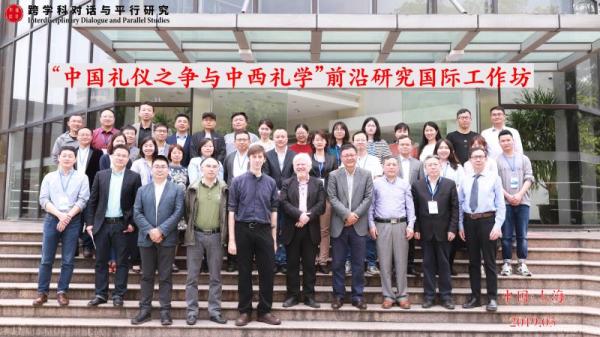
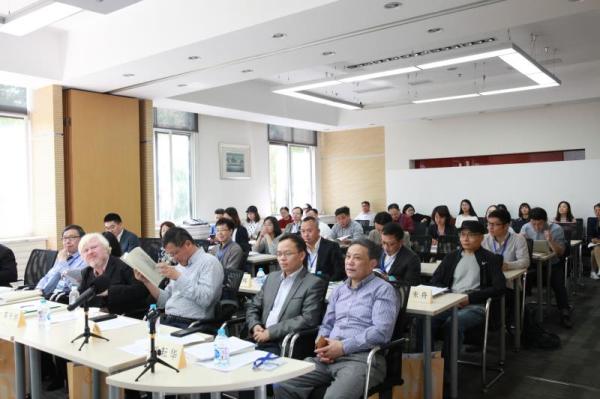
On May 11, 2019, the first international workshop on the frontier research of "Chinese Etiquette Debate and Nakanishi Rei Studies" was held in the Convention Center of Shanghai Normal University. With the innovative way of "interdisciplinary dialogue and parallel research", the workshop gathered more than 30 experts and scholars at home and abroad to explore and expand the way of communication and dialogue between China and foreign countries.

The first international workshop on the frontier research of "China’s Etiquette Debate and Nakanishi Rei Studies" brought together more than 30 domestic and foreign experts and scholars from Fudan University, Wuhan University, Central South University, Institute of World Religions of China Academy of Social Sciences, South China Normal University, Anhui University of Science and Technology, Vassar University in the United States and other Chinese and foreign universities and research institutes. The workshop was jointly sponsored by Shanghai Comparative Literature Research Association, Li Xu Wenming Dialogue Research Center of Fudan University and China Language and Literature Innovation Team of Shanghai Normal University, and was specifically undertaken by the editorial department of Comparative Literature and World Literature, the national key discipline of Shanghai Normal University.

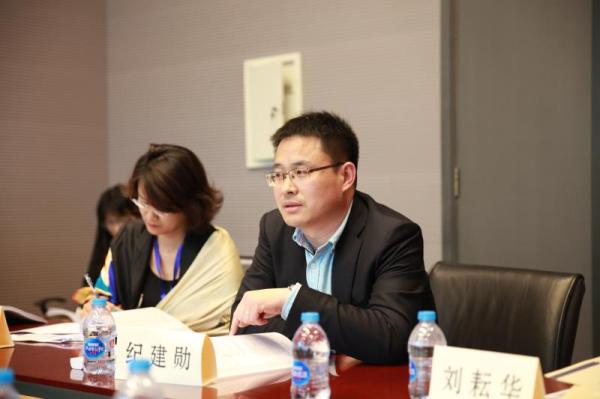
The opening ceremony of the workshop was presided over by Associate Professor Ji Jianxun, majoring in comparative literature and world literature in Shanghai Normal University.

Professor Cha Tsinghua, Dean of School of Humanities and Communication, Shanghai Normal University, and Professor Liu Yunhua, Head of Comparative Literature and World Literature, delivered speeches respectively. Dean Cha first warmly welcomed many experts and scholars from home and abroad, and then introduced the characteristics of Shanghai Normal University’s comparative literature and world literature from three aspects: continuity of development, interdisciplinary and cross-cultural education, and the fine tradition of paying equal attention to academic research and personnel training, and put forward valuable suggestions for the future of disciplines, which should not only seize opportunities, but also continue to improve modestly and cautiously. Professor Liu Yunhua further pointed out that the purpose of the discipline is to create a relaxed, pleasant and truth-exploring academic environment, and placed deep expectations on the future development of young scholars. At the same time, Liu Jiaoshou announced that he would take this meeting as an opportunity to prepare for the establishment of the "Interdisciplinary Dialogue and Parallel Research Center" of Shanghai Normal University.

The conference consisted of a keynote speech in the morning and two parallel workshops in the afternoon. Under the unified theme of "Chinese Etiquette Debate and Nakanishi Rei Studies", 21 lectures were given, which cleared up many problems and promoted the academic understanding and research of "Chinese Etiquette Debate" from various angles and fields.

Li Tiangang: "Debate on Chinese Etiquette" —— Research Method and Its Expansion

The keynote speech in the morning is divided into two halves. The keynote speech in the first half was hosted by Yuan Zhaohui, a researcher at the Institute of World Religions of China Academy of Social Sciences. Professor Li Tiangang of Fudan University, with the title of "Debate on Chinese Etiquette: Research Methods and Its Expansion", discussed four issues. The first one was about "Debate on Chinese Etiquette", and he emphasized that not only western documents but also Chinese Manchu and other oriental documents should be cited in the research methods and its expansion. On the second hand, he pointed out that the "Chinese etiquette dispute" is nominally about "ceremony" and in essence involves concepts, namely God and God, soul and Anima. In the third aspect, he said that the in-depth discussion of the "Chinese etiquette dispute" depends on the continuous advancement of the research paradigm, and in the process, we should open our minds to new knowledge; Finally, taking his new work Kanazawa as an example, he introduced his research in the context of the history of thought, mainly considering what is religion and what is folk belief, and the close relationship between religion and belief and the daily life of ordinary people.

Liu Yunhua: What is the relationship between European Enlightenment and China culture?

Professor Liu Yunhua of Shanghai Normal University gave a lecture entitled "What is the correlation between European enlightenment and China culture? First of all, taking Leibniz as a case, he analyzed and pointed out that although Leibniz had contact with China culture through missionaries, he explained the Confucian "reason" with his deistic view, rather than being influenced by it to achieve ideological transformation. Furthermore, he pointed out that the influence can be divided into implanted and confirmed. When talking about the enlightenment’s understanding of western core concepts such as freedom, equality and democracy, China culture has no implanted influence on the west, but only confirmed influence in the process of collision. Finally, he reconsidered the position of "science and technology" in the history of thought, and pointed out that most thinkers in China in the late Ming Dynasty were always confined to political correctness and could not seek truth from facts, and their understanding of western science and technology was really limited.

Mingde Wei: How to read China’s classics? From the perspective of "Nakanishi Rei studies"

The keynote speech in the second half was hosted by Ivan Ruviditch, director of the International Drama Studio of Shanghai Normal University and associate professor of comparative literature and world literature. Professor Mingde Wei of Fudan University’s report "How to Read China Classics? From the perspective of "Nakanishi Rei Studies", he thinks that "Jing" has the same meaning as the western Textus, and it is woven intentionally, so it must have a structure, so we can observe the Patterns in the structure in turn, that is, the structural Patterns and layout. On this basis, he specifically analyzes the patterns in various types such as structural rhetoric according to historical traditions. It also points out that when we contact the text, we need to regard the whole text as a style of existence and writing. And we should learn to understand a classic and put all these factors into its definite rhetorical structure, just to produce what the work itself contains in those who are ready to read it and endure its obscurity.

Song Lihua: The Encounter between the East and the West —— Guo Shi’s Hunting China in Chinese Novels

Professor Song Lihua of Shanghai Normal University made an in-depth study of Guo Shili’s works with the theme of "Encounter between the East and the West: China in Guo Shili’s Chinese Novels". By analyzing the image of China in his Chinese novels, he pointed out that although Guo Shili took Europe, especially Britain, as the frame of reference in describing China, China was excluded from the mainstream of European scientific, artistic and commercial development and became the object that needed European attention and even rescue. However, his words about China’s national character should not be simply regarded as a distortion of the facts, but should be understood as a historical event that really happened, because it once truly shaped the history and relationship between China and the West.

Zhang Yaonan: From "Debate on Etiquette in China" to Comparative Philosophy in China and Europe —— A Preliminary Study on "Debate on Etiquette" in the History of Comparative Philosophy in China and Europe

Professor Zhang Yaonan of Beihang University gave a report entitled "From the Debate on Etiquette in China to Comparative Philosophy in China and Europe —— A Preliminary Study on the Debate on Etiquette in the History of Comparative Philosophy in China and Europe". He pointed out that "Comparative Philosophy in China and Europe" refers to the comparative study between Chinese philosophy and Western philosophy. Looking at its history from Han and Wei dynasties to the present, it has experienced or will experience six periods. As the fourth phase of comparative philosophy between China and Europe, the debate on Chinese etiquette can be observed in six steps, and further summarized from a philosophical perspective, that is, "the debate on Chinese etiquette" and the "Enlightenment Movement" in western Europe are the same movement, and the themes debated are orthodox and heresy, atheism and deity, polytheism and monotheism, rationality and belief, wisdom and superstition, and self-reliance and self-reliance. It also emphasizes that the summary of Hegel’s "China’s Backwardness Theory" and "Historical Progress Theory" is not in line with the reality of Chinese studies and cannot be established.

On behalf of the National Day: the first voice of the debate on etiquette in China

The first half of the workshop was presided over by Wang Lingling, editor of Journal of Beijing Administration College. Professor Guo Qing on behalf of South China Normal University gave a report entitled "The Preamble of Chinese Etiquette Debate". He took the analysis of sacrificial rites from the perspective of Gao Muxian’s interaction with Chinese and Western Confucian classics as an example, and pointed out that in the recent history of cultural exchange between China and the West, Dominicans, as one of them, have always shown themselves as opponents of Chinese etiquette, highlighting their historical image different from Jesuits’ "adaptation strategy". In fact, it’s not that Dominicans didn’t reconcile Yeru. As early as when he preached in the Philippines, Gao Muxian focused on building a dialogue bridge between Thomas theology and Zhu Xi’s Neo-Confucianism, and applied it to the field of sacrifice. Gao Muxian’s comments on China’s sacrificial ceremony constitute the target of Domingo’s understanding of Chinese etiquette.

Wang Ding ‘an: The Separation of Chinese and Western Sacrifices and the Re-development of Comparative Confucian Classics during the Ming and Qing Dynasties

Associate Professor Wang Ding ‘an of Zhejiang University of Technology is entitled "The Separation of Chinese and Western Sacrifice Rites and the Re-development of Comparative Confucian Classics". He believes that the topic of "whether Mass is a sacrifice or not" during the Ming and Qing Dynasties was being staged fiercely in Europe at the same time, but it was not fully developed in China because of suppression. Now we re-examine the problems, beneficial experiences and the possibility of re-launching Comparative Confucian Classics with Aquinas’ sacrificial theology, which unifies "object" and "way". We can find that the difference between "being" and "being like being" presented by the sacrificial object is nothing more than a concrete manifestation of the relationship between God and man; The "way" of offering sacrifices to both Ye and Confucianism shows obvious sacredness.

Xiao Qinghe: Breaking away from the mundane and becoming a saint —— The Catholic narrative about saint in the late Ming and early Qing Dynasties

Xiao Qinghe, an associate professor at Shanghai University, gave a report entitled "Going from the mundane to the holy: the Catholic narrative about the holy in the late Ming and early Qing Dynasties". By analyzing the evolution of the meaning of the word "holy" and related terms, he clearly showed the process of cultural exchange, conflict and integration between China and the West. He pointed out that the missionary equated Sanctus with "Saint", which not only changed the meaning of Chinese character "Saint" and enriched the content of "Saint" since Ming and Qing Dynasties, but also changed the understanding of Sanctus in European Christian tradition, and the thoughts and spiritual worlds of both sides were blended and changed.

Ji Jianxun: The Origin of the Debate on Chinese Etiquette and the Relationship between Chinese and Western Learning Systems

Associate Professor Ji Jianxun of Shanghai Normal University, starting from The Origin of the Debate on Etiquette in China and the Relationship between Chinese and Western Learning Systems, emphasized that the "Debate on Etiquette" should not be a problem only related to the West or the East, and the new understanding should put it back in the historical coordinates of Sino-foreign exchanges, and the key to solving it lies in identifying the origin of the debate and clarifying the Chinese and Western learning systems behind the conflict. Confronting the problem of "etiquette dispute" and the "two-way" between culture, education and religion in China society revealed from it can help us better understand the two different cultures of China and the West and oppose the "clash of civilizations".

Yang Huiling: A New Probe into the Anti-ancestor Worship Thought in the Debate between Chinese and Western Etiquette in Qing Dynasty

The second half of the first group of the workshop was presided over by researcher Yuan Zhaohui from the Institute of World Religions of China Academy of Social Sciences. Yang Huiling, a researcher at the Institute of Advanced Studies in Comparative Civilization and Humanities Exchange of Beijing Foreign Studies University, took the topic "A New Probe into the Thought of Anti-ancestor Worship in the Debate between Chinese and Western Etiquette in Qing Dynasty" as an example, and studied his understanding and reinterpretation of China culture from the standpoint of Christianity by analyzing Li Yufan, a representative figure who opposed Chinese etiquette in the Debate of Chinese Etiquette in the Vatican Library. He found that he was equally familiar with it even if he held a position and viewpoint against China’s "ancestor worship" culture. Therefore, in the process of cultural exchange between China and the West in history, both sides of the exchange have the process of understanding each other and absorbing each other, rejecting and abandoning, seeing differences in the same, and seeking common ground while reserving differences and integrating and innovating.

Gao Shengbing: Matteo Ricci’s Cultural Identity and Its Translation Strategies and Effects

Associate Professor Gao Shengbing of Anhui University of Science and Technology gave a report on Matteo Ricci’s Cultural Identity and its Translation Strategies and Effects. He analyzed Matteo Ricci’s choice of "God", "Soul" and "Diligene/Caritas" (to love/. The cultural identity of "Western Confucianism" makes Matteo Ricci compare or choose Confucian concepts or words in his discourse, and the cultural identity of Catholic missionaries makes Matteo Ricci choose foreignization in concept translation. As the "other" of China culture, the translated words he chose can be widely accepted, which deserves our consideration.

Jian Wu: "Individualization" and "Cultivation" —— A Comparison between Jung’s Analytical Psychology and Taoist Inner alchemy

Jian Wu, a teacher of Jiaxing University, took "Individualization" and "Cultivation": A Comparison between Jung’s Analytical Psychology and Taoism’s Inner alchemy as the topic, and through the interpretation of the most concentrated and important commentary text of Jung on Taoism’s Inner alchemy, distinguished the fundamental difference between Jung’s psychology and Taoism’s Inner alchemy, and Jung’s misunderstanding of "The Purpose of Taiyi Jinhua". He pointed out that Jung’s psychology and Taoism’s inner alchemy are ideographic codes of two discourse systems, which represent two sets of thinking paths, and their speech objects are both internal experiences, so their differences are actually greater than their similarities. If we say that Jung adopted the method of "Geyi", it may not be an exaggeration to take me as the main analytical psychology when interpreting the Purpose of Taiyi Jinhua (including the Classic of Wisdom and Life) for his own analytical psychology.

Tan Jie: Words and deeds attest to Taoism —— Characters and moral education in "stories of testifying to Taoism" in the late Ming Dynasty

Associate Professor Tan Jie of Central South University’s report is "Words and deeds attest to the truth: the characters and moral education in the story of testifying to the truth in the late Ming Dynasty". By tracing back to the ethical tradition of the Renaissance, he placed the story of testifying to the truth in the Chinese translation in the late Ming Dynasty in the humanistic ethical tradition of the Renaissance. Through the analysis of two typical characters, "King Philip" and "Bi Da Lie La", he investigated its transmission by quoting the words and deeds of western sages.

Jia Weizhou: Confucianism-Confucianism in the Dialogue between Ye and Confucianism in the Late Ming and Early Qing Dynasties

The first half of the second group of the workshop was presided over by Dr. LIM Hyebin, a teacher majoring in comparative literature and world literature at Shanghai Normal University. Associate Professor Jia Weizhou of Guangdong University of Finance and Economics is entitled "Confucianism-Confucianism in the Dialogue between Confucianism and Confucianism in the Late Ming and Early Qing Dynasties", trying to return to the historical text and the specific context in which the problems occurred, so as to understand the reasons why the religious interpretation of Confucianism occurred in the dialogue between Confucianism and Confucianism in the late Ming and early Qing Dynasties, the starting point of different views, the methodology of hermeneutics and the results of the debate. This understanding will provide specific historical enlightenment to the discussion of religious interpretation of contemporary Confucianism. At the same time, the western Confucianism-Confucian view can reflect the attitude towards the whole culture of China, and we can also see the historical formation path of the western China view and China’s western view.

Jiang Xiaojuan: An Islamic Chinese Translator Influenced by the Debate of Catholic Etiquette

Dr. Jiang Xiaojuan of Fudan University’s report is "Islamic Chinese Translators under the Influence of Catholic Etiquette Debate". She started with the stimulation brought to Islamic scholars by a series of activities of Jesuit missionaries entering China, emphasizing that while they were hit hard, the Jesuits’ writing and speaking activities also inspired Islamic scholars, stimulating them to promote the localization of Islam in the same way, and a number of Islamic Chinese translators headed by Wang Daiyu emerged. They advocated the further development of Islam in China by interpreting Confucianism and explaining the similarities between Islam and Confucianism, which contributed to the further China of Islam.

Li Qiang: Christians in China and the Modern Evolution of the "Etiquette Debate" in the Early Qing Dynasty —— Focusing on the manuscripts in Xujiahui Library

Li Qiang, a doctor from Shanghai University, took the modern evolution of the text "The Debate on Etiquette between Christians in China and the Early Qing Dynasty" as a topic-focusing on the manuscripts collected in Xujiahui Library. In his report, he systematically combed the modern evolution of "The Debate on Etiquette" as a product, so as to illustrate the historical inevitability of modern Catholicism releasing the bondage of "The Debate on Etiquette" to Christians in China.

Wang Hongchao: Religion, Politics and Culture —— A Study of Yi-ology of Suoyin School and Missionaries in China

Associate Professor Wang Hongchao of Shanghai Normal University is entitled "Religion, Politics and Culture: A Study on the Yi-ology of Suoyin School and Missionaries in China". He pointed out that the study of Zhouyi by missionaries in China was deeply rooted in the biblical interpretation through the example that China Suoyin School founded by Bai Jin hoped to find the information of ancient China’s GOD from the Book of Changes and Jacob’s interpretation of "God" in the Book of Changes and other classics in the late Qing Dynasty.

Wang Niecai: Revelation or Reason? Two Opposing Interpretations of the Confucian Classics during the Rites Controversy

The second half of the second group of the workshop was presided over by Professor Du Wenwei, President of North American Oral and Performing Literature Research Association, Professor of Vassar University in the United States and researcher of China Opera Academy. Associate Professor Wang Niecai of Zhaoqing University took the book Revelation or Reason? Two opposing interpretations of the Confucian classics during the Rites Contraversy, this paper first introduces two different interpretations of the Four Books in the West, that is, the Franciscan Lian Dang (1602-1669) and the seal of Confucianism (1664) adopted an allegorical method to interpret the true meaning of China classics as the revelation of Christianity, while rejecting the traditional Confucian classics. And the Jesuits adopted the rationalism method in The Four Books of Western Languages (1687) to coordinate the western rationalism with Confucianism. Through the parallel comparison of the two concepts, it is very intuitive to show how these two explanations are rooted in different theological traditions, which leads to the two sides taking opposite positions in Chinese etiquette disputes.

Wu Rui: A Textual Research on the Origin of Oriental Etiquette in Shakespeare’s Plays

Wu Rui, a researcher at Shanghai Theatre Academy, gave a report on the Origin and Development of Oriental Etiquette in Shakespeare’s Plays. He pointed out that Shakespeare’s works involved a lot of oriental content and oriental protagonists, such as Cleopatra, Othello, and Shylock. According to textual research, the main drama conflicts in Romeo and Juliet also came from the legends of two rival families in the East. By exploring the origins of oriental rituals in Shakespeare’s plays, we can provide a path for the orientalization of Shakespeare’s plays.

Wang Qiyuan: Xu Guangqi’s Legacy in Shanghai and Its Contemporary Significance

In the report entitled "Xu Guangqi’s Legacy in Shanghai and Its Contemporary Significance", Wang Qiyuan, an associate researcher at Fudan University’s Chinese Ancient Books Protection Institute, thinks that, as a first-rate figure who walked out of Shanghai in modern national history, if these places in Shanghai related to Xu Guangqi can’t be fully studied and developed, it is indeed a slight violation of the actions of the sages. Therefore, he made an in-depth investigation of Xu Guangqi’s legacy in Shanghai through the publication of a large number of local documents such as the "Shanghai Fu County Old Records Series" compiled by Shanghai Local Records Office and Tongzhi Museum.

Du Wenwei: On the Mutual Influence of Eastern and Western Cultures from the 90-year History of The Story of Grey Lan

Professor Du Wenwei, with the theme of "Looking at the Interaction between Eastern and Western Cultures from the 90-year History of Grey Lan Ji", systematically combed the spread and evolution process of Yuan zaju "Grey Lan Ji", and concentrated on analyzing the theme changes of "Grey Lan Ji" through various stage adaptations. He pointed out that the spreading history and the changing process of the theme reflected the mutual influence between the themes of eastern and western cultures and drama theory, and in this long-term mutual influence process, The Story of the Grey Lanji not only became a historical drama that was performed circularly on the eastern and western stages, but also spawned some modern dramas.

The results of this workshop are quite fruitful, and the teachers and students attending the workshop have had a heated discussion, which has made a great breakthrough in the paradigm and content of promoting the study of "Chinese etiquette dispute". I believe that there will be significant progress in the near future, and a brand-new and in-depth "Nakanishi Rei study" is taking shape. In December 2018, the Center for Comparative Literature and World Literature, a national key discipline of Shanghai Normal University, held the first forum of "Interdisciplinary Dialogue and Parallel Research", which aroused widespread concern in academic circles. On the basis of the first forum, this workshop is another academic grand meeting with the innovative mode of "interdisciplinary dialogue and parallel research", thus further contributing to the construction of the first-class discipline of China Language and Literature in Shanghai Normal University and making new contributions to the academic innovation of humanities in China.

In terms of research paradigm, scholars’ research shows that the academic discussion on "Chinese etiquette dispute" is starting from the field of history and turning into the fields of literature, philosophy, culturology and religion, showing a trend of multi-paradigm transformation; In terms of research content, the series of results of this workshop also show that the series of debates between Chinese and Western civilizations are ostensibly centered around "Chinese and Western etiquette", which is behind the differences and dislocation of the core concepts of the two heterogeneous civilizations, namely "keywords". These studies can be done from point to area, with a clear sense of problems, and provide important reference for the current in-depth exchanges and dialogues between China and foreign countries.

The market value of the four leading liquor stocks broke through one trillion yuan, and the stock price of Maotai reached 473.04 yuan.

  There are 19 liquor stocks in A shares, with a total market value of over 1 trillion as of May 5 this year. Who would have thought that after 26 trading days, the market value of only four leading stocks has exceeded one trillion. Yesterday, the market value of Kweichow Moutai was 594.2 billion, once again exceeding the market value of China Life Insurance of 593 billion.

  Yesterday, the growth rate of the wine-making sector slowed down, only rising by 0.4%, ranking fourth from the bottom in the industry sector, but the market value of its four leading stocks has exceeded one trillion. Beijing Youth Daily reporter noted that as of yesterday’s close, the market values of Kweichow Moutai, Wuliangye, Yanghe and LU ZHOU LAO JIAO CO.,LTD were 594.232 billion, 207.601 billion, 136.91 billion and 71.347 billion respectively, with a total market value of 1,010.09 billion, approaching the total market value of China Agricultural Bank of China of 1,026.2 billion yuan.

  There are 19 liquor stocks in A shares, with a total market value of over 1 trillion as of May 5 this year. Who would have thought that after 26 trading days, the market value of only four leading stocks has exceeded one trillion. It is also known that the total output of A-share liquor companies in 2016 was 1,354,800 tons, accounting for 10% of the national output; The total revenue related to liquor of these 19 listed liquor enterprises was 120.2 billion, and the net profit was 36.455 billion, with an average liquor gross profit margin of 67.07% and an average net profit margin of 18.57%.

  It is worth mentioning that the share price of Kweichow Moutai hit a new closing high yesterday, reaching 473.04 yuan, and its market value not only surpassed Sinopec, but also surpassed China Life again. Yesterday, the market value of China Life was 593 billion yuan. This is the second time that the market value of Kweichow Moutai has surpassed that of China Life Insurance. As early as April 18th this year, the intraday share price of Kweichow Moutai broke through 400 yuan and reached a record high. At the close, Maotai closed at 404.65 yuan, with a stock increase of 2.24%. Its market value reached 508.3 billion yuan, surpassing China Life Insurance, and its A shares ranked sixth. Based on the closing price on April 18th, the market value of China Life was 500.806 billion yuan, while that of Maotai was 508.320 billion yuan, surpassing that of China Life.

  On June 10th, Sinopec, which refined hundreds of millions of tons of oil, was defeated by Maotai, which brewed tens of thousands of tons of wine. As of the close of the day, Kweichow Moutai, with a market value of 585.062 billion yuan, surpassed China Petrochemical’s A-share market value of 583.858 billion yuan, ranking sixth in the total A-share market value.

  On the occasion of the second anniversary of the stock market crash in 2015, the market value of Maotai was only in the early 200 billion. Since then, it has started the "runaway" mode: in 2016, there were only three negative lines on the monthly line, and in 2017, the monthly line was all positive. In July 2016, the stock price broke through 300 yuan with a market value of 394.5 billion yuan; After a small finishing, Kweichow Moutai continued to move upwards, driving the wine-making sector to attack across the board. On April 20th this year, Kweichow Moutai’s share price rose to the top of 400 yuan in one fell swoop, becoming the highest-priced A-share stock, with a market value of about half of Guizhou’s GDP, surpassing Diageo, the world’s veteran champion of spirits, with a market value of 509.68 billion yuan, and becoming the world’s most valuable winery.

  The market believes that the recent surge in the market value of Maotai is not unrelated to its large-scale operation of Maotai College. Maotai College, sponsored by Guizhou, China Maotai Distillery (Group) Co., Ltd., is a non-profit private college at the undergraduate level, which is positioned as an application-oriented college. The number of full-time students is tentatively set at 5,000, and the first five undergraduate majors are brewing engineering, grape and wine engineering, food quality and safety, resource recycling science and engineering and marketing.

  Although Kweichow Moutai has hit record highs, brokers still give it a higher target price and rating. Pacific Securities’ neutral expectation gives Maotai 25 times PE, with a corresponding market value of 860 billion and a corresponding stock price of 685 yuan. TF Securities gave Maotai a 27-fold valuation in 2018 and raised its 12-month target price to 615 yuan; China Merchants Securities maintains its target price of 500 yuan according to 22 times PE in 2018 and continues to strongly recommend it; On the other hand, Shen Wanhongyuan slightly raised its profit forecast based on Maotai’s first quarterly report exceeding expectations, with a one-year target price of 520 yuan, which is 24 times the performance of the 2018 report.

  Text/reporter Liu Shenliang

The highest price is over 300,000. Are these official modified cars of tank 300 expensive?

The appearance of Tank 300 not only enhances the strength of independent automobile brands in the hard-core off-road field, but also promotes the progress of domestic automobile modification culture to a certain extent. There are as many as four "officially modified" models. Today, let’s take a look at what’s special about these four cars.

The first paragraph, tank 300 tank ranger

Guide price: 253,800 yuan

Co-brand: Yunliang Off-road

This is the first official customized model of the tank 300 in the true sense. It was built by the domestic modified brand Yunliang off-road, and the first batch of models were launched in August 2021. In appearance, the design elements of the tank 300 are largely retained, but the front and rear metal stamping bars and metal side bars are replaced, so that the protection of the car body is more in place, and a winch for rescue or extrication is added to the front bar. Tires and wheels have been replaced with off-road models, and nitrogen shock absorption has been replaced, which can cope with extreme road conditions more calmly. The A-pillar of the vehicle is equipped with a wading throat, and the wading depth can reach 900 mm. The second batch of models that are being booked have also added a trailer power inlet, a trailer square opening and an air conditioning entity button, which further improves the practicality.

(2021 Tank Ranger)

In the interior of the car, Tank Ranger also retains most of the design elements of Tank 300, but its performance in comfort configuration is relatively common. Steering wheel heating and Yanfei Lishi audio are not equipped with these two ordinary high-profile models. In addition, the seat is made of imitation leather, and the front seat has only heating and no ventilation function. It seems that the name of tank ranger is unreasonable, and he is a veritable "rough man".

(2021 tank ranger interior)

The second paragraph, the tank 300 wind forest fighters

Guide price: 270,800 yuan

Co-brand: Top Fire

Compared with the tank ranger, the change of Fenglin Iron Rider is bolder. In the front face, the middle net is changed to a simple double rectangular style, and the grille is denser than before, which can better block the impact of flying stones on the condenser. The air inlet is added to the hood, which makes the visual impact stronger. There is no wading throat at the A-pillar position, which will affect the wading height of the vehicle, but the overall feeling is stronger. The front bumper, side bumper and rear bumper of the vehicle have all been changed. After all, this is one of the most attractive places for a hard-core off-road vehicle. It is worth mentioning that this car is equipped with 285/70 R17 wide tires, the tires are basically flush with the wheel cover, and the visual effect is excellent. Such a hard-core tire configuration, of course, requires better suspension shock absorption, and Fenglin Tieqi is also equipped with nitrogen shock absorption and other configurations to improve the passability of vehicles. In addition, the roof is equipped with a luggage rack platform decorated with the words "TOP FIRE", which shows the identity and has strong practicability.

The interior hasn’t changed much, but the higher price compared with tank ranger gives it enough cost space to upgrade in comfort configuration. Steering wheel heating and front seat heating and ventilation are arranged, and the seats are made of leather, which makes the touch more comfortable. This car is also equipped with a PM2.5 filter in the car, as well as the addition of Yanfei Lishi audio and 64-color ambient lights, so that you can be very comfortable in the off-road process. It is also a practical function for camping enthusiasts to bring their own 220V power supply. The first batch of Fenglin fighters gained a good reputation, which also made people look forward to the improvement of the second batch of Fenglin fighters.

Paragraph 3, Tank 300 Border Limited Edition

Guide price: 280,000 yuan

With the cooperation experience with famous domestic off-road refitting brands, Great Wall Motor has also started to upgrade its original factory. This border limited edition model is a typical example, which basically combines the advantages of Tank Ranger and Fenglin Iron Rider. In terms of appearance, the front of this car abandoned the traditional TANK LOGO and replaced it with the simple English letter "Tank". At the same time, the middle net was changed to a black honeycomb style, and the sports atmosphere was improved. The front bumper has been upgraded to a competitive bumper, and the rear bumper has also been optimized. Its approach angle has reached 36 degrees, while its departure angle is 37 degrees, which is the largest among the official models of the 300 series of tanks at present. The front bumper is also equipped with a winch, the wading throat is also equipped, and the roof is equipped with an expandable roof platform, which is more comprehensive.

The interior part of the car basically maintains the configuration of the original high-profile model of the tank 300. Compared with the Fenglin Iron Rider, the front multi-storey sound insulation glass is added, which further improves the sound insulation effect of the vehicle. As an official-reformed vehicle independently developed by Great Wall Motor, the price of the limited edition of Tank 300 Border came to 280,000 yuan. It seems that Great Wall Motor is still quite emboldened. Do you think this price is worth it?

The fourth paragraph, tanks 300 cyber tanks

Guide price: 308,000 yuan

Co-brand: Chaojing

This is the only model of Tank 300 that has been modified to the urban SUV style. If the previous model is regarded as a competing product of herdsman, then this Cybertank is a competing product of Mercedes-Benz G. Although the prices of the two are very different, the styles are relatively close. The appearance of tough sports with gorgeous interior will bring about a turning back rate that is basically no less than that of a supercar. This cyber tank basically only retains the powertrain and chassis of the basic model, and the rest of it has undergone drastic changes. In the net, the penetrating headlights are added, and the car paint with matte gray is matched, so the overall look has a strong sense of science and technology. The wheel eyebrows are changed to the same color as the car body, and the integrity is better. The roof and rearview mirror are decorated with bright colors to enhance the sense of fashion. There is a big bump in the center of the hood to enhance the visual impact. The spare tire is no longer hung at the rear part of the car. Instead, it is a square suitcase with a larger spoiler at the top, but it is mainly used for decoration. Tyre size is 275/45 R21, with a relatively high face value, but it basically does not have off-road ability. Even if it crosses the speed bump or bumps, it is necessary to close the throttle, otherwise it will easily cause tire bulging.

The biggest change in the interior is the use of pure white color matching. The seats, center console and door panels are mainly white, followed by a large number of chrome-plated decorative pieces. The visual effect is excellent, but it is really not resistant to dirt. The stitching of leather seats is exquisite, and the sense of luxury is in place. According to legend, this is the most expensive model in the customized version of tank 300. Can you accept the price increase of such a model with a main face value?

These are the four special models of Tank 300 on sale. Although the price is much higher than that of the ordinary model, these models are equipped with hard-core configurations such as front and rear axle differential lock and part-time 4wd, which can meet the individual needs of different consumers. If the budget is enough, which one would you choose? In addition, this successful model of tank 300 is likely to continue to other models such as tank 500. Do you expect it? (Text/Youshi Automobile Control Wind)

Note: the pictures are from the internet, and the rights belong to the original author. Thank you! This article only represents the author’s personal views, and does not represent the position of AUV.

The golden monkey population in Shennongjia, Hubei Province likes to add "new ding"

       Cctv newsRecently, the staff of Dalongtan Golden Monkey Field Research Base in Shennongjia, Hubei Province tracked and monitored the monkeys and found that a female monkey in the golden monkey population, a national first-class protected animal, successfully gave birth to the first golden monkey baby in the base this year.

one

       According to the relevant person in charge of the Dalongtan Golden Monkey Field Research Base, golden monkeys give birth from the beginning of March to the end of May every year, and females are generally pregnant from August to October in the first year, and the pregnancy period is nearly 200 days. Every female monkey usually gives birth once every two years, and it takes a year for the female monkey to feed the little golden silk monkey. In order to ensure that the mother monkey recovers as soon as possible and secretes enough milk to feed the baby monkey, the base adjusts the food supply type for the mother monkey, and sends special personnel to observe and monitor the mother monkey and the baby monkey around the clock.

       According to the statistics of the base, the population of golden monkey in Shennongjia has increased from 8 in 2005 to 10, and the number has increased from more than 1,280 to more than 1,470, and the habitat area has increased from 210 square kilometers to 354 square kilometers.

The central bank announced that bank loans are the main liabilities of urban residents’ "bottom children"

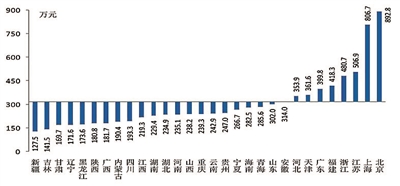
Total assets per household in each province

  How many assets do urban households in China have? How much debt is there? Is the household debt risk controllable? The latest investigation and study by the investigation and statistics department of the central bank gives the answer. On April 24th, WeChat official account, the official WeChat of China Finance magazine, published the research report "Survey on the Assets and Liabilities of Urban Households in China in 2019", which was written by the research group of the Survey and Statistics Department of the People’s Bank of China.

  In the middle and late October of 2019, the research group of assets and liabilities of urban households of the Survey and Statistics Department of the People’s Bank of China conducted an assets and liabilities survey on more than 30,000 urban households in 30 provinces (autonomous regions and municipalities directly under the Central Government). This is one of the most complete and detailed surveys on the assets and liabilities of urban residents in China.

  According to the report, the three provinces (autonomous regions and municipalities directly under the Central Government) with the highest household assets are Beijing, Shanghai and Jiangsu, among which the average household assets of Beijing residents are 8.928 million yuan.

  Family assets are mainly real estate.

  Every household has 1.5 suites.

  According to the survey data, the average total assets of urban households is 3.179 million yuan, and the median is 1.63 million yuan. The difference between the mean and the median is 1.549 million yuan.

  After deducting the assets from the liabilities, the net assets obtained can more truly reflect the wealth level of the households. According to the survey data, the average net worth of urban households in China is 2.89 million yuan. The median net worth of a family is 1.41 million yuan, which is 1.48 million yuan lower than the average.

  In terms of economic regions, the eastern region is significantly higher than other regions. The average total assets of households in the eastern region are 4.61 million yuan, which are 1.975 million yuan, 2.534 million yuan and 2.96 million yuan higher than those in the central, western and northeastern regions respectively.

  The survey shows that the household assets of urban residents in China are mainly physical assets, with an average of 2.53 million yuan, accounting for 80% of the total household assets.

  Of the physical assets, 74.2% are housing assets, and the average household housing assets are 1.878 million yuan. The proportion of residents’ housing assets to total household assets is 59.1%.

  The survey shows that the housing ownership rate of urban households in China is 96.0%, the proportion of households with one house is 58.4%, the proportion of households with two houses is 31.0%, the proportion of households with three or more houses is 10.5%, and the average household owns 1.5 houses. The overall housing ownership rate of American households is 63.7%, which is 32.3 percentage points lower than that of China.

  The more houses owned by urban households, the lower the proportion of housing assets in their household assets. The proportion of housing assets in the total assets of a family with one house is 64.3%, that of a family with two houses is 62.7%, and that of a family with three or more houses is 51.0%. This is mainly because families with multiple properties are more inclined to diversify their assets after solving their basic housing needs.

  Risk-free financial assets per household are 350,000 yuan.

  The total debt per household is 512,000 yuan.

  According to the survey, 99.7% of the families surveyed have financial assets, with an average financial asset of 649,000 yuan, accounting for 20.4% of the total family assets. Compared with the United States, the proportion of financial assets of urban households in China is low, which is 22.1 percentage points lower than that of the United States.

  The families are sorted by financial assets and physical assets from low to high. The financial assets owned by the families with the highest 10% financial assets account for 58.3% of all sample families, while the assets owned by the families with the highest 10% physical assets account for 47.1%. It can be seen that the imbalance of financial assets is more significant.

  The survey shows that the holding rate of risk-free financial assets in the surveyed families is 99.6%, and the average household is 352,000 yuan; The holding rate of risk financial assets is 59.6%, and the average household is 501,000 yuan. From the survey sample as a whole, the average household holds 350,000 yuan of risk-free financial assets, accounting for 53.9% of the total financial assets, which is higher than the risk-free financial assets.

  In terms of household liabilities, the survey shows that the proportion of households with liabilities is 56.5%. In terms of regions, the household debt participation rate in Northeast China is the lowest, accounting for 42.1%; 57.9% in the east and 55.7% in the middle; The highest in the western region is 60.1%.

  Among the indebted families, the total debt per household is 512,000 yuan. Among them, 53.8% households have a debt balance of less than 300,000 yuan, 35.6% households have a debt balance of 300,000 to 1 million yuan, and 10.5% households have a debt balance of more than 1 million yuan. The liabilities of urban households are mainly bank loans. Among households with debts, the average bank loan is 496,000 yuan, accounting for 96.8% of the total liabilities of households.

  The proportion of liabilities outside the banking system is low, only 3.2%, of which the average household liabilities of private loans and Internet financial products loans are 12,000 yuan and 0.1 million yuan respectively, accounting for 2.4% and 0.2% of the total household liabilities respectively.

  From the perspective of debt use, mortgage is the basic composition of household debt. Among the indebted households, 76.8% have housing loans, and the average household housing loan balance is 389,000 yuan, accounting for 75.9% of the total household liabilities.

  analyse

  The household debt risk is generally controllable.

  The report pointed out that the asset-liability ratio of urban households is generally stable and their solvency is generally strong.

  Overall, the asset-liability ratio of urban households in China is relatively low. The survey shows that the average asset-liability ratio of urban households in China is 9.1%, which is lower than that of the United States (12.1%). Among them, the average asset-liability ratio of indebted families is 14.8%, and the median is 15.8%.

  According to the report, the solvency of urban households in China is generally strong. According to the survey data, the average debt service income ratio of urban households is 18.4%, of which the mortgage debt service income ratio is 9.1%. The average debt service income ratio of indebted households is 29.5%, and the median is 26.7%.

  According to the results of the investigation, the research group puts forward two problems that need to be paid attention to. First, the financial asset-liability ratio of households is relatively high, and there is a certain liquidity risk. The survey shows that the financial asset-liability ratio of urban households in China is 44.6%, among which the average financial asset-liability ratio of indebted households is 85.3% and the median is 117.3%, and the financial asset-liability ratio of more than half of households exceeds 100%. It can be seen that although the overall asset-liability ratio of residents is stable, the liquidity of assets is poor and there is a certain liquidity risk.

  Second, the debt risk of some families is relatively high, mainly manifested in: some low-asset families are insolvent and the risk of default is high; Young and middle-aged groups have great debt pressure and high debt risk; There are many financial products such as wealth management, asset management and trust invested by the elderly groups, which are risky; The debt risk of just-needed mortgage families is outstanding. (Reporter Cheng Wei)

Shanghai guides banks to innovate science and technology credit products to ease the financial pressure of enterprises

CCTV News:In addition, in order to alleviate the financial pressure of enterprises, the Shanghai Municipal Science and Technology Commission and the Finance Bureau also guided banks to increase the supply of science and technology credit and innovate science and technology credit products.

This technology enterprise engaged in the research and development of smart factories is also supported by Shanghai’s "Special Action for Helping Enterprises through Science and Technology". During the epidemic period, there was a problem in the capital flow of enterprises. According to the scale of enterprise revenue, Shanghai Science and Technology Commission and Finance Bureau joined forces with financial institutions such as banks, insurance companies and guarantee companies to innovate science and technology credit products, and launched various preferential science and technology credit products such as "science and technology loan", "science and technology performance loan", "little giant credit loan" and "high enterprise loan". This enterprise has applied for a science and technology performance loan and can renew the loan without paying the principal.

Huang Xiaoming, head of an intelligent technology company:The company can’t arrange the capital turnover in time. Under such circumstances, the Shanghai Municipal Science and Technology Commission is also urgent for enterprises, helping us to actively (coordinate) guarantee the company and coordinate the bank, and making an unsecured loan of 4 million yuan for us, which has provided great help for enterprises to resume their work and business smoothly.

In addition, according to the provisions of the "Special Action to Help Enterprises by Science and Technology", the Shanghai Municipal Science and Technology Commission, together with the finance and taxation departments, will speed up the implementation of policies such as 100% additional deduction of R&D expenses for small and medium-sized science and technology enterprises in 2022, income tax relief for high-tech enterprises and technologically advanced service enterprises, value-added tax exemption for technology development and technology transfer, and income tax relief for technology transfer enterprises.

The reporter learned from the Shanghai Science and Technology Commission that at present, the Shanghai Science and Technology Entrepreneurship Center has issued loans of 29.574 billion yuan to 1,849 enterprises through various preferential technology credit products; Another 198 lending enterprises received seamless loan renewal support in the form of non-repayment and extension, amounting to 1.008 billion yuan.

Pro-law class | What are the types of judicial expertise?

2024

SI FA

JI SHU

Types of judicial expertise

There are 28 kinds of traditional four categories and others.

Click here to open the file.

Judicial expertise refers to the activities in which appraisers use science and technology or expertise to identify and judge the specialized issues involved in litigation and provide expert opinions. There are many kinds of professions involved, and any appraisal involving related specialized issues in litigation belongs to the scope of judicial appraisal.

Judicial expertise can be divided into four traditional categories, such as forensic expertise, material evidence expertise, audio-visual material expertise, environmental expertise and other types of judicial expertise outside the four categories, totaling 28.

Number: 2024

Types of judicial expertise

PART 1

Traditional four categories of judicial expertise

1. Forensic medicine

It can be divided into five specific categories: forensic pathology appraisal (such as identification of the cause of death and estimation of the time of death, etc.), forensic clinical appraisal (such as identification of the level of human disability and the degree of human injury, etc.), forensic psychiatric appraisal (such as civil capacity appraisal and mental injury appraisal, etc.), forensic material evidence appraisal (such as kinship appraisal and individual identification, etc.) and forensic poison appraisal (such as volatile poison appraisal and natural medicine poison appraisal, etc.).

2. Physical evidence

It can be divided into three specific categories: document identification (such as handwriting identification, seal identification, etc.), trace identification (such as fingerprint identification, footprint identification, etc.) and trace material evidence identification.

3. Identification of audio-visual materials

It can be divided into recording identification (such as authenticity identification of recording, identity identification of recording, etc.), image identification (such as image content analysis, similarity identification of image works, etc.) and electronic data identification (such as existence identification of electronic data and functional identification of electronic data, etc.).

4. Others

According to the needs of litigation, other authentication matters that should be registered and managed by the judicial administrative department of the State Council in consultation with the Supreme People’s Court and the Supreme People’s Procuratorate. Including the identified environmental identification (including environmental monitoring identification, environmental pollution damage identification, environmental pollution damage assessment identification, environmental pollution control identification, environmental impact assessment identification, environmental science identification and environmental protection identification, etc. )

PART 2

Judicial expertise outside the traditional four categories

Judicial expertise outside the traditional four categories

The identification beyond the traditional four categories mainly includes:

5. Medical damage

6. Accounting audit (accounting audit, tax audit)

7. Price verification

8. Motor vehicle appraisal and evaluation (motor vehicle technical appraisal and motor vehicle evaluation)

9. Insurance assessment

10. Asset appraisal

11. Forest resource assets assessment (forest resource assets assessment, forest resource survey)

12. Land evaluation

13. Real estate appraisal

14. Surveying and Mapping (Bureau of Surveying and Mapping qualification)

15. Construction engineering (engineering appraisal, engineering cost, engineering inspection, municipal engineering quality appraisal, traffic engineering quality appraisal and design, water conservancy engineering, water transport engineering)

16 product quality appraisal (mechanical and electrical, chemical, light industry, building materials, metal materials and metal products, electronics, food)

17. Intellectual property rights

18. Average assessment

19. Ship inspection and evaluation

20. Mining right evaluation

21. Gold and silver jewelry

22. Arts and crafts

23. Cultural relics identification

24. Scientific and technological advice

25. Safety evaluation

26. Hydrological investigation and evaluation

27. Orthopedic prostheses

28. Other identification types

PART 3

tag

Judicial expertise is an important part of national judicial activities, which plays an irreplaceable role in safeguarding judicial justice, resolving social contradictions, resolving social disputes and promoting social harmony and stability. It is a high unity of science and law. Accurate application of identification categories can improve the quality and efficiency of identification, ensure judicial justice and safeguard the legitimate rights and interests of parties.

Original title: "Pro-Law Classroom | What are the types of judicial expertise? 》

Read the original text

Notice of Beijing Taxation Bureau of State Taxation Administration of The People’s Republic of China on successively launching and optimizing the measures of "Spring Breeze Action for Convenient Taxat

Beijing Tax Letter [2023] No.61

  In order to continuously promote the theme education of the tax system, conscientiously implement the Opinions of the Central Committee of the Communist Party of China and the State Council on Promoting the Development and Growth of the Private Economy (hereinafter referred to as the Opinions) and the arrangement of the the State Council executive meeting on July 31, according to the work arrangement of the State Administration of Taxation, the Beijing Taxation Bureau of State Taxation Administration of The People’s Republic of China has launched four batches of "Spring Breeze Action for Facilitating Taxation" measures in the first half of this year, focusing on supporting the development of small and medium-sized enterprises and individual industrial and commercial households. We will implement the new series of tax reduction and fee reduction policies, combine the actual tax situation in Beijing and the new needs of taxpayers, and then introduce and optimize a number of "Spring Breeze Action for Facilitating Taxes" measures to help the private economy grow and develop, promote the sustained improvement of economic operation, and better serve high-quality development. The relevant matters are hereby notified as follows:

   First, further strengthen policy implementation

  (a) to formulate and distribute the list of preferential tax policies and related guidelines to support the development of small and micro enterprises and individual industrial and commercial households.

  (two) according to the list and guidelines, organize face-to-face publicity and interpretation of private enterprises and individual industrial and commercial households. Common questions shall be answered in accordance with the question-and-answer caliber uniformly issued by the State Administration of Taxation, so as to ensure the implementation of unified norms.

  (3) Improve the accurate push mechanism of tax and fee policies, implement the Work Specification for Accurate Push of Tax and Fee Policies of the State Administration of Taxation, better realize "finding people by policies" and ensure that policies can be enjoyed directly and quickly.

  (4) Improve the service measures for retrospective enjoyment. For those who need tax refund, they should fully respect the will of taxpayers and handle it in time through special projects.

  (5) If the taxpayer fails to enjoy the policy of adding and deducting R&D expenses in time during the levy period in July this year for various reasons, it can be supplemented in August and September by changing the second quarter (or June) enterprise income tax prepayment declaration; Actively work with relevant departments to collect and compile appraisal cases of R&D projects, and help qualified small and medium-sized enterprises fully and accurately enjoy the bonus of R&D expenses plus deduction policy.

  (six) for small-scale taxpayers to reduce the value-added tax concessions, small-scale low-profit enterprises and individual industrial and commercial households income tax concessions and other policies, increase the implementation of independent declaration and self-enjoyment, and constantly expand the scope of application.

  (VII) Improve the push mechanism of dividend bills for tax reduction and fee reduction, optimize and improve system functions, and explore personalized and customized push services for dividend bills.

   Two, to further facilitate the handling of taxes and fees

  (eight) for the "enterprise financial accounting system" and other 11 proof materials using access to reuse measures, reduce the data submitted repeatedly, reduce the burden of tax payment.

  (9) Deepen the implementation of the notification commitment system for 12 tax certification items, such as "identity certificate of individual industrial and commercial business operators", strictly control the newly established tax certification items, and do not require taxpayers to test, inspect, authenticate, authenticate, notarize or provide certificates before applying for tax matters.

  (ten) in accordance with the deployment of the State Administration of Taxation, promote digital electronic invoices, help the digital transformation of small and medium-sized enterprises, and further reduce the institutional transaction costs of small and medium-sized enterprises.

  (eleven) continue to optimize the value-added tax, enterprise income tax, personal income tax and other tax declaration and pre-filling services, explore intelligent pre-filling, and shorten the reporting time.

  (12) Optimize the procedures for inter-provincial migration of small and medium-sized enterprises. For qualified small and medium-sized enterprises, the tax authorities shall go through the formalities for moving out in a timely manner according to regulations, and the migration information shall be pushed to the tax authorities in the place where they move in.

  (XIII) Further optimize the information sharing method of bank and tax credit, and help more private enterprises to obtain financing support through "bank-tax interaction" with good tax credit on the premise of ensuring data security and safeguarding taxpayers’ legitimate rights and interests.

   Third, further improve the appeal response

  (14) Give full play to the role of the mechanism for solving the service demands of taxes and fees. The State Administration of Taxation and the provincial tax bureaus will establish direct contact points for private enterprises at the same time, conduct regular visits and discussions for private enterprises, systematically sort out the problems strongly reflected by small and medium-sized enterprises, study practical and effective solutions, and respond to the reasonable demands of taxpayers and payers in a timely manner.

  (15) Organize the tax system to continue the service season for small and medium-sized enterprises, focus on the needs and expectations of small and medium-sized enterprises and individual industrial and commercial households, expand innovative service measures, and promote the new series of tax reduction and fee reduction policies to be better implemented.

  (16) Further strengthen the linkage with the Federation of Industry and Commerce and other departments, actively carry out multi-field and multi-level online and offline professional training and counseling for private enterprises, actively explore the provision of personalized services for different types of private enterprises, and help private enterprises in the transformation and upgrading stage to improve their compliance ability.

  (17) Cooperate with local chambers of commerce to organize the establishment of private enterprise service stations or service consultants, carry out in-depth work of popularizing law, answering questions, mediating, safeguarding rights, etc., and meet the service needs of enterprise tax and fee consultation in a timely manner.

   Fourth, further deepen cross-border services

  (XVIII) Simplify the relevant statements of overseas investment and information obtained by enterprises, reduce the frequency of submission, and further reduce the reporting burden of enterprises.

  (XIX) Optimize the "single window" service functions of the electronic tax bureau and international trade, and implement the "exemption from reporting" of export tax refund invoices and export customs declarations, so as to further improve the convenience of private enterprises and other enterprises in handling export tax rebates.

  (20) Set up the 12366 cross-border service consultation hotline, strengthen the collection and collation of high-frequency difficult tax-related issues in cross-border operations, launch and constantly improve the "cross-border taxpayer’s difficult questions", and broaden the channels for private enterprises to solve doubts and doubts.

  (21) Combined with the overseas investment characteristics of private enterprises in this Municipality, after official website, the State Administration of Taxation, issued the "Overseas Tax Case Library", cooperate with the publicity and utilization of the "Overseas Tax Case Library", assist in updating and issuing the investment tax guide for countries (regions), and help "going out" private enterprises to prevent tax risks and improve their tax compliance ability.

  (twenty-two) deepen the use of international tax legal tools such as mutual consultation procedures of tax treaties and advance pricing arrangements, and make greater efforts to help taxpayers such as private enterprises solve cross-border tax-related disputes and improve the tax certainty of cross-border operations.

  (23) Focusing on the characteristics and tax-related demands of the "going out" taxpayers in this Municipality, we will optimize and upgrade the "Belt and Road" measures for tax services, better serve the "going out" taxpayers in this Municipality, and create a good tax environment for private enterprises to better "go out".

   Fifth, further optimize the law enforcement methods

  (24) Insist on collecting taxes and fees according to laws and regulations, resolutely refuse to collect "excessive taxes and fees", expand and smooth the complaint reporting channels such as the 12366 tax payment service hotline, and seriously investigate and deal with the behavior of collecting "excessive taxes and fees" together.

  (twenty-five) to accelerate the development of regional unified tax administrative punishment discretion benchmark, and promote regional tax law enforcement coordination.

  (26) In accordance with the relevant deployment requirements of the State Administration of Taxation, the tax authorities shall provide guidance to private enterprises that meet the requirements and have real difficulties in paying taxes, and shall not take enforcement measures for those who pay taxes as planned.

  (27) Adhere to the combination of education and punishment, and further strictly implement the system of "no penalty for the first violation". If 14 items in the list of "no penalty for the first violation" of tax administrative punishment occur for the first time and the harmful consequences are slight, they will not be given administrative punishment.

  (28) Strictly implement the system of fair competition and equity review of tax regulatory documents, strengthen the review of relevant policies and measures, earnestly safeguard the legitimate rights and interests of taxpayers in the private economy such as small and medium-sized enterprises and individual industrial and commercial households, and ensure that all types of enterprises are treated equally and equally.

  All units should adhere to the guidance of the Supreme Leader’s Socialism with Chinese characteristics Thought in the new era, implement the new development concept completely, accurately and comprehensively, resolutely implement the "Two Unswervings", fully understand the significance of promoting the development and growth of the private economy, fully understand the significance of doing a good job in current tax work to promote the sustained recovery and high-quality development of the national economy, and earnestly enhance the sense of mission and responsibility. Taking the implementation of the Opinions and the spirit of the executive meeting of Politburo meeting of the Chinese Communist Party and the State Council seriously as an important task to further promote the theme education of the tax system, we should work closely with the actual creativity, solve problems and do practical things for taxpayers in accordance with the law and regulations, take the initiative to cooperate efficiently, be close to the fine service, and strive to promote the private economy to become bigger and better. It is necessary to combine the requirements of continuous innovation and development of "Jinjiang Experience", constantly enrich and improve the measures and methods for tax departments to serve small, medium and micro enterprises and individual industrial and commercial households, sum up and popularize good experiences and practices in a timely manner, and fix effective experiences and practices to form a system, so as to ensure that the decision-making arrangements of the CPC Central Committee and the State Council to promote the development of the private economy and the new series of tax reduction and fee reduction policies are fully effective in the tax system, and make new and greater contributions to the high-quality development of services.

State Taxation Administration of The People’s Republic of China Beijing Municipal Taxation Bureau    

August 22, 2023